
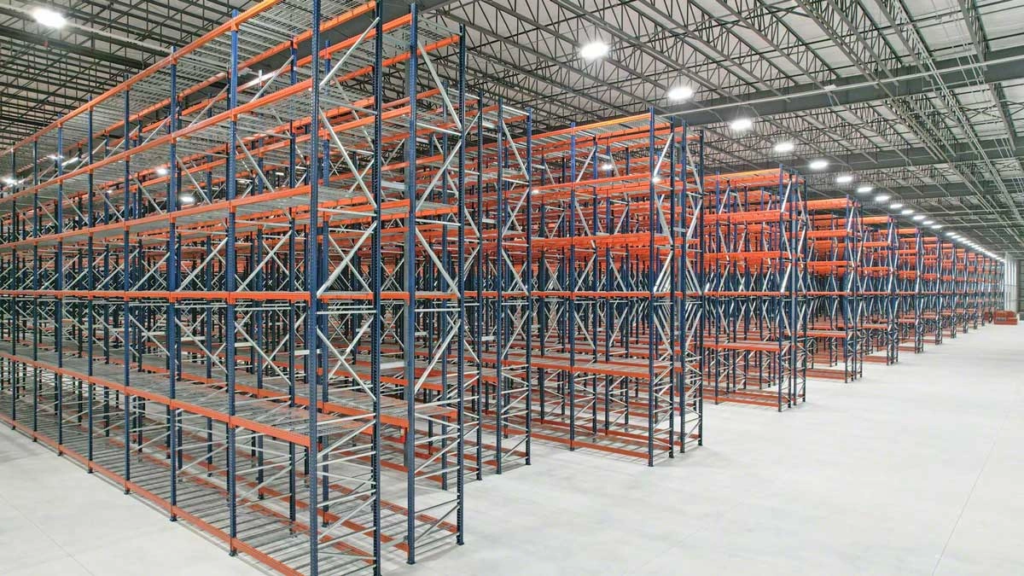
Warehouse planning hinges on knowing rack installation costs, which range from $50 to over $450 per pallet position. Smart businesses need to review their storage needs before making this major investment.
The system type largely determines price differences. Most warehouses choose selective pallet racking, which costs between $50 and $75 per pallet position. More complex systems demand bigger budgets. Double-deep pallet racks run from $80 to $200 per pallet position, and drive-in racking costs stretch from $115 to $500 per pallet position. Specialized solutions like pallet flow racking can set you back between $200 and $450 per pallet position.
Your pallet racking costs will depend on installation needs, location, and extra features. Warehouse managers need solid estimates to plan budgets and get the best return on investment. This detailed breakdown shows pallet racking costs for different systems, uncovers hidden costs, and helps you cut expenses while meeting storage needs.
Understanding Warehouse Rack Installation Costs

Pallet rack installation goes way beyond the reach and influence of putting metal parts together. Many businesses miss out on the full range of installation costs that can affect their final investment while planning their warehouse storage budget.
What is included in warehouse rack installation?
Professional rack installation services go beyond simple assembly. These services ensure safety compliance and streamline processes. A detailed warehouse racking installation package has:
- Layout verification and engineering approval
- Materials (upright frames, beams, wire decking)
- Professional installation labor
- Anchoring hardware and floor fasteners
- Safety accessories and signage
- Permit documentation processing
- Final inspection and certification
Professional installation will give a proper load distribution and structural integrity across the system. Complete turnkey quotes usually combine these elements, and installation services add 15-35% to equipment costs. This means businesses should plan for this cost in their storage infrastructure budget.
Some facilities need extra services like floor leveling, removing existing infrastructure, and special adjustments for complex systems. These extra needs can change the timeline and total project cost.
Why installation costs vary by project
Location plays a vital role in installation expenses. North American labor rates range from $50 to $100 per hour per worker. Southeast Asian markets have lower rates due to regional wage differences. European installations often cost more because of strict safety rules and certification needs.
System complexity changes both timeline and cost. Selective racking installs faster than specialized systems like pallet flow or mobile racking that need precise alignment. This difference affects labor hours and total installation cost.
Project size is another key factor in determining costs:
- Small warehouses under 1,000 square meters: $30 to $50 per pallet position for installation
- Large distribution centers over 5,000 square meters: $70 to $120 per pallet position for complete setup
- Complex systems requiring specialized equipment: Additional 20-40% labor premium
Getting a facility ready can extend project timelines. Floor leveling, anchoring specs, and removing existing infrastructure might add days to schedules. Permit processes create their own costs, especially for systems taller than 5 feet 9 inches or facilities storing flammable materials.
Seismic considerations are vital in many regions. Areas prone to earthquakes need extra engineering calculations and reinforcement, which extends planning and installation phases. These requirements can increase costs as they need special expertise and materials.
Expert installers make a big difference in project efficiency. Specialized teams finish projects 30-40% faster than general contractors who don’t know racking systems well. This speed can lower labor costs even with higher hourly rates.
How much does pallet racking cost on average?
Warehouse racking costs vary based on system type and setup. Most facilities spend between $60 and $120 per pallet position for roll-formed selective racks and up to $180 per position for heavy-duty structural systems.
Professional installers charge $40-$70 per upright frame or $5-$10 per pallet position. Projects that need floor anchoring, safety bolting, and precise row spacing cost more.
Installation labor makes up 10-20% of total project costs, but complex installations can reach 35%. Standard selective pallet rack with wire decks costs around $150 per pallet position – $130 for materials and $20 for installation.
Specialized systems cost more:
- Drive-in pallet racking: $275 per pallet position ($225 material/$50 installation)
- Pushback pallet racking: $300 per pallet position ($250 material/$50 installation)
Self-installation might look like a money-saver, but most areas—and insurance policies—need certified professionals to install or inspect pallet rack systems. This rule ensures compliance with OSHA and RMI standards and prevents costly fixes and safety risks.
Types of Racking Systems and Their Price Ranges
Warehouse storage systems come in many shapes and sizes to match specific inventory requirements. Your choice of racking system will affect both your original investment and how well your operation runs long-term. Facility managers can make better decisions by understanding each option’s benefits and costs.
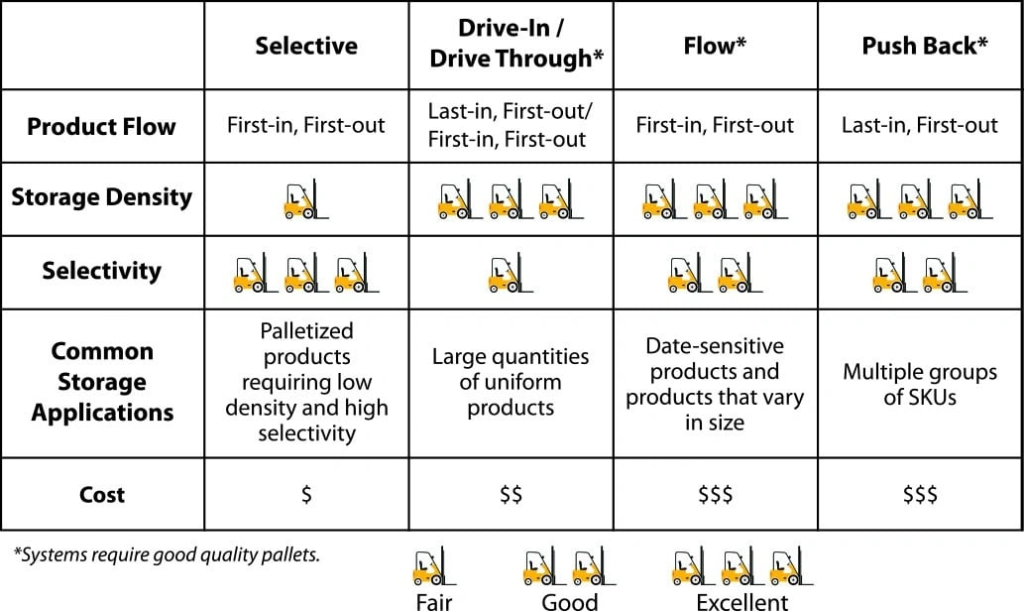
Selective pallet racking: $55–$200 per position
Selective pallet racking stands as the most popular warehouse storage solution because it lets you access every pallet position. You can reach all stored items directly without moving other pallets. This system gives you the most affordable starting point, with costs ranging from $55 to $200 per pallet position.
A basic selective system costs between $50 and $75 per pallet position. You’ll pay more for extras:
- Cross bars: $12–$16 per position
- Wire decking: $15–$21 per position
- Upright protectors: $20–$30 each
- End-of-aisle protectors: $105–$125 each
Selective pallet racking works best in warehouses that handle diverse inventory and must access individual pallets often. These systems excel at managing high SKU variety with 100% product accessibility.
Drive-in and pushback racking: $115–$450 per position
Drive-in and pushback systems pack more storage into your space than selective racking, though you’ll sacrifice some accessibility. Drive-in racking lets forklifts enter the rack structure directly, making it perfect for storing large amounts of similar products. Drive-in systems cost between $115 and $140 per pallet position, with prices changing based on depth:
- 2-pallets deep: $121–$135 per position
- 3-pallets deep: $118–$132 per position
- 4-pallets deep: $115–$129 per position
Pushback racking uses rails and carts that move pallets forward automatically when you remove front pallets. This system costs $150 to $450 per position, with deeper configurations costing more:
- 2-pallets deep: $151–$181 per position
- 3-pallets deep: $176–$216 per position
- 4-pallets deep: $210–$250 per position
- 5-pallets deep: $243–$273 per position
These space-saving solutions work well for last-in, first-out (LIFO) inventory management. Pushback systems offer better selectivity than drive-in racks while keeping excellent storage density.
Pallet flow and mobile racking: $200–$600 per position
Pallet flow and mobile racking systems serve as premium options for operations that must maximize space efficiency. Pallet flow racks use gravity to move pallets from loading to picking positions, which helps rotate products efficiently. These systems cost between $200 and $450 per pallet position.
Mobile racking sits on motorized bases that create access aisles only when needed, offering the highest possible storage density. This advanced technology costs between $200 and $600 per position. You can increase storage capacity by up to 50% compared to selective racking in the same space.
Both systems cost more upfront but deliver great long-term value where space optimization matters most. Pallet flow systems shine in first-in, first-out (FIFO) operations with high throughput.
Structural vs roll-formed racking systems
Your choice of construction method affects both price and performance. Roll-formed systems use cold-rolled steel with teardrop connections, which makes installation faster and costs less. These racks cost 30-40% less than structural alternatives.
Structural racking uses hot-rolled steel with bolted connections for better durability and load capacity. These systems work best in challenging environments:
- Food storage applications (easier wash-down)
- Freezer facilities (better thermal stress resistance)
- High-impact zones with frequent forklift traffic
Industry data shows structural racks take 66% longer to install but last longer in tough conditions. Your choice between these systems should depend on operational requirements rather than just cost.
Smart warehouse planning looks at both immediate costs and long-term benefits to get the best return on investment throughout the storage system’s life.
Installation Labor and Project Management Costs
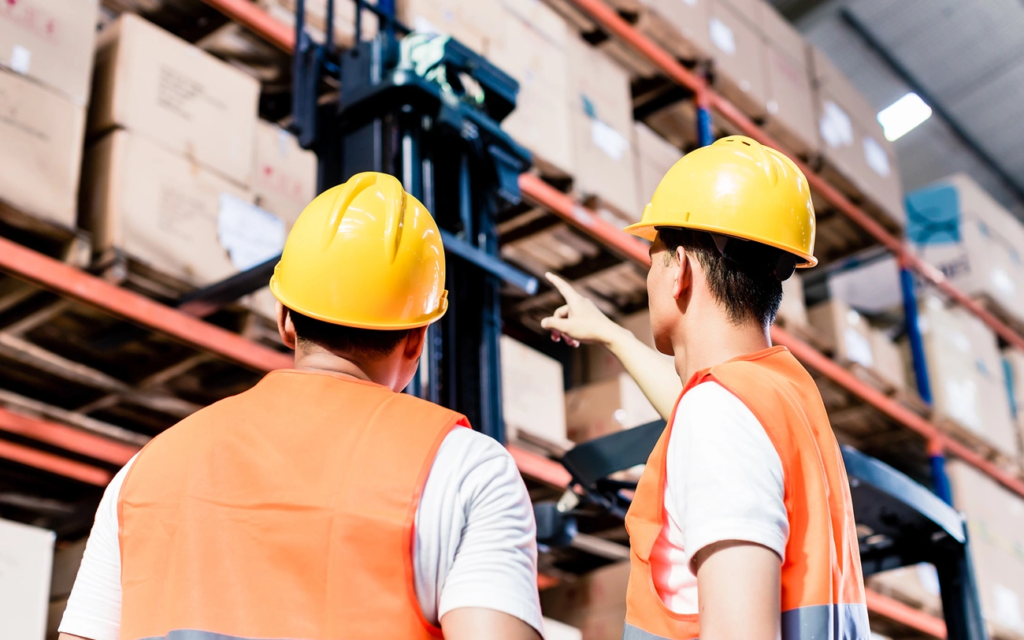
Labor makes up a big part of any rack installation project. It adds 15-35% to the total equipment costs. Professional installation will ensure safety compliance and proper load distribution throughout the racking system. Warehouse managers need to understand these costs to budget well and avoid surprises.
Labor cost per pallet position by region
Location plays a key role in installation labor rates. North American workers cost between $50.00 and $100.00 per hour. Southeast Asian installations cost nowhere near as much. Labor costs run higher in urban areas compared to rural locations.
Professional installers usually charge in two ways:
- Per upright frame: $40.00-$70.00
- Per pallet position: $5.00-$10.00
Rates vary by a lot in different markets:
- Small warehouses under 1,000 square meters: $30.00-$50.00 per pallet position
- Large distribution centers over 5,000 square meters: $70.00-$120.00 per pallet position
- European installations: Higher rates due to strict safety rules
Labor typically makes up 10-20% of the total project cost. Skilled labor might cost more upfront, but investing in experienced installers pays off through faster completion and fewer issues later.
Factors that affect installation time
Installation timelines directly affect labor costs. Several factors determine how long a rack installation takes:
System complexity makes a big difference. Selective racking goes up faster than specialized systems like pallet flow or mobile racking that need precise alignment. Complex systems often cost 20-40% more in labor.
Getting a facility ready can add time. Floor leveling, anchoring specs, and removing existing infrastructure might add days to schedules. Ceiling height and floor condition also affect installation speed.
Getting permits can slow things down, especially for systems taller than 5 feet 9 inches or facilities storing hazardous materials. Buildings in earthquake-prone regions need extra engineering calculations and reinforcement, which takes more time to plan and install.
Experience makes a huge difference. Specialized teams finish projects 30-40% faster than general contractors who aren’t familiar with racking systems. A standard warehouse racking installation takes 1-3 weeks depending on these factors.
How project size impacts labor costs
The size of your project shapes installation costs. Small projects under 2,000 square feet might take only 1-2 days. Large distribution centers of 50,000 square feet can take weeks to complete.
Project length ties directly to labor expenses. A one-week project costs less than a one-month build. With North American workers charging $50-$100 per hour, longer timelines can really add up.
Project management becomes more valuable as projects grow. Good project managers get at least three quotes for each product and service. This approach helps balance cost, quality, and timeline needs.
Hiring professional project managers might seem like an extra cost, but they often save money by preventing mistakes and keeping operations running smoothly. They also maintain relationships with vendors that can lead to good discounts.
Large installations need proper planning and execution. This prevents costly downtime that could wipe out any savings from cheaper installation options.
Hidden Costs You Shouldn’t Overlook
Rack installation projects come with obvious costs like materials and labor, but businesses often face unexpected expenses that can blow their budgets. These hidden costs catch many warehouse managers off guard during their original planning. A clear understanding of these additional expenses helps create better financial forecasts.
Permit and compliance fees
You’ll need permits from local authorities before starting rack installation, especially if your system goes above certain heights. The permit fees vary significantly based on your location:
- Major metropolitan areas: $500-$2,500 per permit application
- Rural locations: $200-$800 per application
The compliance requirements go beyond simple construction permits. Local jurisdictions often need professional engineer-stamped drawings for racking systems, which adds $1,500-$5,000 to your costs. Building inspections after installation can cost $300-$1,000 more, depending on the project size.
Delayed permit approvals can stretch project timelines and raise storage expenses during transitions. Smart warehouse managers set aside extra budget and time to handle these regulatory requirements.
Freight and equipment handling
Transportation costs often surprise project managers and make up 8-15% of total equipment expenses. Cross-country deliveries cost even more.
The freight charges include several extra costs:
- Lift gate services: $75-$150 per delivery
- Inside delivery requirements: $100-$250 additional
- Limited access locations: $50-$150 surcharge
- Rush shipping: 25-40% premium over standard rates
Equipment handling creates additional challenges once deliveries arrive. Facilities without proper unloading equipment need to rent forklifts or other material handling machines. Daily rental rates run $250-$500, plus $100-$300 delivery fees for each piece of equipment.
Seismic and fire safety requirements
Buildings in earthquake-prone areas face high extra costs for seismic compliance. The requirements change by zone, but usually include:
- Enhanced anchoring systems: $15-$30 per upright frame
- Heavier gauge components: 15-25% material premium
- Row spacers and additional bracing: $20-$50 per bay
- Specialized engineering analysis: $2,000-$8,000 per project
Fire safety adds another layer of costs. New rack installations often require sprinkler system modifications, particularly for high-pile storage. These changes typically cost $5-$15 per square foot of affected area.
Many project managers overlook in-rack sprinkler systems in their budgets. These become mandatory when storage heights exceed local fire code limits, adding $75-$150 per affected pallet position.
A realistic budget must include these often-missed expenses. Leaving out these hidden costs can turn what seems like an affordable rack installation into a financial nightmare.
Cost-Saving Strategies for Your Warehouse
Smart warehouse managers know that saving money on warehouse racking isn’t just about finding the lowest price. The right investment strategy comes from careful planning and smart decisions about storage infrastructure.
Using a warehouse racking cost estimator
Poor racking planning causes warehouses to lose 25-40% of their potential storage space. Professional racking calculators give estimates that come within 10-15% of final engineered layouts. These tools help warehouse managers input their rack configuration details and account for key factors like:
- Racking type and dimensions
- Aisle widths and forklift requirements
- Pallet dimensions and weight distribution
- Vertical clearance requirements
Digital estimators calculate load per beam based on pallet weight and positions per bay. They also reveal potential density improvements from narrow or very-narrow aisle configurations based on forklift type. This capability lets managers compare different scenarios before making big investments.
Buying used vs new pallet racking
Used pallet racking costs 30-50% less than new systems. This makes it a great choice for budget-conscious projects. Small projects can start around $10,000 with used equipment, which helps operations with tight capital constraints save money.
The quality of inspection determines whether used racking will be a good investment. Reputable dealers should evaluate:
- Structural integrity and weight capacity
- Rust, dents, or deformation
- Compatibility with standard dimensions
- Regulatory compliance
New buyers should know that used teardrop selective racking starts at about $20-$25 per pallet position. Structural selective racking begins around $30-$35 per position.
Combining racking types for efficiency
The best warehouses often use multiple racking systems in one facility. A hybrid approach meets different storage needs – selective racks handle fast-moving products while drive-in or pallet flow racks store bulk items. One case study showed a 38.25% efficiency boost after switching to a hybrid system.
Smart combinations pair selective pallet racks with push-back systems, especially for mixed perishable and non-perishable inventory. Push-back racks work best for non-FIFO inventory, while selective racks excel with items that need frequent rotation.
Planning for future scalability
Smart warehouse design includes growth corridors that add rows without major changes. Some operations start with shorter uprights that they can replace with taller versions as inventory grows.
The best scalable racking systems offer:
- Adjustable beam levels for different pallet heights
- Expandable bays that add storage without system changes
- Compatibility with accessories like wire decking and dividers
Your layout should handle more product variety, changing inventory turnover, seasonal demands, and workflow adjustments. A good balance of current needs and growth plans will keep your rack installation working efficiently for years.
Maximizing ROI from Your Racking Investment
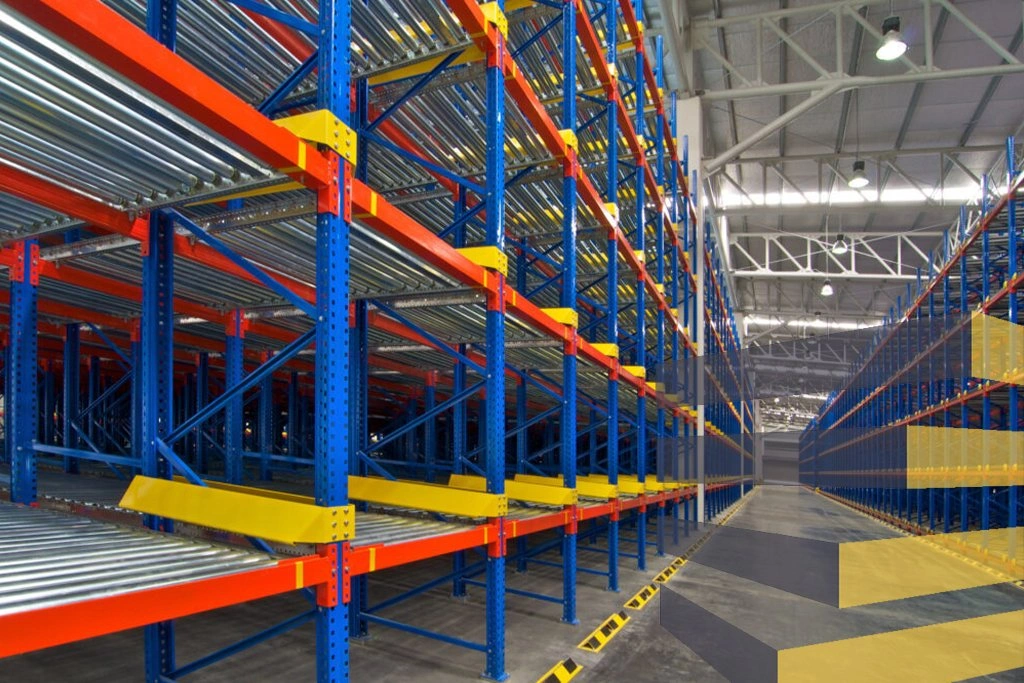
The true ROI for warehouse racking goes beyond the original purchase price and includes long-term operational benefits. Well-designed rack systems generate financial returns through several efficiency improvements.
How racking improves space utilization
Smart racking systems boost storage capacity without needing extra floor space. Warehouses can double or triple their storage capacity by using vertical space efficiently, eliminating the need for facility expansion. Modern narrow-aisle setups with the right lift equipment boost storage density by up to 50% compared to standard racking systems. Drive-in racking allows forklifts direct system access, which creates up to 75% more pallet storage space than selective racking.
Reducing labor costs through better layout
The right rack setup makes a big difference in worker productivity. A mere 10% cut in picking time saves thousands of pounds each year in labor costs. Workers who travel shorter distances to pick items deliver measurable financial benefits. Teams that use batch picking, zone picking, or wave picking methods see a significant drop in travel time and labor expenses.
Maintenance and inspection best practices
Safety, compliance, and investment protection depend on regular rack inspections. Usage patterns determine inspection frequency, which ranges from monthly to yearly. Quick fixes prevent small problems from becoming major repairs. Here’s what good maintenance looks like:
- Keep systems clean from dust and corrosive substances
- Check welds, connections, and load-bearing parts
- Monitor all load positions to prevent overloading
- Check column anchoring and alignment regularly
Conclusion
Warehouse rack installation is a major investment for businesses, but smart planning creates operational benefits that go beyond the original costs. Storage evaluation is the most important first step before choosing any racking system. Warehouse managers should look at all options and think over both current needs and room for growth.
The price gap tells an interesting story. Simple selective pallet racking costs $50-75 per position, while specialized pallet flow systems run $200-450 per position. This shows why matching storage solutions to your inventory profile matters so much. Labor costs add another 15-35% to equipment expenses, making professional installation a vital budget item rather than an optional extra.
Unexpected costs often catch warehouse planners off guard. Permit fees, freight charges, seismic requirements, and fire safety changes can turn an affordable project into a budget nightmare. A complete plan must include these overlooked costs from day one.
Smart warehouse managers have ways to save money. Used racking systems cost 30-50% less than new equipment. Hybrid installations that mix different rack types are a great way to get the most storage space while optimizing operations. Note that well-designed systems pay for themselves through better space use and lower labor costs.
Racking systems are the foundations of warehouse success. Companies need to weigh upfront costs against future benefits while meeting safety standards during installation. The right rack setup changes warehouse operations completely. It creates competitive edges through better inventory control, faster fulfillment, and maximum storage space. With proper planning and maintenance, warehouse racking’s value goes way beyond the reach of its installation price.
Key Takeaways
Understanding warehouse rack installation costs is crucial for effective budget planning, with prices varying dramatically based on system type and complexity.
• Selective pallet racking costs $55-$200 per position while specialized systems like pallet flow can reach $200-$600 per position, making system selection critical for budget control.
• Installation labor adds 15-35% to equipment costs, with professional installation required for safety compliance and proper load distribution in most jurisdictions.
• Hidden costs including permits, freight, and seismic requirements can add thousands to projects, making comprehensive planning essential to avoid budget overruns.
• Used racking systems offer 30-50% savings compared to new equipment, providing cost-effective solutions for budget-conscious warehouse operations.
• Strategic planning with hybrid systems and scalability considerations maximizes ROI through improved space utilization and reduced long-term operational costs.
Proper warehouse racking investment requires balancing immediate costs against long-term operational benefits. Well-designed systems can double storage capacity while reducing labor costs through improved layout efficiency. The key to success lies in comprehensive planning that accounts for all expenses—from equipment and installation to permits and compliance—while considering future growth needs and maintenance requirements.
FAQs
Q1. What is the typical cost range for installing warehouse racking? The cost of warehouse racking installation can vary widely, typically ranging from $55 to $600 per pallet position. Selective pallet racking, the most common type, usually costs between $55 and $200 per position, while more specialized systems like pallet flow racking can cost up to $600 per position.
Q2. How much does labor contribute to the overall cost of rack installation? Labor costs typically add 15-35% to the total equipment costs for rack installation. Professional installation is crucial for safety compliance and proper load distribution. Labor rates can vary by region, with North American rates ranging from $50 to $100 per hour per worker.
Q3. Are there hidden costs to consider when planning a warehouse racking project? Yes, several hidden costs can significantly impact the budget. These include permit and compliance fees, freight and equipment handling charges, and expenses related to seismic and fire safety requirements. For instance, permit fees can range from $200 to $2,500 depending on the location and project size.
Q4. Can buying used pallet racking save money? Used pallet racking can offer substantial savings, typically costing 30-50% less than new systems. However, it’s crucial to inspect used racking thoroughly for structural integrity, compatibility, and regulatory compliance before purchasing.
Q5. How can warehouses maximize their return on investment from racking systems? Warehouses can maximize ROI by improving space utilization, reducing labor costs through better layout design, and implementing regular maintenance and inspection practices. Effective racking systems can double or triple storage capacity without facility expansion and can reduce picking time by 10% or more, translating to significant cost savings.