
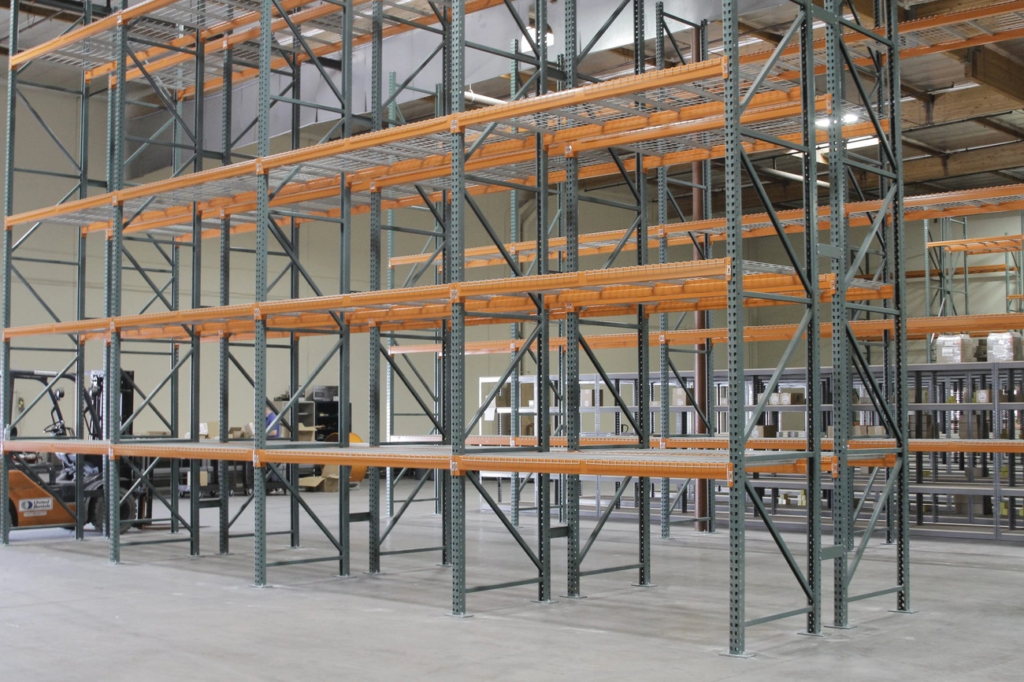
Racking systems serve as the backbone of warehouse storage operations and provide smart ways to maximize space and manage inventory effectively. These metal structures help businesses make the most of vertical space in warehouses and industrial facilities. The available options range from selective pallet racking with complete access to stored loads to mobile systems that slide on tracks to save warehouse space. Modern racking systems come in many types to meet different storage needs.
The industrial storage sector has changed by a lot over time. What started as simple adjustable pallet racking has now evolved into flexible and adaptable systems. These systems fall into three main categories: pallet racks, picking shelves, and specialized racking solutions. Selective pallet racking remains the most popular choice for warehouse storage. Other options,l ike pallet flow rackin,g use gravity to automate stock rotation and follow a first-in, first-out principle. This piece explores warehouse racking system types, their parts, and helps you pick the right solution for your operational needs.
Core Components of Racking Systems in Warehouses
Warehouse racking systems work through the smooth integration of several structural components. Each component plays a vital role in creating a reliable storage framework. Warehouse managers can make better decisions about the most suitable racking systems by understanding these core components.
Upright Frames and Beam Configurations
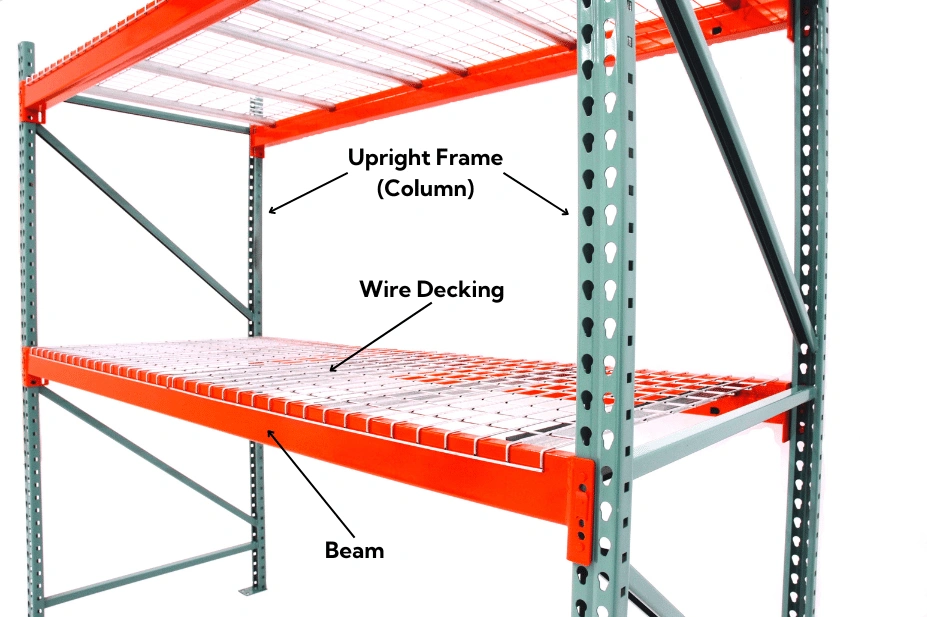
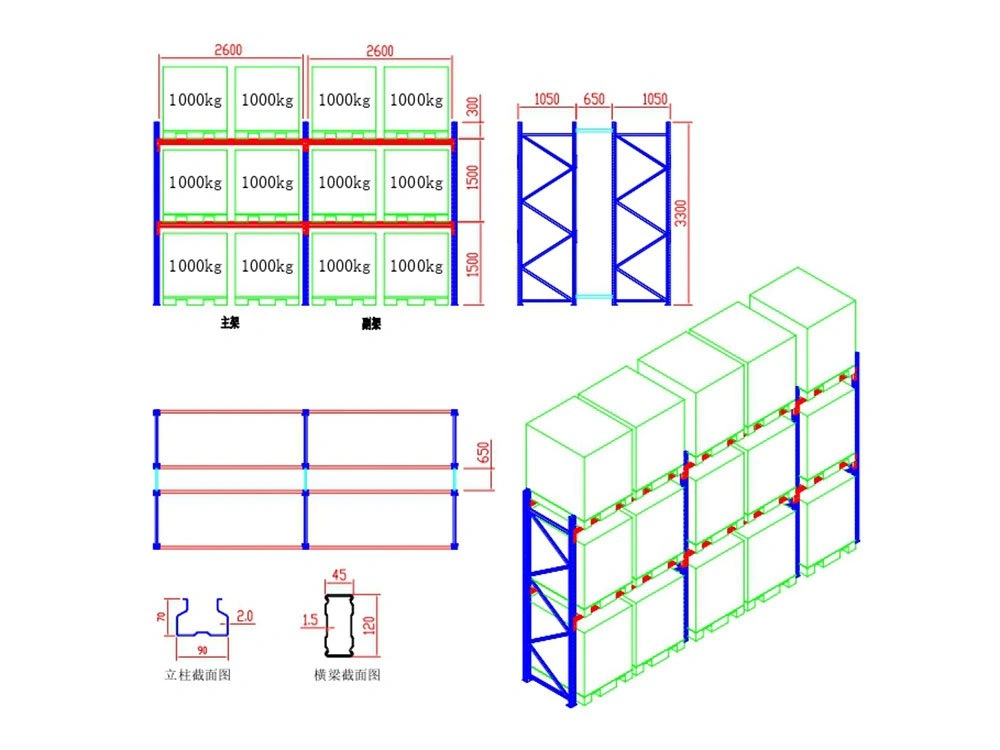
The backbone of any warehouse racking system starts with upright frames. These vertical structures create the skeleton of the storage solution. Two or more perforated uprights connect through lattice work to support loading levels. High-strength steel uprights provide primary support and connect to horizontal beams through precise connections.
Each upright frame has these key elements:
- Columns (vertical posts determining height and strength)
- Bracing (horizontal and diagonal supports enhancing stability)
- Baseplates (securing uprights to the warehouse floor)
- Punch hole styles (determining beam compatibility)
Beams are another vital component that serve as horizontal metal profiles attached to the frames. These load-bearing members send weight to the rack columns and come in different configurations. Step beams support crossbars and mesh decks while box beams work with wire mesh and safety bars. Beam-to-upright connections happen through connectors that fit into drill holes, creating a very strong joint system.
Wire Decking and Safety Accessories
Wire decking and safety accessories make racking systems more functional and safer. Heavy-duty waterfall wire decking uses support channels with a 2-½-inch by 4-inch 6-gage wire mesh that stops pallets from falling. Wire decking helps air move better, reduces dust build-up, and lets overhead sprinklers work better. Many local fire codes now require wire decking instead of particle board or plywood.
Safety accessories reinforce warehouse racking protection:
- Fall protection netting (stopping goods from falling)
- Protectors (end aisle protectors, upright and frame protectors)
- Locking devices (keeping beams from coming loose)
Row spacers are needed when installing pallet rack sections back-to-back. These spacers keep rows straight and create more support surface area for each section.
Load Capacity and Structural Integrity
Safety and operational efficiency depend on proper load capacity. Several factors affect a rack system’s structural integrity. Thicker steel in beam size and gage offers better durability. Deeper upright frames hold heavier loads, and reinforced columns increase weight tolerance.
Beam deflection shows how well the structure holds up under pressure. RMI (Rack Manufacturers Institute) standards state that allowable beam deflection equals the beam length divided by 180. A 96-inch beam would have an allowable deflection of about 0.53 inches. Any measurement above this makes the system unsafe.
The space between beam levels, called the unsupported span, affects load-bearing capacity by a lot. More distance means more unsupported space, which reduces the frame’s overall capacity. Warehouse managers should plan both vertical spacing and horizontal beam length carefully when setting up their racking systems.
Regular safety checks help maintain structural integrity. Professionals should look for stress signs like bowed beams, deformed uprights, or shifted anchors to prevent system failure.
Types of Pallet Racking Systems Explained
Let’s take a closer look at warehouse storage options and the various pallet racking systems that meet specific operational needs. Each system provides unique benefits that match different inventory management strategies and space requirements.
Selective Pallet Racking for 100% SKU Access
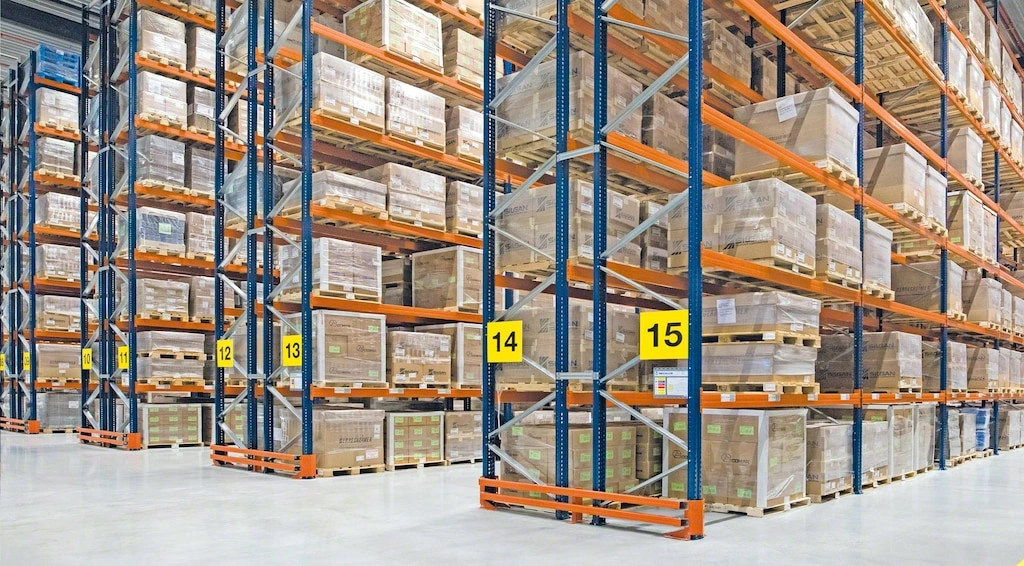
Selective pallet racking is the most popular warehouse storage solution because it’s cost-effective and has customizable configurations. The system gives direct access to every pallet and complete selectivity—a vital advantage for warehouses that manage many product lines. You can store pallets at different heights while maintaining 100% accessibility to all loads. The simple design offers great versatility with adjustable shelf heights that fit different pallet sizes. This system has been around since the 1950s, but its main limitation is lower storage density compared to other racking methods. You’ll need more aisles for forklift access.
Double Deep Racking with Reach Truck Requirements
Double deep racking boosts storage capacity by placing two rows of racks next to each other. This doubles the storage density compared to selective systems. You’ll need specialized equipment—usually double deep reach trucks with extendable pantographs—to access the rear pallets. The system works on a Last-In, First-Out (LIFO) inventory approach and works best for storing uniform items with predictable demand cycles. The setup is straightforward, but you’ll trade off selectivity (50%) for increased storage capacity.
Drive-In and Drive-Through Racking for High-Density Storage
Drive-in and drive-through racking systems maximize storage density by removing aisles between racks. Forklifts enter the rack structure through a single entry/exit point in drive-in configurations, following a LIFO inventory method. Drive-through systems have two access points—one for loading and another for unloading. This enables First-In, First-Out (FIFO) inventory management. These systems excel at storing similar products with limited SKUs, especially in cold storage facilities where space optimization affects cooling costs directly.
Push-Back Racking with LIFO Inventory Flow
Push-back racking combines high-density storage with moderate selectivity through a clever design of inclined rails with nested carts. The forklift gently pushes existing inventory deeper into the system when loading new pallets. Each pallet sits on its own cart. The rear pallets move forward automatically through gravity during retrieval. The system typically holds 2-6 pallets deep and provides 100% lane selectivity while needing fewer aisles. Push-back systems cost more than selective racking but reduce forklift damage since trucks stay out of the rack structure.
Pallet Flow Racking Using Gravity Rollers
Pallet flow racking uses gravity-powered roller tracks that move pallets automatically from the loading end to the picking face. This FIFO system has separate loading and retrieval sides, making it perfect for time-sensitive inventory like perishable goods. The sloped roller beds help rotate inventory efficiently and reduce labor needs. Pallet flow systems cost more but deliver excellent benefits for high-turnover products, particularly in cold storage applications where space optimization matters most.
Mobile Racking on Motorized Bases
Mobile racking is an innovative solution that mounts entire rack structures on motorized bases moving sideways along floor-embedded rails. The system removes fixed aisles between racks and creates a single movable aisle that opens only when needed. This technology increases storage capacity by 80-120% more than conventional racking while maintaining direct access to all items. Mobile racking works especially well in cold storage facilities by reducing the volume that needs temperature control, which lowers energy costs.
Picking and Light Load Racking Solutions
Warehouses need more than just pallet storage. They also need special solutions to handle smaller items and manual picking operations. Light load systems help boost access and efficiency when staff handle individual items instead of full pallets.
Longspan Shelving for Manual Item Access
Longspan shelving is a strong, versatile storage option that works great for medium and bulky items that need direct manual access. You can adjust shelf heights in 25mm increments. Each level can hold up to 275kg, which makes longspan shelving adaptable to what your warehouse needs. The simple assembly needs minimal tools – you’ll just need adjustable spanners and a rubber mallet.
These shelves work best in areas with non-palletized goods like retail stockrooms, manufacturing facilities, and tool storage areas. The modular design lets you add features like dividers and suspension filing sets to help organize documents.
Carton Flow Racks with Inclined Roller Beds
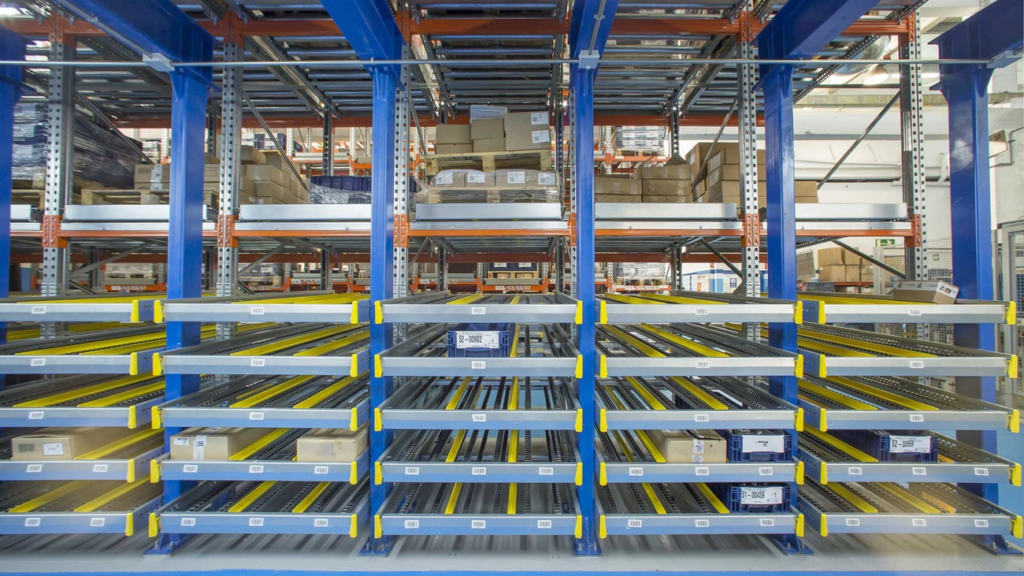
Carton flow rack systems use inclined roller tracks so cartons can glide from loading to picking aisles. This gravity-powered system gives you First-In/First-Out (FIFO) inventory management, which is perfect for time-sensitive products.
These racks can cut storage space needs by up to 60% and use about 22% less floor space than standard solutions. The benefits are clear:
- Loading and picking aisles are separate for simultaneous work
- Inventory rotates automatically to prevent product expiration
- Labor costs drop by up to 75% compared to static storage
Multi-Tier Racking for Vertical Space Utilization
Multi-tier racking makes the most of vertical warehouse space by creating multiple aisle levels for manual loading. Staff can access these through stairs or elevators. Your storage capacity can double or triple without expanding the facility.
The design gives direct access to all unit loads and lets workers pick from several levels at once, which improves efficiency. Warehouses with limited floor space but high ceilings will find multi-tier systems perfect for spare parts, pharmaceuticals, document archives, and e-commerce fulfillment.
AR Light Shelving for Office and Light Industrial Use
AR light shelving systems are a great fit for manual storage in office and light industrial settings. These units combine strength with easy access, making them ideal for document archives, small parts storage, and retail needs.
The M3 light-duty racking systems are adaptable thanks to their wide range of parts and accessories that work with different loads – from small parts and boxes to packages and documents. Quality materials make these systems reliable and long-lasting, yet they remain easy to install and reconfigure as your storage needs change.
Choosing the Right Racking System for Your Warehouse
Your warehouse operation’s daily functionality, storage capacity, and operational costs depend on four critical factors that help you choose the right racking system.
SKU Variety and Inventory Turnover Rate
Your inventory characteristics are the foundations of racking requirements. Operations with high SKU variety and quick turnover need flexible storage solutions. Slow-moving items that aren’t properly placed often take up valuable space unnecessarily. Selective pallet racking works best for operations with high turnover rates and diverse SKU counts, as it lets you access each pallet position quickly.
The best way to boost efficiency is to arrange warehouse zones based on how quickly products move. Items that move fast should be placed near storage and retrieval areas to reduce travel distances. This smart placement keeps warehouse travel routes shorter and lets staff access frequently needed inventory quickly.
Warehouse Layout and Ceiling Height
Your facility’s physical dimensions play a crucial role in racking selection. Today’s warehouses have clear heights of 32-36 feet, with some reaching 40 feet or more—quite a jump from the 16-foot average in the 1970s. This upward expansion brings challenges that require careful planning to ensure structural stability and safety compliance.
To evaluate vertical storage potential, you’ll need to add up the pallet height, load dimensions, beam height, and required clearance between loads and sprinkler systems. Higher racking systems need extra reinforcement beyond standard setups to stay stable and meet regulations.
Forklift Compatibility and Aisle Width
The type of material handling equipment you use determines your racking configuration. Different forklifts need specific minimum aisle widths: standard counterbalanced forklifts work best with 12 feet, reach trucks need 9-11 feet, and specialized very narrow aisle trucks can work in just 5-6 feet.
The quickest way to find minimum aisle width requirements is to add forklift head length + load length + 12 inches clearance. This simple math helps avoid setting aisles too narrow for smooth operation or too wide, which wastes valuable space.
Budget Constraints and Long-Term ROI
While initial costs matter, looking at long-term return on investment gives you a better picture. You can calculate financial benefits using the standard ROI formula—(Total Net Benefit/Total Cost)×100. Another option is to find the payback period by dividing total cost by annual savings.
Returns typically come from increased storage capacity without expanding facilities, faster handling times, fewer damaged products, and improved staff efficiency. Buying second-hand racking from reliable suppliers can boost ROI substantially, saving up to 60% while giving you the same performance when properly inspected and certified.
Use Cases and Industry-Specific Applications
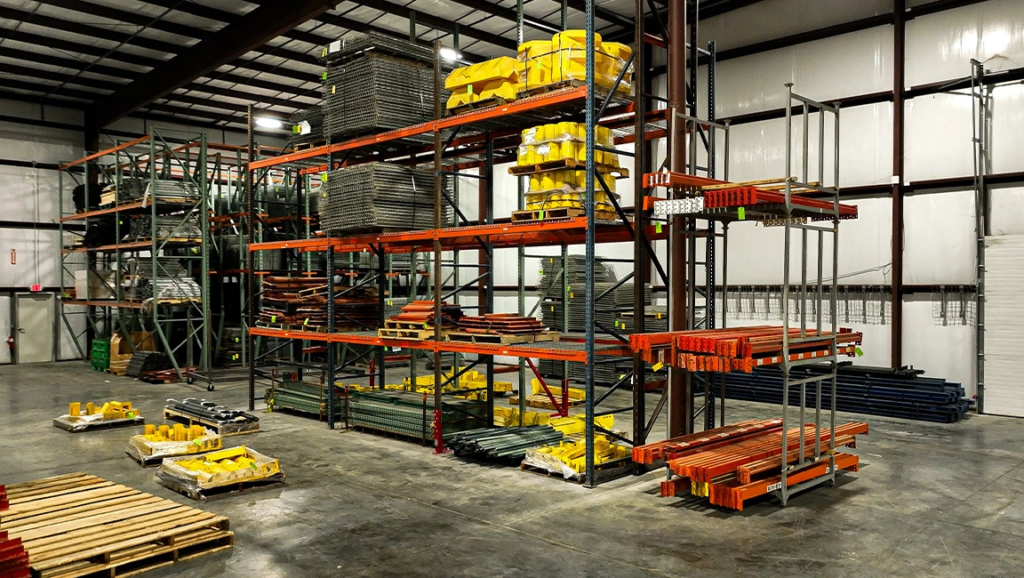
Different industries use various warehouse racking types to solve their unique storage challenges. This approach will give a perfect balance of operational efficiency in a variety of business settings.
Cold Storage Facilities with Mobile Racking
Cold storage operations use mobile racking systems to minimize temperature-controlled volume and cut down energy costs. These facilities can increase their storage capacity by up to 85% in existing floor spaces. The space-saving design works great for frozen foods, pharmaceuticals, and temperature-sensitive products at temperatures as low as -30°C. Motorized bases support mobile racks that eliminate fixed aisles and create a single movable access point when needed.
Retail Warehouses Using Selective Racks
Retail operations prefer selective racking systems because of their flexibility. These setups give 100% pallet accessibility, simple inventory management, and easy reconfiguration options for changing SKU profiles. Retail warehouses save on capital investment costs and can use standard material handling equipment.
Automotive Parts Storage with Cantilever Racks
Automotive facilities use cantilever racking to store specialized components like prop shafts, fenders, cables, and trims. These systems have no front columns, which allows clear access from the front and storage of parts with widely different sizes. Cantilever arms can hold up to 1000 kg, making them perfect for non-standard automotive parts.
E-commerce Fulfillment with Carton Flow Systems
E-commerce operations use carton flow racks to boost order picking speed. High-volume operations can increase throughput by up to 150% with these gravity-driven systems. The First-In/First-Out inventory rotation keeps products organized as stock moves in and orders go out. Carton flow systems work best for online retail fulfillment’s high-volume case-pick and piece-pick operations.
Conclusion
Modern storage facilities rely on warehouse racking systems as a vital part of their infrastructure. These systems turn vertical space into valuable real estate and help manage inventory better. Different racking types work best for different needs. Selective pallet racking lets you access all SKUs easily. High-density systems like drive-in racks make the most of limited spaces. Push-back and pallet flow solutions use gravity to streamline processes, but they need careful planning to work well.
Some industries need special solutions. Mobile racking systems help cold storage facilities cut energy costs. Carton flow racks speed up picking for e-commerce businesses. Warehouse managers just need to balance several key factors to pick the right system. These include SKU variety, how fast inventory moves, warehouse size, equipment compatibility, and budget limits. A good look at these elements helps managers choose systems that work well long-term instead of just fixing immediate problems.
Safety comes first when choosing and setting up these systems. Wire decking, protectors, and regular checks keep the structure sound and prevent accidents. The best warehouses often use different racking types in different areas. This mixed approach handles various inventory needs better.
A full picture of operation patterns and growth plans shows the best storage solution. Expert help is a great way to get the most from racking systems. Specialists spot ways to use space better while following regulations. Many facilities improve efficiency and capacity without expanding, just by making smart racking choices.
Technology and changing business needs reshape the scene of warehouse racking. Smart organizations keep checking their storage setup to stay competitive in tough markets. The right racking system changes more than just storage – it improves how the whole supply chain works.
Key Takeaways
Understanding warehouse racking systems is essential for optimizing storage capacity, operational efficiency, and long-term ROI in modern facilities.
• Selective pallet racking offers 100% SKU accessibility making it ideal for diverse inventory with high turnover rates and frequent picking operations.
• High-density systems like drive-in and mobile racking can increase storage capacity by 80-120% without facility expansion, perfect for homogeneous products.
• Match racking type to your specific needs: Consider SKU variety, inventory turnover, ceiling height, forklift compatibility, and budget constraints before selecting.
• Gravity-fed systems boost efficiency significantly with carton flow racks increasing throughput up to 150% in high-volume e-commerce operations.
• Safety components are non-negotiable including wire decking, protectors, and regular inspections to maintain structural integrity and prevent accidents.
The most successful warehouses often implement hybrid storage environments, combining multiple racking types across different zones to address varied inventory characteristics and operational requirements. Professional consultation during the selection process helps identify optimization opportunities while ensuring regulatory compliance and maximizing return on investment.
FAQs
Q1. What are the main types of warehouse racking systems? The main types include selective pallet racking, double deep racking, drive-in/drive-through racking, push-back racking, pallet flow racking, and mobile racking. Each type offers different benefits in terms of storage density, accessibility, and inventory management.
Q2. How do I choose the right racking system for my warehouse? Consider factors like SKU variety, inventory turnover rate, warehouse layout and ceiling height, forklift compatibility, aisle width requirements, and budget constraints. Analyze your operational needs and future growth projections to select a system that offers long-term benefits.
Q3. What are the advantages of mobile racking systems? Mobile racking systems can increase storage capacity by 80-120% without facility expansion. They’re particularly beneficial in cold storage facilities, as they reduce the volume requiring temperature control, thus lowering energy costs.
Q4. How can carton flow racks improve e-commerce operations? Carton flow racks can increase throughput by up to 150% in high-volume e-commerce operations. They use gravity-driven systems for efficient order picking and ensure First-In/First-Out inventory rotation, which is ideal for managing time-sensitive products.
Q5. What safety features should be considered in warehouse racking systems? Essential safety features include wire decking to prevent pallet fall-through, protectors for uprights and end-of-aisle guards, locking devices to secure beams, and fall protection netting. Regular safety inspections are crucial to maintain structural integrity and prevent accidents.