
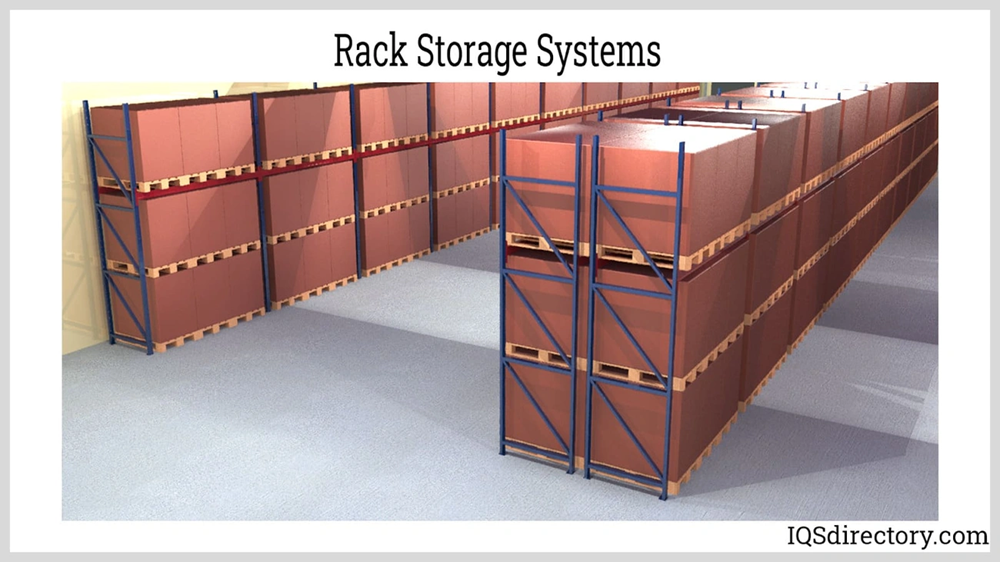
Warehouse rack and shelving systems have a key difference in their basic design and how much weight they can hold. Warehouse racking features complex steel frames and beams that can handle palletized products of 1,000 pounds or more . Shelving works best for lightweight items that workers can reach by hand . Both storage solutions help organize inventory but serve different purposes in warehouse settings.
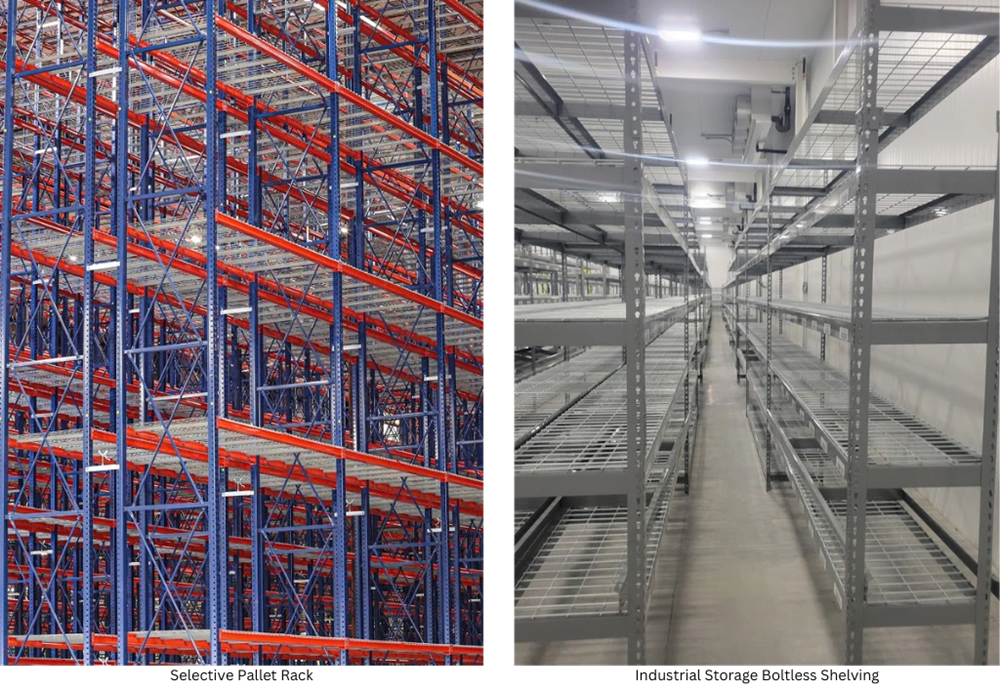
The structure of pallet racking and shelving is nowhere near the same. A standard pallet rack system has vertical uprights and horizontal cross beams . It uses vertical space well to store more items without taking up too much floor space . You can get shelving in two simple models—boltless and bin . Workers can quickly put it together and move it around because the upright-to-shelf connections are straightforward . The difference between rack vs shelf goes beyond looks and affects everything from access to use.
Your choice between racking and shelving systems will affect more than storage space. These systems help manage inventory and streamline operations beyond just storing items . The right choice makes organization better, maximizes space, and improves workflow in any facility . Selective racks work great for quick item retrieval in busy environments. Drive-in systems make the most of space for bulk items . This shows how the shelf vs rack decision needs to line up with your operation’s specific needs and storage requirements.
Structural and Functional Differences
Structural and Functional Differences
Load Capacity: Heavy-duty racks vs lightweight shelves
The biggest difference between warehouse rack systems and shelving lies in their load-bearing capabilities. Rack systems can support palletized products that weigh 1,000 pounds or more. Shelving systems handle much lighter loads – about 50 pounds per square foot. High-capacity boltless shelving can hold up to 1,500 pounds per shelf, but that’s nowhere near what racks can handle.
Accessibility: Forklift access vs manual reach
There’s another reason why racking and shelving systems are so different – how you access them. You can reach items on shelves by hand, which works great when you need to move things often. Racks need forklifts or other machines to get items in and out. This makes sense because shelves are meant for people to use often, while racks store bulk items that don’t move as much. On top of that, it helps to know that shelves are limited by how high people can reach, but racks can go as high as safety allows.
Space Utilization: Vertical stacking vs floor-level access
Both storage options handle space differently. Pallet racking makes the most of vertical space and can reach right up to the warehouse ceiling. This makes racks perfect when floor space is tight, but you have high ceilings. Shelving systems come in different heights, too, but they focus more on being easy to reach than going super high. Modular rack systems are great at building upward, which creates lots of storage space without taking up too much floor area.
Material and Build: Steel frames vs modular panels
The materials used in these systems show another key difference. Rack systems use strong steel frames with heavy-duty beams and uprights that can handle tough industrial conditions. You need to anchor these structures to the floor so they stay stable. Shelving units use lighter materials like metal, wood, or plastic – they’re built to be versatile rather than super tough. Modern modular racking offers something different – it uses pipe-and-joint parts that you can quickly rearrange without welding or complex building. This gives you options that regular fixed shelving just can’t match.
Types of Racking and Shelving Systems
Warehouse storage solutions include many specialized systems that serve different operational needs. Here are the most important rack and shelving types you should know about:
Pallet Racking: Selective, drive-in, push-back, and flow racks
Selective pallet racking stands out as the most popular storage system. It’s affordable and easily configurable with different upright heights and beam sizes. Drive-in racks create dense storage by eliminating aisles, which makes them perfect for spaces with limited room. Push-back racks come with inclined rails and rolling carts that offer high-density storage while keeping aisle access open. Pallet flow systems work with gravity rollers that allow FIFO inventory rotation, making them ideal for perishable goods.
Cantilever Racks: For long and bulky items
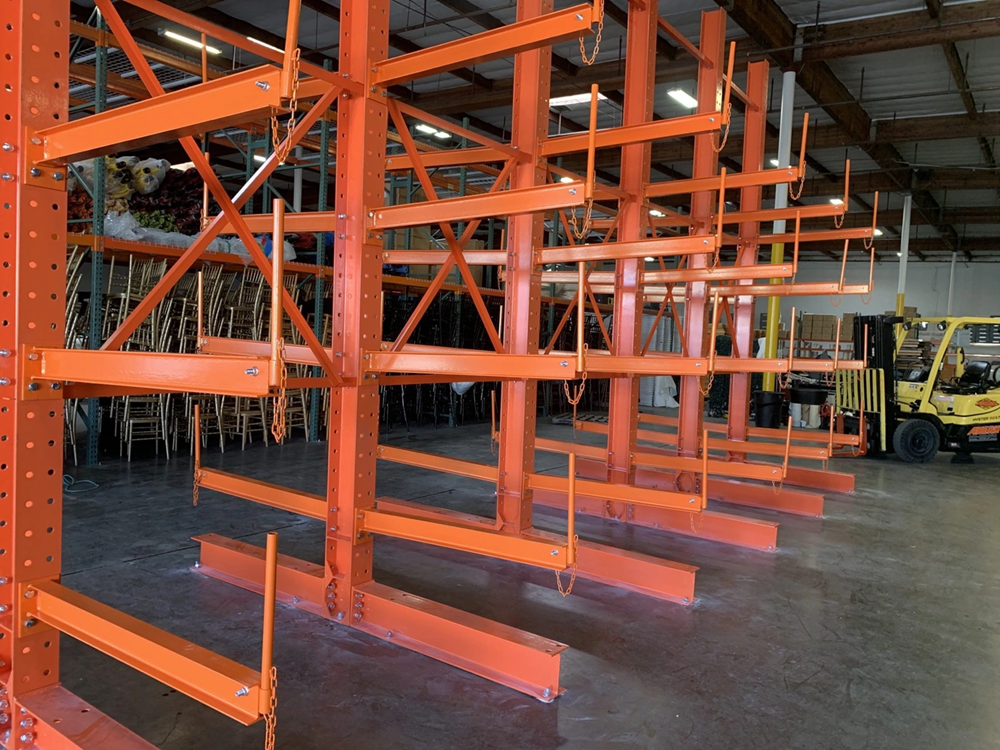
Heavy-duty structural cantilever racks have three main parts: uprights, arms, and brace sets. These racks work best for storing lumber, PVC, steel bars, pipes, and furniture. What makes cantilever racking special is its clear front access – no upright columns get in the way during loading or unloading.
Boltless Shelving: Easy assembly and reconfiguration
This system, also called rivet shelving, needs no nuts or bolts – just a leather mallet puts it together. You can adjust the shelves up or down every 1½ inches, which makes it very adaptable to changing storage needs.
Bin Shelving: Ideal for small parts and tools
Bin shelving systems combine adjustable shelves with removable storage bins in different setups. These systems help organize small components better by offering clear visibility and easy access.
Carton Flow Racks: Efficient for order picking
Carton flow racks make warehouses run better and can cut labor costs by 25%-75% by using gravity as a free power source. Food distribution centers and e-commerce fulfillment operations particularly benefit from these systems for high-volume order picking.
Use Cases and Industry Applications
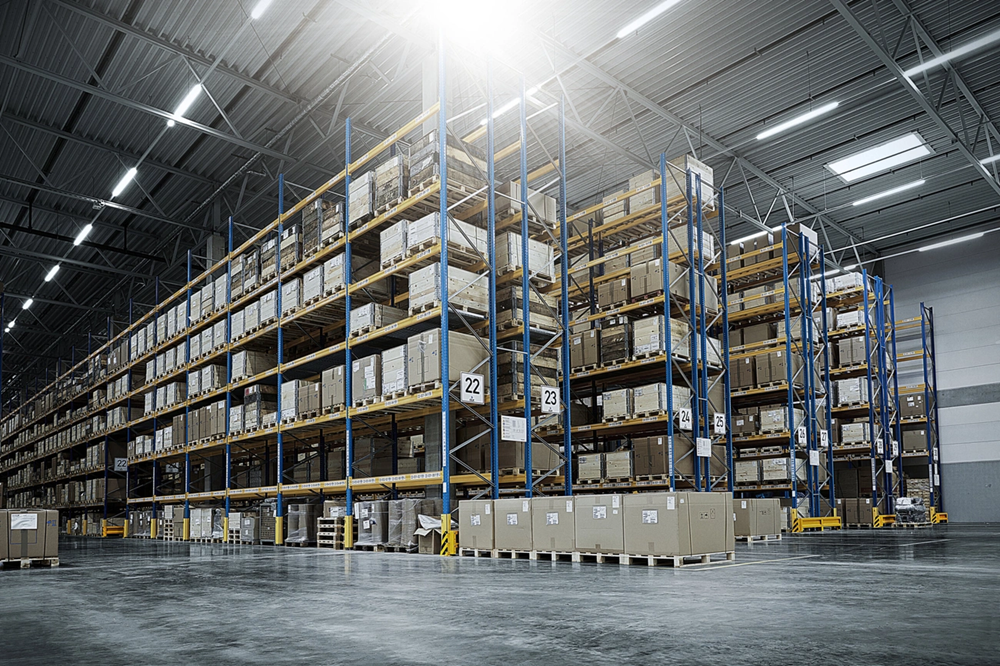
Different industries use storage solutions that match their operational needs. Each sector needs custom systems to handle its unique challenges in inventory management and space usage.
Warehousing and Logistics: High-volume pallet storage
Distribution centers depend on high-density pallet racking to maximize their storage space. These systems can increase usable space by up to 75% in premium locations. The facilities typically use drive-in, push-back, and pallet shuttle systems that work best with large quantities of similar SKUs. Pallet flow racks enable FIFO flows in operations where inventory rotation matters most, which ensures perfect product rotation.
Retail and E-commerce: Quick-pick shelving systems
E-commerce facilities need storage solutions that keep pace with business speed through a mix of selective systems and dynamic solutions. Carton flow racks support FIFO inventory rotation that keeps products available and visible while reducing labor costs by 25%-75%. SpeedCell systems can transform 200 feet of traditional shelving into just 40 feet of efficient storage and cut labor costs by up to 40%.
Pharmaceutical and Electronics: Clean, organized shelving
Pharmaceutical and electronics industries just need cleanroom-compatible storage solutions that prevent contamination. These specialized shelves come with open wire construction that helps air circulation, reduces dust buildup, and allows laminar airflow in controlled environments. Pharmacy shelving systems work with repeatable layouts that use dividers and bin fronts to improve prescription picking routines.
Automotive and Hardware: Mixed-use racking and shelving
Automotive warehousing faces unique challenges with various load types—from bulky vehicle components to small parts. Cantilever racks handle long, irregularly shaped items like exhaust systems and bumpers. Specialized tire racks store tires safely and efficiently. This industry often combines storage systems—selective pallet racking handles heavier components while picking systems manage smaller parts.
Cost, Installation, and Maintenance
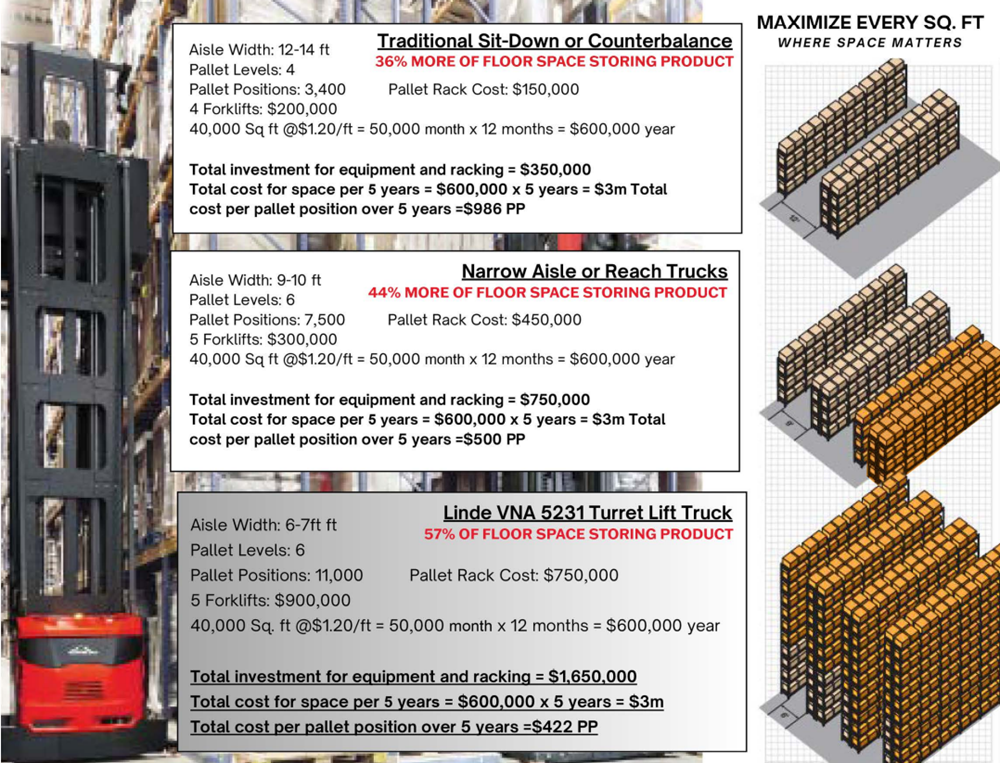
Money plays a significant role when you pick between warehouse storage options. A complete understanding of costs helps businesses look beyond the purchase price to make smart decisions.
Original Investment: Racking vs shelving costs
Industrial shelving is a more affordable option than racking systems. Shelving units need less expensive materials and simpler designs, which cuts down upfront costs. Warehouse racking systems, especially those built for heavy loads, use more substantial materials and complex assembly that drive up costs. Budget limits often shape the final choice—shelving saves money now, while racking delivers better value over time through increased capacity.
Installation Complexity: Anchored vs free-standing systems
These storage solutions are different in how you set them up. Rack systems need floor anchoring with baseplates to stay stable and safe. Shelving units are quick to put together and easy to move around since they use basic connections and usually stand on their own. Wall-mounted options need secure anchoring to hold their weight. You’ll need to think over the wall material and might want professional help for installation.
Maintenance Needs: Durability and safety checks
A periodic inspection plan is a vital part of keeping storage systems running well. Good maintenance has these key parts:
- Warehouse staff should check daily for visible problems
- Supervisors need to inspect all levels monthly
- Independent experts should do detailed yearly inspections
Smart maintenance goes beyond just cleaning. You should spot early signs of damage, check if connections are tight, and make sure loads stay within their limits.
Comparison Table
| Feature | Warehouse Racks | Shelving Systems |
|---|---|---|
| Load Capacity | 1,000+ pounds per level | 50 pounds per square foot (standard) Up to 1,500 pounds per shelf (high-capacity boltless) |
| Accessibility | Requires forklift access Can extend to maximum warehouse height | Manual access Limited by operator’s height |
| Construction Materials | Heavy-duty steel frames and beams Requires floor anchoring | Lighter materials (metal, wood, or plastic) Typically free-standing |
| Installation | Complex installation Must be anchored to floor | Quick assembly Easy to relocate Simple connections |
| Space Utilization | Maximizes vertical space Designed for palletized storage | Prioritizes floor-level access Focus on human ergonomics |
| Main Applications | • Warehousing and logistics • High-volume pallet storage • Bulk item storage | • Retail and e-commerce • Small parts storage • Frequent manual picking operations |
| Original Cost | Higher investment More expensive materials and complex design | More budget-friendly Less expensive materials and simpler design |
| Common Types | • Selective pallet racks • Drive-in racks • Push-back racks • Flow racks | • Boltless shelving • Bin shelving • Carton flow racks |
Conclusion
The choice between warehouse racking and shelving systems comes down to several key factors in your operation. Load capacity makes the biggest difference – racks can handle palletized items over 1,000 pounds, while shelves typically support up to 50 pounds per square foot. These systems also need different access methods. You’ll need forklifts and mechanical help for racks, but shelves let workers grab items by hand.
Each storage solution uses space in its own way. Racks make the most of vertical warehouse space and often reach right up to the ceiling. Shelves, on the other hand, focus on worker comfort and easy access at ground level. The materials used set these options apart too. Racks need heavy-duty steel frames anchored to the floor, while shelves use lighter materials in standalone, modular designs.
Racking systems cost more upfront because they use tougher materials and need complex installation. Their better load capacity and space usage might save you money over time if you handle heavy, palletized goods. Shelves give you quick assembly, easy changes, and lower starting costs.
Different industries put these storage options to work in their own ways. Distribution centers need dense pallet racking, while e-commerce warehouses want quick-pick shelving. Pharmaceutical companies look for cleanroom-ready storage, and auto warehouses often mix racks and shelves together.
The best choice between warehouse racks and shelving really depends on what your business needs – neither option works best for everyone. Your inventory type, how often you pick items, space limits, and budget should shape this choice. The right storage setup works smoothly with your operations and lets you grow and adapt. Both systems can really boost your warehouse’s efficiency, organization, and space use when you pick the right one and take care of it.
Key Takeaways
Understanding the fundamental differences between warehouse racks and shelving systems is crucial for optimizing storage efficiency and operational workflow in any facility.
• Load capacity determines the choice: Warehouse racks handle 1,000+ pounds per level for palletized goods, while shelving manages lighter loads up to 50 pounds per square foot for manual handling.
• Access methods drive operational efficiency: Racks require forklift access and maximize vertical space, while shelving enables direct manual retrieval with ergonomic floor-level access.
• Initial investment varies significantly: Racking systems cost more upfront due to heavy-duty steel construction and complex installation, but shelving offers budget-friendly quick assembly and easy reconfiguration.
• Industry applications guide system selection: Distribution centers need high-density pallet racking, e-commerce requires quick-pick shelving, and specialized industries like pharmaceuticals demand cleanroom-compatible storage solutions.
• Maintenance requirements differ substantially: Racks need floor anchoring and periodic safety inspections, while shelving systems offer simpler maintenance with free-standing modular designs.
The right storage solution depends on your specific operational needs—inventory weight, picking frequency, space constraints, and budget—rather than one system being universally superior.
FAQs
Q1. What are the main differences between warehouse racks and shelving systems? Warehouse racks are designed for heavy-duty storage, supporting palletized items weighing 1,000+ pounds and requiring forklift access. Shelving systems, on the other hand, are suited for lighter loads (typically up to 50 pounds per square foot) and allow for manual access. Racks maximize vertical space, while shelving prioritizes floor-level accessibility and ergonomics.
Q2. How do installation and maintenance requirements differ between racks and shelves? Warehouse racks require complex installation and must be anchored to the floor for stability and safety. They also need regular safety inspections. Shelving systems are generally easier to install, often free-standing, and can be quickly assembled or reconfigured. Maintenance for shelving is typically simpler due to their modular design.
Q3. Which industries benefit most from warehouse racks versus shelving systems? Warehousing and logistics industries often rely on high-volume pallet racking for efficient storage. Retail and e-commerce businesses tend to prefer quick-pick shelving systems for easier manual access. Pharmaceutical and electronics industries may use specialized clean room-compatible shelving, while automotive and hardware sectors often employ a mix of both racks and shelves to accommodate diverse inventory.
Q4. How do costs compare between warehouse racks and shelving systems? Initially, warehouse racking systems generally require a higher investment due to their heavy-duty materials and complex design. Shelving systems are typically more budget-friendly upfront, using less expensive materials and simpler designs. However, the long-term value depends on specific storage needs and space utilization requirements.
Q5. What are some common types of warehouse racks and shelving systems? Common warehouse rack types include selective pallet racks, drive-in racks, push-back racks, and flow racks. Popular shelving systems include boltless shelving, bin shelving, and carton flow racks. Each type is designed for specific storage needs and operational efficiencies, such as high-density storage or efficient order picking.