
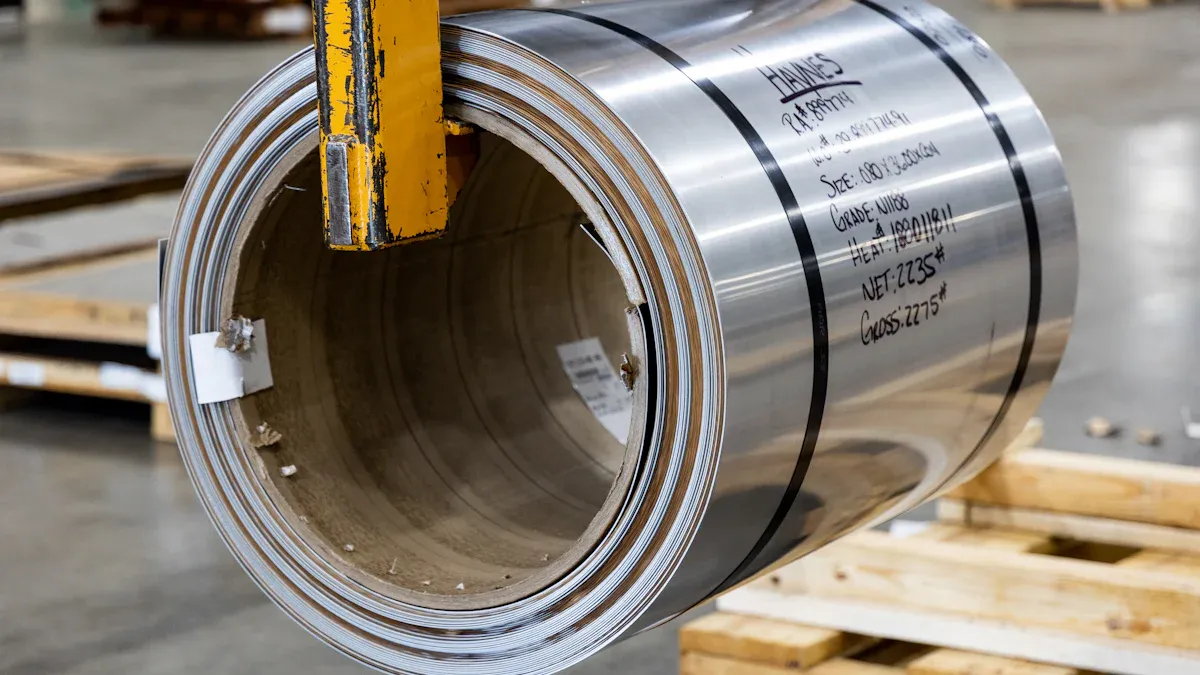
Manufacturers primarily use structural carbon steel for Warehouse Racks. This material often conforms to standards such as ASTM A36 or equivalent international specifications. They select this specific steel for its optimal balance of strength, ductility, and cost-effectiveness. This choice ensures the structural integrity and operational reliability essential for demanding storage environments. It provides a robust and economical foundation for various industrial applications.
Key Takeaways
- Warehouse racks use structural carbon steel like ASTM A36. This steel balances strength, flexibility, and cost.
- Steel grade affects rack performance. It changes how much weight a rack can hold and how long it lasts.
- Yield strength and tensile strength are important. They show how much stress steel can handle before bending or breaking.
- Higher-grade steel allows racks to hold more weight. It also makes them last longer and resist damage.
- Galvanized steel protects racks from rust. It is good for wet places or outdoor use.
- Stainless steel is best for very clean places. It resists chemicals and helps keep things sanitary.
- Always check manufacturer documents. This ensures the steel meets safety rules and quality standards.
- Engineers help choose the right steel. They make sure racks are safe and strong for their purpose.
Understanding Steel Grade Importance for Warehouse Racks
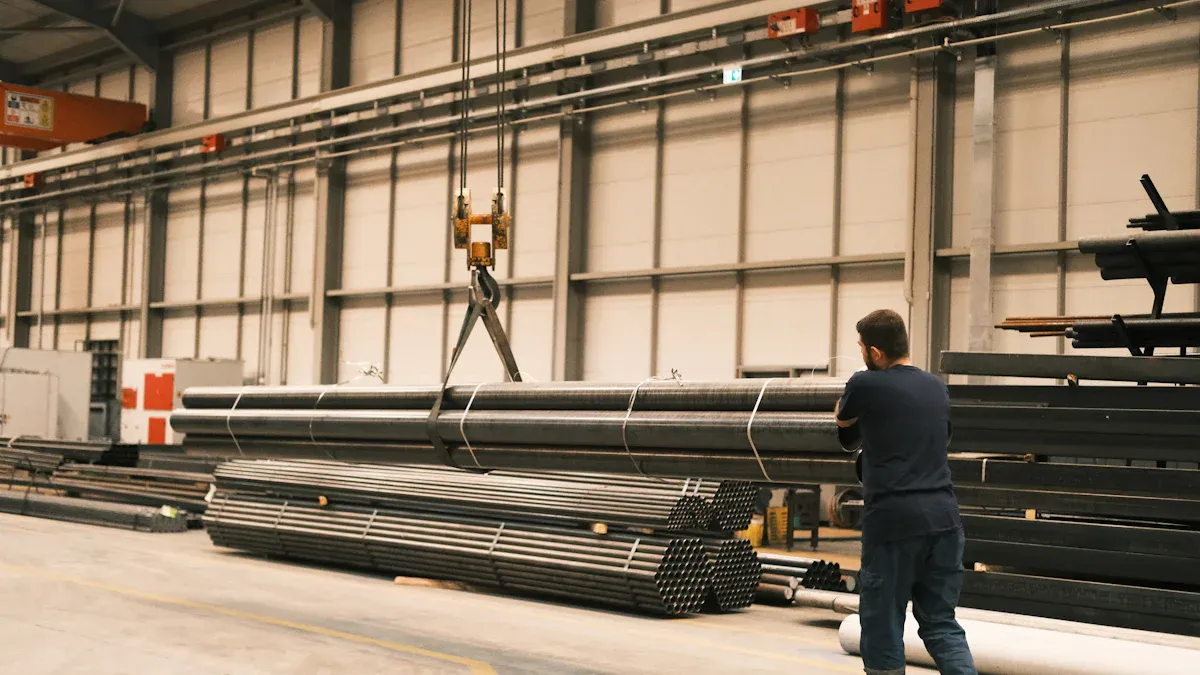
The selection of steel grade for warehouse racking systems profoundly influences their overall performance, safety, and economic viability. Manufacturers carefully choose specific steel types to meet the rigorous demands of industrial storage environments. This decision directly impacts how racks function under load, how long they last, and their ability to maintain a safe operational environment.
Impact on Rack Performance and Load Capacity
The inherent properties of steel directly dictate a rack system’s ability to perform its primary function: supporting stored goods. Different steel grades offer varying levels of strength and resilience, which translates directly into how much weight a rack can safely bear.
Yield Strength and Tensile Strength in Warehouse Racks
Two critical mechanical properties, yield strength and tensile strength, define a steel’s performance in warehouse racks. Yield strength represents the maximum stress a material can withstand before it begins to deform permanently. For steel that supports heavy loads, this property is crucial. Tensile strength, on the other hand, indicates the maximum stress a material can endure before breaking. Along with yield strength, tensile strength is a critical factor in material selection. Beyond these, good strength is a fundamental requirement for racks, ensuring they can safely bear loads. Weldability is essential for fabricating racks, allowing for strong and reliable joints. Formability is important for shaping the steel into the required rack components, facilitating intricate designs and custom fabrication. Hardness also influences the material’s resistance to indentation, scratching, or abrasion, which is important for durability in rack applications.
Steel Grade Influence on Maximum Load Ratings
The specific steel grade directly influences the maximum load ratings of warehouse racks. High-grade steel significantly enhances the capacity of warehouse racks and improves their resistance to corrosion. It also plays a crucial role in minimizing the likelihood of deformation when subjected to heavy loads. The material grade, which refers to the strength of the steel used in manufacturing components, is a critical factor influencing the capacity of warehouse racks. Examples of common material grades in the industry include A36, A572 Gr50, and A1011 HSLAS Gr55. Higher-grade steels allow for designs that support heavier loads or achieve the same load capacity with less material, optimizing space and cost.
Durability and Longevity of Warehouse Racks
Beyond immediate load capacity, the chosen steel grade also determines the long-term durability and lifespan of a racking system. A robust material resists wear and tear, ensuring the investment provides value over many years.
Resistance to Deformation and Fatigue
Steel grades vary in their resistance to deformation and fatigue, which are common issues in heavily used racking systems. Fatigue failure in steel occurs due to cyclic stress, even when stresses are below the metal’s ultimate tensile strength. This happens when repeated small cycles of stress gradually form and grow cracks until the metal breaks. These failures often start at stress concentrators like notches or welds and propagate over time. Several factors contribute to deformation:
- Overloading: Exceeding the beam’s rated capacity causes it to bow beyond its design limits.
- Uneven Load Distribution: When loads rest on beam corners or are off-center, they create concentrated stress points instead of spreading weight evenly, leading to sagging.
- Damaged or Deformed Beams: Prior forklift impacts, overloading, or fatigue can permanently deform a beam, indicating the steel has been stressed beyond its elastic limit.
- Incorrect Beam Selection: Choosing beams with insufficient depth or gauge thickness for the required span and weight can lead to excessive deflection. While higher-grade steel increases strength, physical dimensional changes (thickness or height) are needed to reduce sagging.
Factors Affecting Rack Lifespan
Many factors affect the lifespan of warehouse racks, with the initial steel grade being a primary determinant. Industrial steel storage racks generally have a lengthy lifespan, with many installations remaining in use for several decades after commissioning. Structural racks are noted to have a lifespan that extends 5-10 years longer than roll-formed systems. Dr. Logan Kebeli, Vice President of Engineering at Advance Storage Products, states that “When well maintained and properly used, there’s no reason a pallet rack system can’t last for an exceedingly long time.” He also notes that many manufacturers, including his company, offer 10-year warranties, indicating expected longevity. Proper maintenance, correct usage, and the quality of the steel all contribute to maximizing the operational life of a racking system.
Safety Implications of Steel Selection for Warehouse Racks
The safety of personnel and stored goods hinges significantly on the integrity of the racking system. The steel grade plays a foundational role in preventing accidents and ensuring compliance with safety regulations.
Preventing Rack Collapse and Structural Failure
The primary safety concern for any racking system is the prevention of collapse or structural failure. The chosen steel grade directly impacts a rack’s ability to withstand anticipated loads, impacts, and environmental stresses without failing. Stronger, more ductile steel grades offer a greater margin of safety, absorbing energy from impacts and resisting sudden brittle fractures. Engineers design racks with specific steel properties to ensure they remain stable and secure, even under challenging operational conditions.
Compliance with Safety Standards and Regulations
Regulatory bodies and industry associations establish stringent safety standards for warehouse racking systems. These standards often specify minimum material requirements and performance criteria. Selecting the appropriate steel grade ensures compliance with these regulations, such as those set by the Rack Manufacturers Institute (RMI). Adhering to these standards is not only a legal requirement but also a critical practice for protecting workers and assets. Proper steel selection demonstrates a commitment to safety and operational excellence.
Economic Considerations for Warehouse Racks
Choosing the right steel grade for warehouse racking systems involves more than just initial purchase price. Businesses must carefully weigh the upfront material costs against the long-term value, including maintenance and potential replacement expenses. This comprehensive approach ensures a cost-effective solution over the system’s entire lifespan.
Initial Material Costs Versus Long-Term Value
The initial material cost of steel for warehouse racks varies significantly depending on the type and grade. While some materials offer a lower entry price, they may not provide the same durability or performance as higher-grade options. Companies often find that investing in superior materials initially leads to greater savings over time.
Consider the typical price ranges for different steel types used in racking:
| Material Type | Price Range | Notes |
|---|---|---|
| Cold-Rolled Steel | $800 to $2,000 per ton | Most common steel type for pallet racks; price varies by thickness and finish |
| Stainless Steel (304 Grade) | ~$180 to $200 per kilogram | Higher corrosion resistance; significantly more expensive than regular steel |
| Aluminum & Other Alloys | $2,700+ per ton | Less common due to high cost; used for specialized applications |
Cold-rolled steel, being the most common, offers a balance of cost and performance for general applications. However, specialized environments or heavy-duty requirements might necessitate materials like stainless steel or other alloys, which come with a substantially higher price tag. Despite the increased initial outlay, these materials often deliver enhanced durability and a longer service life, ultimately providing better long-term value.
Maintenance and Replacement Costs
The durability and quality of a racking system directly impact its maintenance and replacement costs over time. High-quality pallet racking, sometimes backed by lifetime guarantees, often provides better long-term value despite a higher initial cost. Systems built with lower-grade steel, even if they appear identical to those made with quality American steel, can exhibit significant capacity differences. This often leads to more frequent repair and replacement situations.
Higher-grade steel offers greater resistance to impacts, a common cause of damage in busy warehouse environments. When a load-bearing component of a rack sustains damage, its capacity decreases, increasing operational risk. Wachsmuth notes that replacement parts and labor often cost substantially more than the original parts. This makes lower-cost racks require larger investments in maintenance and repair over their lifespan. For example, Steel King’s use of closed tubing for frame components provides superior impact resistance. Their SK2000 system shows a 250% increase in front-impact strength and a 68% increase in side-impact strength compared to common open-back systems. This enhanced durability proves particularly crucial in cold storage applications, where low temperatures, dense layouts, and hurried operations increase the risk of forklift impacts. It also benefits areas prone to seismic activity, where higher-quality, customized racking can withstand tremors and reduce repair costs. Ultimately, Wachsmuth states that while higher-quality pallet rack systems may have a greater upfront cost, they lead to significant savings over the system’s lifetime.
Distribution and fulfillment center operators can expect higher ongoing costs with warehouse racking made from lower-grade steel, featuring less rigid designs, and employing construction techniques like welding that do not provide the highest level of strength. While the initial purchase price for low-quality, insufficiently designed storage racking might be lower, the costs over the structure’s lifespan will be greater. The composition of the racking, particularly the quality of the steel, is crucial for durability. American-made, mill-certified steel ensures optimal performance, unlike imported steel which may lack certification and contain contaminants that limit strength. The formation of components also impacts durability and long-term operating costs. For instance, closed-tube steel, as used by Steel King, has been shown to increase front impact strength by 250% and side impact strength by 68% compared to open-back components, significantly reducing costly damage from forklift impacts. The method of assembly, including the amount of bracing and welding quality, also contributes to impact resistance and overall strength. If racking components are damaged, the system’s capacity can be reduced, affecting efficiency and productivity due to temporary loss of storage space during repairs. Replacement parts, which should always come from the same manufacturer, are likely to be more expensive than their original cost as part of the entire structure. These operating costs, including unpredictable accidental damage, are an inevitable part of the total cost of ownership and businesses must factor them into budgeting when evaluating storage systems.
Primary Steel Grades for Warehouse Racks
Manufacturers select specific steel grades for warehouse racking systems based on performance requirements, cost-effectiveness, and application. Understanding these primary grades helps in choosing the right material for optimal structural integrity and longevity.
ASTM A36: The Workhorse for Warehouse Racks
ASTM A36 steel stands as a foundational material in the construction of many industrial components, including warehouse racking systems. Its balanced properties make it a reliable and economical choice for general-purpose applications.
Key Mechanical Properties of A36 Steel
ASTM A36 steel possesses a combination of mechanical properties that make it highly suitable for structural applications. It offers good strength and toughness, allowing it to withstand significant loads while ensuring stability and safety. The steel’s processing performance also allows for operations like cutting, welding, and cold bending, providing high flexibility for various project requirements.
| Property | Value |
|---|---|
| Yield Strength | 250 MPa (36,000 psi) |
| Tensile Strength | 400–550 MPa (58,000–80,000 psi) |
| Elongation | 20% in 200 mm |
| Density | 7.85 g/cm³ |
| Modulus of Elasticity | 200 GPa |
This steel is widely used for industrial applications like storage platforms and racks because of its reliable mechanical performance and weldability. It provides a good balance of ductility and strength, allowing for welding, cutting, and shaping without compromising structural integrity. Its uniform mechanical properties offer resistance in both indoor and outdoor environments, and it remains a cost-effective choice without sacrificing significant mechanical performance.
Common Applications in Rack Components
Manufacturers frequently use ASTM A36 steel in various rack components. Its versatility allows for its application in:
- Industrial racks and supports
- Storage racks
- Pipe supports
- Shelving systems
The material’s ease of fabrication makes it ideal for forming the uprights, beams, and bracing that constitute the framework of most racking systems.
Advantages for General Purpose Warehouse Racks
ASTM A36 steel offers several distinct advantages for general-purpose warehouse racks. These benefits contribute to its widespread use in the industry:
- Excellent weldability, machinability, and affordability.
- Easy to cut, drill, weld, and machine.
- Compatible with standard fasteners and joining methods.
- Readily available and relatively low in cost.
- High tensile strength.
- Elongates up to 20% of its length, contributing to longevity.
These characteristics make A36 a practical and efficient choice for many standard storage needs.
Other Common Structural Steel Grades for Warehouse Racks
While ASTM A36 serves as a common standard, other structural steel grades offer enhanced properties for more demanding applications or comply with international specifications.
ASTM A572 Grade 50 for Heavier Loads
ASTM A572 Grade 50 steel provides a higher yield strength compared to A36, making it suitable for heavier loads and more robust designs. This grade is compliant with ASTM A572 Grade 50 (345MPa yield). Its wide flange design effectively distributes dynamic and static loads evenly. It is ideal for heavy-duty warehouse storage, including pallet racks and heavy equipment. Hot rolling ensures a uniform grain structure, delivering excellent ductility and weldability. This steel meets strict structural safety standards, resisting bending and torsion under extreme loads. It is durable and low-maintenance. Furthermore, it supports long spans to eliminate intermediate columns, maximizing warehouse space utilization for large-scale industrial storage. This grade offers a high strength-to-weight ratio, superior durability, good weldability, and cost efficiency for structural steel applications.
European Equivalents: EN 10025 S235, S275, and S355
European standards provide equivalent steel grades that align with the performance characteristics of ASTM specifications. These grades are commonly used in European-manufactured racking systems.
| ASTM Grade | European Equivalent |
|---|---|
| A36 | N/A |
| A572 Grade 50 | S355 (EN 10219) |
Specifically, S235 is often considered a European equivalent to A36, while S355 (including S355JR) corresponds to A572 Grade 50. S275 offers an intermediate strength level.
Chinese Grades: Q235B and Q345B for Warehouse Racks
Chinese steel grades also find widespread use in the global market, particularly for components manufactured in Asia. These grades offer comparable properties to their American and European counterparts.
| ASTM Grade | Chinese Equivalent |
|---|---|
| A36 | Q235 |
| A572 | Q345B |
Q235B is generally equivalent to ASTM A36, providing similar strength and weldability for general structural purposes. Q345B (formerly Q345, now often Q355) aligns with the higher strength of ASTM A572 Grade 50, making it suitable for more demanding applications.
Specific Benefits of Higher Strength Grades
Higher-strength steel grades, such as ASTM A572 Grade 50 and its equivalents, offer several key benefits. They allow for the design of racks with greater load capacities or the use of thinner material sections to achieve the same capacity, potentially reducing overall weight and material costs. Their enhanced resistance to bending and torsion improves structural integrity under extreme conditions, contributing to increased safety and longevity, especially in heavy-duty or high-bay racking systems.
High-Strength Low-Alloy (HSLA) Steels for Specialized Warehouse Racks
High-Strength Low-Alloy (HSLA) steels represent another category of materials used in specialized warehouse racking applications. These steels offer superior properties through precise alloying and processing.
Characteristics and Advantages of HSLA Steels
HSLA steels contain small additions of alloying elements like niobium, vanadium, titanium, and copper. These elements enhance strength, toughness, and corrosion resistance without significantly increasing weight or requiring complex heat treatments. They achieve higher yield strengths than conventional carbon steels, often with improved formability and weldability. This allows for lighter, yet stronger, structural components.
Specialized Applications Requiring HSLA
Manufacturers typically reserve HSLA steels for specialized warehouse racks where conventional carbon steels might not suffice. These applications include:
- Automated Storage and Retrieval Systems (AS/RS): Where precision, high speeds, and minimal deflection are critical.
- High-Bay Racking: Requiring exceptional strength and stability over great heights.
- Seismic Zones: Where racks must withstand significant dynamic forces.
- Corrosive Environments: Certain HSLA grades offer enhanced atmospheric corrosion resistance, reducing the need for extensive coatings.
The use of HSLA steels in these contexts ensures maximum performance, safety, and durability for highly demanding storage solutions.
Galvanized and Stainless Steel Warehouse Racks
Beyond standard structural steels, specialized treatments and alloys offer enhanced protection and performance for warehouse racks in demanding environments. Galvanized and stainless steel provide superior resistance to corrosion and other harsh conditions.
Galvanized Steel for Enhanced Durability
Galvanized steel offers a robust solution for warehouse racks requiring extra protection against environmental factors. This material significantly enhances durability.
The Galvanization Process for Warehouse Racks
Galvanization involves applying a protective zinc plating to steel pallet racks. This process gives the steel a brilliant silver appearance. The zinc coating acts as a barrier against rust and corrosion, safeguarding the underlying steel from corrosive factors. It maintains structural integrity. Galvanized pallet racking has a metallic silver-gray appearance, which is the natural color and luster of the zinc layer. Its main structure remains similar to traditional pallet racking.
Benefits of Galvanized Steel in Industrial Racking
Galvanized steel provides exceptional corrosion resistance. The zinc coating forms a barrier against moisture, chemicals, and other corrosive elements. It acts as a sacrificial layer, protecting the underlying steel from rust and corrosion. This makes it ideal for outdoor applications. The protective zinc coating also reduces the need for frequent cleaning, painting, and repairs, leading to long-term cost savings. This low-maintenance aspect is a significant advantage. The zinc layer protects against degradation, allowing galvanized racks to perform well for many years. This reduces the need for replacements. The zinc coating minimizes the risk of structural collapse caused by corrosion, thereby preventing accidents and injuries. This enhanced safety is crucial in industrial settings.
Applications for Galvanized Warehouse Racks
Galvanized racks are designed to withstand moisture, chemicals, and external elements without losing structural integrity. This makes them suitable for various challenging environments. They are particularly beneficial for outdoor storage areas and facilities in humid environments. They also excel in facilities that frequently wash equipment or floors. Galvanized racks are ideal for food processing, chemical storage, and marine applications. They perform well in cold storage, including refrigerated and frozen environments with moisture and temperature fluctuations. Their ability to withstand weather conditions makes them perfect for outdoor storage.
Stainless Steel Grades for Specific Environments
Stainless steel offers the ultimate solution for environments demanding the highest levels of hygiene and corrosion resistance.
Standard Stainless Steel Grades: 304, 316, and 430
Several standard stainless steel grades are available, each with unique properties. Grade 304 is a common choice, offering good corrosion resistance and formability. Grade 316 provides superior corrosion resistance, especially against chlorides, due to its molybdenum content. Grade 430 is a ferritic stainless steel, offering moderate corrosion resistance and good ductility, often used for less demanding applications.
Corrosion Resistance in Warehouse Racks
Stainless steel’s primary advantage lies in its inherent corrosion resistance. This resistance is crucial in environments with high humidity levels, which increase the amount of water in the air and raise the likelihood of rust. Regular exposure to water, such as in car washes or food processing plants, also benefits from stainless steel. The presence of chemicals like acids or salts in industrial environments, which can accelerate the rusting process, also necessitates stainless steel.
Applications for Stainless Steel Warehouse Racks
Stainless steel is essential in harsh environments like chemical plants, manufacturing facilities, and coastal locations. It resists moisture, acids, and cleaning chemicals. Cleanrooms, healthcare, and food-grade environments require stainless steel due to its smooth, non-porous surface, essential for easy cleaning and sanitization. Outdoor or washdown areas, where exposure to rain, humidity, temperature fluctuations, and salt spray would rapidly degrade other materials, also benefit from stainless steel. Marine and coastal facilities, where highly corrosive salt air necessitates long-term performance with minimal upkeep, rely on stainless steel. Laboratories, which often deal with corrosive chemicals, sensitive materials, and fluctuating temperatures, benefit from a stable, inert surface.
Factors Influencing Steel Grade Selection for Warehouse Racks
Choosing the correct steel grade for warehouse racks involves a careful evaluation of several critical factors. These factors ensure the racking system meets operational demands, safety standards, and economic objectives.
Load Requirements and Rack Design
Rack designers must consider the types of loads a system will bear. This directly impacts the required strength and durability of the steel.
Static Versus Dynamic Loads on Warehouse Racks
Static loads remain constant, while dynamic loads involve movement or impact. If a facility stores products requiring cooler or freezer storage, and lift trucks access these areas, structural steel rack is recommended. Structural steel rack offers greater frame strength and durability. It better withstands impact in these challenging environments. The grade of steel and quality of construction determine the durability of the racking system. Higher-quality materials provide greater long-term reliability for storage needs.
Impact of Rack Configuration on Material Stress
The specific layout and design of a racking system influence how stress is distributed across its components. Complex configurations or very tall racks often require steel with higher yield strength to manage increased material stress effectively.
Engineering Calculations for Grade Specification
Engineers perform detailed calculations to specify the appropriate steel grade. These calculations consider load capacities, deflection limits, and safety factors. They ensure the chosen material can safely support the intended weight and withstand operational forces.
Environmental Conditions for Warehouse Racks
The environment where racks operate significantly affects steel performance and longevity.
Temperature Extremes and Material Behavior
Extreme temperatures can alter steel’s properties. This potentially leads to deformation or weakening. In cold environments, particularly at or below 0° Fahrenheit, steel racking can experience a ‘ductile-brittle transition.’ This makes it more susceptible to impact damage. Temperature extremes necessitate accounting for thermal expansion and material performance, especially in climates like deserts.
Humidity and Corrosion Risk
Maintaining low humidity levels is crucial to prevent rust and corrosion, particularly for carbon and alloy steels. Atmospheric corrosion of metals is influenced by environmental factors such as relative humidity and temperature. Carbon steels are particularly susceptible to general corrosion. Their corrosion rate depends on environmental parameters like the time of wetness and temperature. OSHA racking requirements include an environmental assessment that considers humidity conditions and temperature variations.
Cold Storage and Outdoor Warehouse Racks
Cold storage facilities and outdoor installations present unique challenges. Structural steel racking, which is hot-rolled and then welded and bolted, is recommended for cold storage facilities where vehicles are used. It offers greater frame strength and ability to withstand impact. Corrosion mitigation strategies, such as appropriate protective coatings, are specified for challenging environmental conditions.
Manufacturing Processes for Warehouse Racks
The method of manufacturing steel components also influences their final properties and suitability for racking applications.
Cold-Formed Steel Sections in Rack Manufacturing
Manufacturers create cold-formed steel structural members at room temperature from steel plate, sheet, or strip material. They use processes like press-braking or cold roll-forming. Cold-formed steel generally exhibits increased strength compared to hot-rolled steel of similar grades due to work hardening. This process, involving multiple passes, hardens the material and makes it stronger. Cold roll forming typically produces more robust steel products because the material becomes stronger through repeated deformation. Cold-rolled steel is best suited for applications that do not require flexing or significant stress, such as shelving and various construction-related products.
Hot-Rolled Steel for Structural Elements
Hot-rolled steel, with its combination of strength and flexibility, is ideal for heavy-duty structural products. These products need to absorb impact and swaying motions, like construction beams and guard rails. Structural steel racking, which is hot-rolled, is recommended for cold storage facilities where vehicles are used. This is due to its greater frame strength and ability to withstand impact.
Influence of Fabrication on Material Properties
The fabrication process significantly influences the material properties. Cold rolling can increase steel’s strength by up to 20% through strain hardening. However, this process decreases the ductility of the steel, limiting its ability to undergo plastic deformation before fracture. Hot-rolled steel maintains better ductility, making it more resilient to impacts.
Regulatory Standards and Building Codes for Warehouse Racks
Selecting the correct steel grade for racking systems requires strict adherence to various regulatory standards and building codes. These guidelines ensure the safety, stability, and longevity of storage structures. They protect both personnel and stored goods.
Adherence to RMI Standards
The Rack Manufacturers Institute (RMI) establishes critical standards for industrial steel storage racks in North America. RMI specifications, such as ANSI MH16.1: Specification for the Design, Testing and Utilization of Industrial Steel Storage Racks, provide comprehensive guidelines. These guidelines cover design, testing, and utilization. Manufacturers often design their systems to meet or exceed these RMI standards. This ensures structural integrity and safe operation. Adhering to RMI standards directly influences the choice of steel grade. It dictates the minimum yield strength and other mechanical properties required for various rack components. Compliance with RMI standards gives users confidence in the rack system’s performance and safety.
Local Building Code Requirements
Local building codes also play a significant role in steel grade selection. These codes often incorporate or reference national standards like the International Building Code (IBC). The IBC specifies minimum design loads and material requirements for structures, including storage racks. Local jurisdictions may have specific amendments or additional requirements based on regional factors. For example, areas prone to seismic activity will have stricter requirements for steel ductility and connection strength. Engineers must consider these local codes during the design phase. They ensure the chosen steel grade and overall rack design comply with all applicable regulations. This compliance is essential for obtaining necessary permits and ensuring legal operation.
International Standards and Their Impact
Beyond North American and local codes, international standards also influence steel grade selection, especially for global manufacturers or multinational companies. European standards, such as EN 15512: Steel static storage systems – Adjustable pallet racking – Principles for structural design, provide similar guidance. Chinese standards, like GB 50017: Code for Design of Steel Structures, also dictate material specifications. These international standards often have equivalent steel grades to ASTM specifications. For example, European S355 steel offers properties similar to ASTM A572 Grade 50. Understanding these equivalencies is crucial for sourcing materials globally. It also ensures consistency in quality and performance across different regions. Manufacturers must navigate these diverse standards. They ensure their steel choices meet the specific requirements of the intended market or application.
Verifying Steel Grade in Warehouse Racks
Verifying the steel grade in a racking system is crucial for ensuring safety and performance. This process involves reviewing documentation, examining material reports, and conducting visual inspections. Proper verification confirms the racks meet design specifications and industry standards.
Manufacturer Specifications and Documentation
Manufacturers provide essential information about their products. This documentation helps users understand the materials used.
Importance of Product Data Sheets
Product data sheets offer detailed specifications for the steel components. These sheets list mechanical properties, chemical composition, and applicable standards. They confirm the steel’s strength, ductility, and other critical characteristics. Users rely on these documents to ensure the racks meet their operational requirements.
Understanding Manufacturer Warranties
Manufacturer warranties often depend on the proper use and installation of the racking system. A warranty indicates the manufacturer’s confidence in their product’s quality and material. Reviewing warranty terms helps users understand their coverage and the expected lifespan of the steel components.
Material Test Reports (MTRs) and Certifications
Material Test Reports (MTRs) provide definitive proof of a steel’s properties. These reports are vital for quality assurance.
What to Look for in an MTR
An MTR details the steel’s chemical analysis and mechanical test results. Key information includes yield strength, tensile strength, and elongation. It also lists the specific ASTM or equivalent standard the steel conforms to. Users should verify these values match the required specifications for the racking system.
Ensuring Traceability and Quality Assurance
MTRs ensure traceability. They link a specific batch of steel to its original mill and testing data. This traceability is critical for quality assurance. It allows users to confirm the material’s origin and verify its compliance with industry standards. This process helps maintain high safety levels.
Visual Inspection and Markings on Warehouse Racks
Visual checks offer an initial assessment of the steel components. However, they have limitations.
Identifying Steel Grade Markings on Components
Some steel components may have grade markings stamped or etched directly onto them. These markings typically indicate the steel type or standard, such as “A36” or “S355.” Users can look for these identifiers on beams, uprights, or other structural elements.
Limitations of Visual Inspection
Visual inspection alone cannot confirm the precise steel grade or its mechanical properties. Markings can be absent, faded, or misleading. Visual checks do not reveal internal defects or variations in material composition. Therefore, users must always supplement visual inspection with documentation review and MTR verification for accurate assessment.
Professional Consultation for Warehouse Racks
Engaging qualified professionals provides an essential layer of safety and assurance for warehouse racking systems. These experts offer specialized knowledge, ensuring the structural integrity and compliance of storage solutions. Their involvement helps prevent costly errors and potential hazards.
When to Engage Structural Engineers
Businesses should engage structural engineers for various critical situations involving their racking systems. These professionals provide expert assessment and guidance. Consider their involvement when:
- Changing beam spacing from original as-built drawings. This alteration affects load distribution.
- Buying new or used racks without prior engineering review. An engineer ensures the system safely supports products and manages them efficiently.
- Installing lightweight storage racks on surfaces other than concrete. A qualified engineer recommends appropriate anchoring methods.
- Ensuring the floor slab can support the loads. This involves assessing concrete yield strength, slab thickness, joint locations, and steel reinforcement.
- Anchoring near slab expansion joints. This requires extra precaution to maintain stability.
- Dealing with sloped floors. Engineers account for nominal loads and forces on these surfaces.
- Anchoring in multiple aisles in older buildings. This avoids compromised areas within the structure.
- Inspecting any rack anchoring system. This is especially important if repairs or changes occur, or if anchoring to surfaces other than concrete.
- The facility is in an area with high seismic activity. This demands higher gauge steel, often structural steel, and increased structural integrity.
- Using used pallet racking systems. Their questionable structural integrity necessitates a third-party structural engineer to review and approve them.
Benefits of Independent Material Testing
Independent material testing offers significant benefits beyond manufacturer specifications. This process provides an unbiased verification of the steel’s properties. Manufacturers often provide product data sheets and Material Test Reports (MTRs). However, an independent test confirms these claims. It ensures the steel meets the specified grade and performance criteria. This is particularly valuable for custom-fabricated components or when sourcing materials from new suppliers. Independent testing identifies potential material defects or inconsistencies that might compromise the rack’s safety and lifespan. It adds an extra layer of quality assurance, protecting investments and personnel. This proactive approach mitigates risks associated with material failure, enhancing overall operational safety.
Selecting the correct steel grade is paramount for the safety, efficiency, and longevity of racking systems. While ASTM A36 serves as a common standard, understanding specific application demands remains vital. Consulting reputable manufacturers ensures optimal steel grade utilization. Proper steel grade selection guarantees structural integrity and operational reliability. This protects both investments and personnel effectively.
FAQ
What is the primary steel grade used in warehouse racks?
Manufacturers primarily use structural carbon steel, such as ASTM A36. This grade offers a good balance of strength, ductility, and cost-effectiveness. It provides a reliable foundation for general-purpose storage applications.
Why is yield strength crucial for rack performance?
Yield strength indicates the maximum stress a steel can withstand before permanent deformation. For warehouse racks, a high yield strength ensures the system supports heavy loads without bending or collapsing. This property directly impacts the rack’s load capacity and safety.
How do environmental conditions influence steel grade selection?
Environmental factors like temperature extremes, humidity, and corrosive agents significantly affect steel. Cold storage requires steel resistant to brittle fracture. Humid or chemical environments necessitate corrosion-resistant options like galvanized or stainless steel to ensure longevity.
What are the main benefits of galvanized steel racks?
Galvanized steel racks feature a protective zinc coating. This coating provides excellent resistance to rust and corrosion. They are ideal for outdoor storage, humid environments, and facilities requiring frequent washing, enhancing durability and reducing maintenance.
When should businesses consider using stainless steel racks?
Businesses should consider stainless steel racks for environments demanding the highest hygiene and corrosion resistance. These include food processing plants, chemical facilities, cleanrooms, and marine applications. Stainless steel resists harsh chemicals and prevents contamination effectively.
Why are RMI standards important for warehouse rack safety?
RMI standards provide comprehensive guidelines for the design, testing, and use of industrial steel storage racks. Adhering to these standards ensures structural integrity, safe operation, and compliance with industry regulations. This protects both personnel and stored goods.
How can one verify the steel grade of existing warehouse racks?
One can verify the steel grade by reviewing manufacturer specifications and product data sheets. Material Test Reports (MTRs) provide definitive proof of properties. Professional consultation and independent material testing offer additional assurance for critical applications.
What is the difference between hot-rolled and cold-formed steel in racks?
Hot-rolled steel offers a combination of strength and flexibility, suitable for heavy-duty structural elements that absorb impact. Cold-formed steel, processed at room temperature, generally exhibits increased strength due to work hardening, often used for lighter sections.