
Key Takeaways
Retail display manufacturing is a strategic investment that directly impacts sales, with 70% of buying decisions happening in-store, making quality displays essential for retail success.
• Master the three display types: permanent (1-5+ years), semi-permanent (3-12 months), and temporary (2-4+ weeks) to match durability with budget and campaign goals.
• Thorough planning prevents costly revisions – gather complete requirements, including size limits, security needs, power requirements, and quantities before design begins.
• Material selection drives both esthetics and functionality – wood offers elegance, metal provides strength, acrylic delivers clarity, and cardboard offers cost-effectiveness.
• Quality control and professional installation are non-negotiable – rigorous testing ensures displays meet safety standards and perform reliably in retail environments.
• Partner with experienced manufacturers who offer end-to-end services from design through installation to ensure your displays enhance customer experience and drive sales.
The retail display manufacturing process transforms raw materials into powerful sales tools through careful planning, precision fabrication, and quality assurance. Success depends on choosing manufacturers who understand both technical requirements and retail objectives.
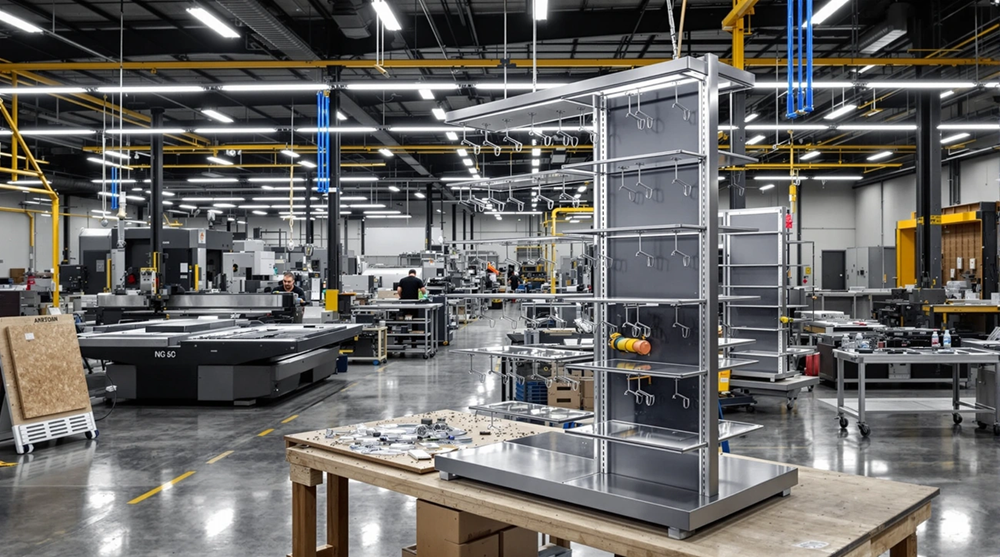
Retail display manufacturing transforms raw materials into strategic tools that showcase products and drive sales. Yet many retailers struggle to find the right retail display manufacturer who can deliver both quality and functionality.
The process involves multiple stages, from original design concepts to final production. Display manufacturing requires expertise in various areas, especially metalworking and woodworking, along with finishing techniques. To name just one example, specialized manufacturers process thousands of tons of steel annually while maintaining strict quality standards. Custom retail display manufacturers also incorporate components such as display hooks and hardware that boost product visibility.
This piece walks readers through the complete retail display manufacturing process. It covers gathering client requirements to final delivery and installation.
Understanding Retail Display Manufacturing
What Is Retail Display Manufacturing
Retail display manufacturing covers the production of interior displays and fixtures that advertise and feature branded products within retail environments. The global retail display market operates at a massive scale. It was valued at USD 11.00 billion and experienced a compound annual growth rate close to 6% in the United States. This growth stems from a powerful reality: 70% of buying decisions occur in-store. Displays and the shopper experience become paramount to sales success.
A retail display manufacturer handles everything from structural design through final installation. They act as strategic partners who cooperate on design and engineering. They source materials for each project and manage production workflows. The manufacturer’s role extends beyond simple fabrication. It includes providing turnkey solutions that arrange with client branding and sales objectives.
Types of Retail Displays You Can Manufacture
Display manufacturing covers three main categories based on lifespan requirements. Permanent displays last 1-5+ years. They use durable materials such as wood products, laminates, metals, plastics, foam core, and glass. These displays serve as interior signage, shelving, countertops, fixtures, anti-theft devices, and display casework. They also extend to exhibits, tradeshows, pop-up retail spaces, and experiential environments like airport displays and museum installations.
Semi-permanent displays function for 3-12 months and feature interchangeable graphics or panels. These displays balance durability with flexibility. They maintain visual appeal longer than temporary options while supporting more physical weight.
Temporary displays operate for 2-4+ weeks. They use corrugated materials, printed corrugated, plastic corrugated (Coroplast), and foam core (Sintra). Common assemblies include pallet displays, end caps, side caps, convenience store displays, countertop units, and seasonal promotions. Pallet displays alone represent 28% of the temporary display market.
Kitting and packaging form another manufacturing segment. This incorporates foam inserts, partitions, graphic attachments, and retail-ready packaging solutions.
Common Materials Used in Display Manufacturing
Material selection varies by display type and durability requirements. Wood offers elegance and versatility but requires regular maintenance. Metal provides sleek, modern esthetics with strength for heavier products. It carries a colder impression and higher costs though. Acrylic delivers clarity and lightweight portability at affordable prices, yet scratches easily and lacks strength for heavy items. Cardboard presents the most cost-effective and eco-friendly option for short-term promotions. It offers limited durability and customization though.
Key Roles of a Retail Display Manufacturer
Custom retail display manufacturers manage detailed services from product development through fulfillment. They ensure proper project scoping including dimensions, budget, artwork and quantities. Manufacturers work closely with design teams and deliver projects within budget expectations. They get vendor quotes and initiate orders efficiently. They work together through disciplined communication tools and coordinate logistics. This ensures competitive pricing and on-time delivery.
Planning and Design Phase
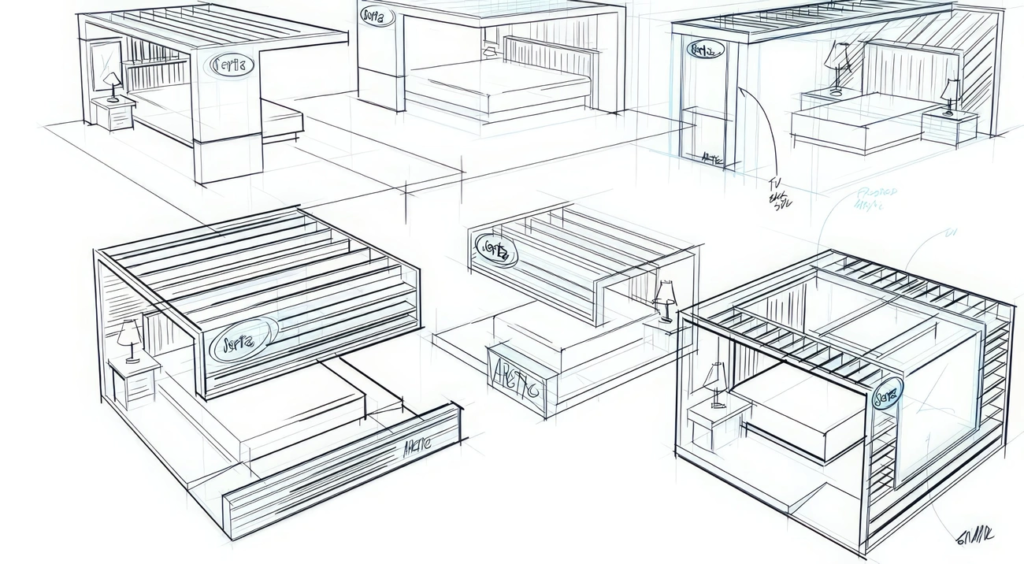
Gathering Client Requirements and Vision
Successful retail display manufacturing begins with detailed preliminary discussions. A display manufacturer arrives with specific questions to lay project groundwork. These include size limitations like footprint and height restrictions at retail locations, whether displays will be freestanding or positioned on gondola endcaps, and how products will be presented to consumers. Other factors cover security measures such as retractable cables or protective brackets, power requirements for lighting or digital components, and total quantities needed for retail deployment.
Preparation to answer these questions during first meetings accelerates the design phase. Display manufacturers must understand if merchandise will be shopped from the fixture, how many product variations require accommodation, and specific stocking quantities per display.
Creating Opening Design Concepts
Designers begin developing first-round concepts after we establish requirements. Cost factors heavily into this stage and requires designers to function as estimators or work together with in-house teams to ensure materials and processes line up with budget projections. Designers weigh features against costs and determine whether displays can incorporate woodgrain patterns or must use solid colors, and whether lighting or monitors fit within financial constraints.
Quantitative knowledge proves valuable here. It determines whether components can be handcrafted for smaller runs or require tooling investments for larger productions. Clients often request combining features from multiple concepts, which causes second design iterations.
Engineering and Technical Drawings
Engineering teams develop detailed technical drawings and specifications after design approval. These documents translate creative concepts into manufacturable blueprints and specify exact dimensions, materials, and assembly instructions.
Prototyping Your Display Design
Prototypes provide tangible representations of design concepts. Clients can review functionality before full production. Physical prototypes verify that 3D renderings translate to reality, help identify structural issues, and enable clients to approve materials and colors firsthand. They also allow testing of security features and product interactivity.
Getting Client Approval Before Production
Clear expectations set early reduce friction during approvals. Kickoff meetings should outline objectives, timelines, and responsibilities. Setting feedback deadlines keeps projects on schedule. Centralized feedback platforms prevent fragmented communication across emails and chat threads.
Manufacturing and Production Process
Production begins once approvals are finalized and specifications are locked. The manufacturing phase requires precision in multiple disciplines to deliver functional, durable retail displays.
Material Selection and Preparation
Raw materials arrive based on approved specifications. Metal sheets, wood products and specialty substrates undergo inspection before processing. Production schedules determine how materials are sized and staged.
Cutting and Forming Metal Components
Metal fabrication employs shearing for straight cuts on flat metal without deformities. Press brakes apply tons of force to bend sheet metal at precise angles using various dies and punches. Plasma cutting adds holes and slots for both plate and tube stock.
Woodworking and Custom Millwork
Custom millwork capabilities include cabinetry, shelving, paneling and ornamental details. CNC routers allow precision cuts while edgebanding equipment finishes edges naturally. Various stains, paints and protective coatings can be applied to wood substrates.
Welding and Assembly
Welding fixtures hold workpieces in correct orientation during joining operations. Consistent alignment is maintained by these fixtures and material movement is prevented. This ensures accurate weld placement and superior quality.
Powder Coating and Surface Finishing
Powder coating creates a harder, more resilient finish that resists chips and scratches compared to traditional liquid paint. The process prevents rust and corrosion while providing uniform appearance. Specific brand requirements including Pantone and RAL specifications are accommodated through custom color matching.
Adding Display Hooks and Hardware
Display hooks are installed based on weight requirements. Smaller hooks withstand up to 10kg while larger options support 15kg loads. Wall plugs and secure fastening are included in proper installation to ensure fixtures remain stable under product weight.
Quality Control and Delivery
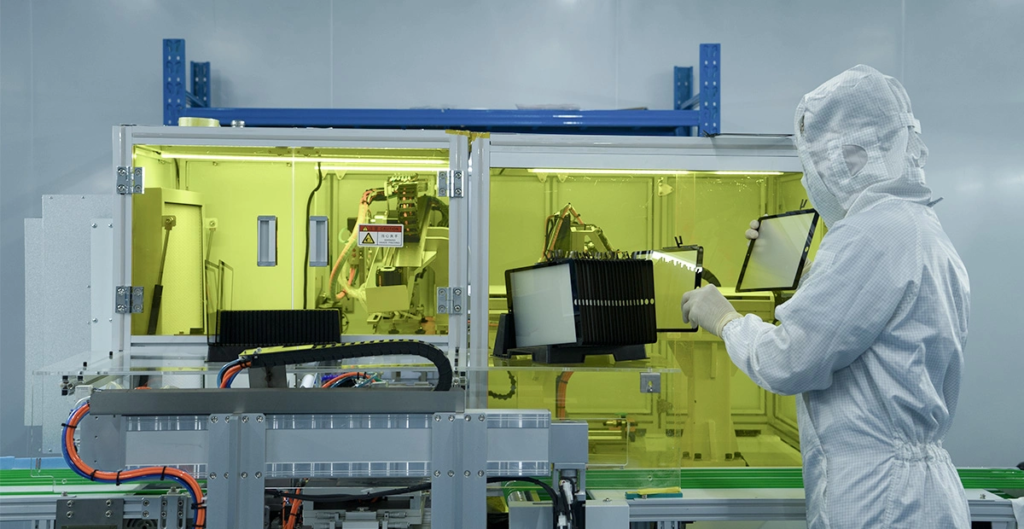
Quality assurance determines whether displays meet specifications before leaving the facility. Completed fixtures undergo rigorous evaluation against approved prototypes and engineering drawings.
Final Inspection and Testing
Inspectors verify dimensional accuracy, surface finish quality and structural soundness. Load-bearing tests confirm shelves withstand specified weight capacities without sagging or failure. Fixtures must comply with safety standards including UL 970 for retail fixtures and ASTM material specifications. Functional testing will give a smooth slide to drawers, proper door alignment and secure merchandise hooks. Any deviations from approved specifications trigger corrective action before shipment authorization.
Packaging for Safe Transport
Protective packaging prevents damage during transit. Corrugated cardboard selection depends on fixture weight and size. Options range from single-wall for lighter units to triple-wall for heavy assemblies. Foam inserts cushion vulnerable areas and corner protectors absorb impact on edges. Custom-fit packaging reduces internal movement and minimizes wasted space. Pallets receive stretch wrap or plastic straps for stability. Labels include handling instructions such as orientation markers and stacking restrictions.
Installation Services and Support
Professional installation teams execute fixture placement at retail locations. JY Shop Fitting specialists bring 12+ years of experience in the shop fitting industry. They work closely with retailers to understand specific needs and customer priorities. Approved drawings transform into functional retail spaces that lift store ambiance and boost the consumer experience.
Conclusion
Retail display manufacturing requires expertise in design, engineering, fabrication and quality control. Precision and collaboration are essential at each stage to change concepts into displays that drive sales and improve customer experience.
Partnering with the right manufacturer makes a significant difference. JY Shop Fitting has over 12 years of experience changing visions into functional retail spaces that raise store ambiance. Choose experienced shopfitting suppliers who understand your unique needs and can deliver displays that leave lasting impressions on customers.
FAQs
Q1. What are the main stages involved in the retail display manufacturing process? Retail display manufacturing typically involves several key stages: gathering client requirements and vision, creating initial design concepts, developing engineering and technical drawings, prototyping the display design, material selection and preparation, cutting and forming components, assembly and welding, surface finishing like powder coating, and finally quality control and delivery. Each stage requires precision and collaboration to transform concepts into functional displays.
Q2. What materials are commonly used to manufacture retail displays? Common materials include wood for elegance and versatility, metal for strength and modern esthetics, acrylic for clarity and lightweight portability, and cardboard for cost-effective temporary displays. Material selection depends on the display type, durability requirements, and budget. Permanent displays often use wood products, laminates, metals, and glass, while temporary displays primarily utilize corrugated materials and foam core.
Q3. How do manufacturers ensure quality before delivering retail displays? Manufacturers conduct rigorous final inspections to verify dimensional accuracy, surface finish quality, and structural soundness. Load-bearing tests confirm shelves can withstand specified weight capacities, and fixtures must comply with safety standards including UL 970 and ASTM material specifications. Functional testing ensures all components like drawers, doors, and display hooks work properly before shipment authorization.
Q4. What is the difference between permanent, semi-permanent, and temporary retail displays? Permanent displays last 1-5+ years and use durable materials like wood, metal, and glass for shelving, fixtures, and countertops. Semi-permanent displays function for 3-12 months with interchangeable graphics or panels, balancing durability with flexibility. Temporary displays operate for 2-4+ weeks using corrugated materials and foam core, commonly seen as pallet displays, end caps, and seasonal promotions.
Q5. What should retailers consider when planning a custom retail display? Retailers should prepare to discuss size limitations including footprint and height restrictions, whether displays will be freestanding or positioned on endcaps, how products will be presented, security measures needed, power requirements for lighting or digital components, total quantities required, and how merchandise will be stocked and shopped. Having clear answers to these questions during initial meetings accelerates the design phase and ensures the final display meets all functional requirements.