
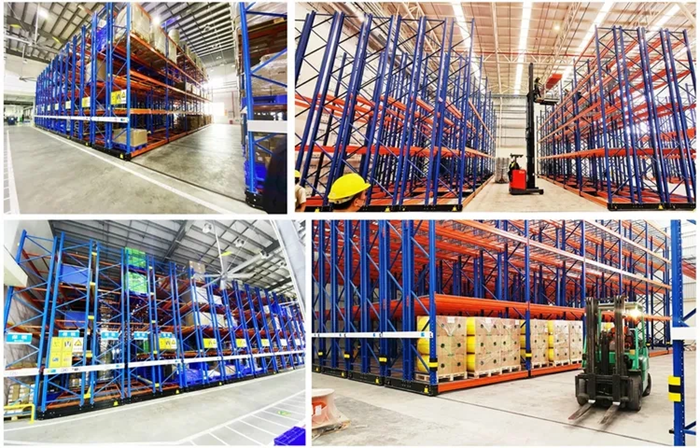
Modern warehouse racking has grown into advanced storage solutions that blend safety with better operations. Lyon stands as the racking industry’s gold standard for more than a century. Their durable systems can handle what modern warehousing operations throw at them. Pallet rack shelving can hold impressive loads—up to 5,000 pounds per level. This makes it crucial for smart inventory management.
A well-planned approach helps create safe and compliant warehouse racking systems. Selective pallet racks lead the pack as the most popular warehouse shelving system. These racks usually come with frame heights of 12′ or 16′ and standard frame depths of 42″. This setup works perfectly with industry-standard 48″ deep pallets. The system’s safety features include footplates that anchor to the ground. Precision MIG-welded upright structures with heavy-duty cross channel reinforcements boost strength and stability . Warehouse teams should know both technical details and safety rules to build reliable storage spaces.
This piece gets into the key parts of warehouse racking systems that follow OSHA safety standards. Everything from upright frames and beam choices to safety checks and system picks matters. Teams working with current facilities or planning new warehouse layouts will find these guidelines helpful to stay compliant while making the most of their storage space.
Understanding Warehouse Racking System Components
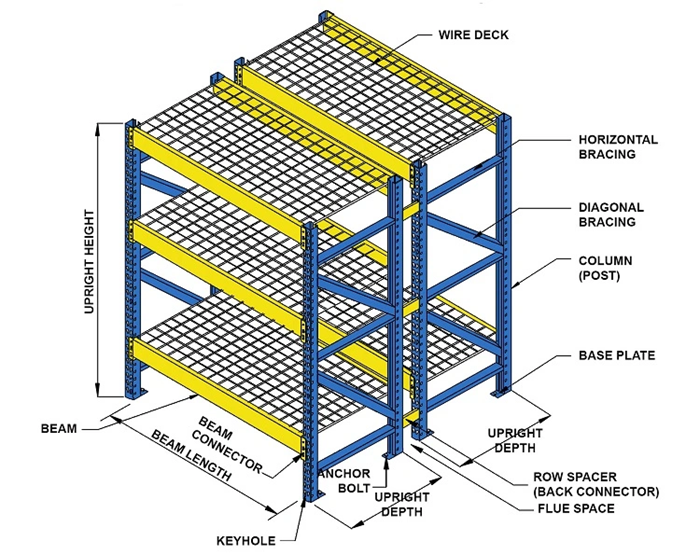
A good warehouse racking system needs a proper understanding of its core components. The way these elements work together determines structural integrity, safety compliance, and operational efficiency.
Upright Frames: Load Support and Height Considerations
Upright frames create the vertical structure of warehouse racking systems. They have two main parts: uprights and frames. Metal columns called uprights provide vertical support. Each upright has a footplate that secures it to the warehouse floor. The frames use diagonal struts, footplates, and accessories to build a stable vertical structure.
Several key factors determine how much weight upright frames can hold. The frame’s height plays a big role in its capacity. Taller frames can’t hold as much weight because of increased leverage and deflection. The space between beam levels, known as the “unsupported span,” also affects how much weight the frame can bear. Adding more beam levels can boost the frame’s overall capacity as this span gets bigger.
The frame’s material makes a difference, too. Structural pallet rack frames can hold more weight than roll-formed ones. The frames come in depths of 36″, 42″, or 48″. A 42″ depth works best to support standard pallets.
Pallet Rack Beams: Length, Face Size, and Load Ratings
Beams are horizontal supports that attach right to the frames and hold pallets or shelving panels. Four things determine how much they can hold: length, profile height (face size), material thickness, and how they connect.
The beam length affects its load capacity. Longer beams bend more under weight. RMI standards say the maximum beam deflection allowed is L/180 (L is the beam length in inches). A 96-inch beam, to name just one example, can bend about 0.53 inches at most.
The beam’s face height and material thickness matter just as much. Taller profiles and thicker steel resist bending better, which means they can hold more weight. A 4″ x 96″ beam will always be stronger than a 2.5″ x 96″ beam made of the same material.
The connection between beams and uprights is vital. Most systems have locking devices welded to the endplate. These prevent accidental disconnection and make the whole structure safer. The system stays secure only when these connections lock properly before loading.
Wire Decking vs Solid Decking: Fire Safety and Load Distribution
Wire decking has become better than solid shelving mainly because it’s safer during fires. Water from sprinkler systems can pass through the open mesh design during emergencies. This helps put out fires faster. The design meets NFPA code 13 requirements and makes warehouses safer overall.
Wire decking does more than just help with fire safety. It lets air flow better throughout the facility. This helps control temperature and keeps dust from building up. Better ventilation means cleaner storage and fewer fire risks.
Each wire deck panel typically holds between 1,500 to 3,000 pounds. They distribute weight well when installed correctly. Solid decking works better for small items or inventory that might leak. However, it blocks sprinklers and might not meet fire codes.
Most warehouses need two wire decks for each shelf level. A quick tip: order as many wire decks as beams [5]. Wire decking costs more upfront than wood, but its safety benefits, durability, and code compliance make it the go-to choice for modern warehouse racking systems.
OSHA Safety Standards for Racking Systems
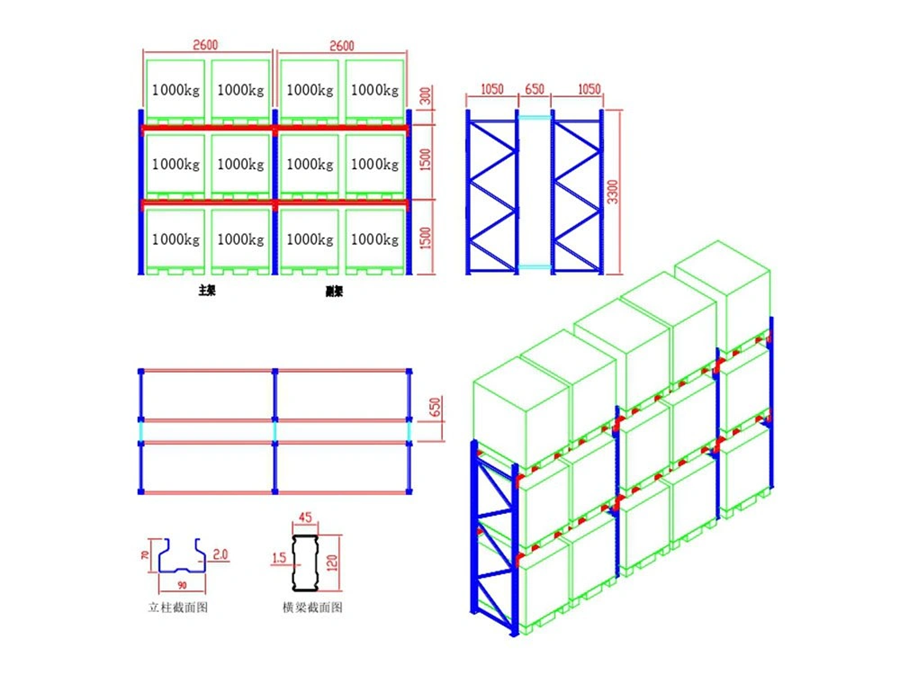
OSHA safety standards help warehouse operators create safe working environments and avoid expensive violations. These regulations target hazards from improper racking systems that might collapse and cause workplace injuries.
OSHA 1910.176(b) Requirements for Secure Storage
OSHA standard 1910.176(b) forms the foundation of warehouse racking safety regulations. The regulation states that “storage of material shall not create a hazard” and materials “stored in tiers shall be stacked, blocked, interlocked and limited in height so that they are stable and secure against sliding or collapse”. OSHA enforces this standard through regular inspections and citations, even without explicit racking specifications.
The General Duty Clause, Section 5(a)(1) of the Occupational Safety and Health Act, requires employers to keep workplaces “free from recognized hazards that are causing or are likely to cause death or serious physical harm”. This clause lets OSHA cite warehouses with unsafe racking practices even without specific standards.
Warehouses typically receive violations because of unsecured materials, damaged racking components, or structural modifications. Regular inspection of racking systems should check beam damage, missing components, footplate issues, anchor problems, leaning frames, and column damage.
Anchoring Guidelines for Uprights and Frames
Proper anchoring is vital to racking safety. The Rack Manufacturers Institute (RMI) and ANSI MH16.1 standards require anchor bolts to secure every pallet rack upright to the floor. Each baseplate needs at least one anchor bolt embedded in solid concrete and installed according to engineer-approved specifications.
Warehouses should follow these anchoring practices to comply with OSHA:
- Secure every upright into concrete with at least one properly installed anchor per footplate
- Use the correct anchor size as specified by the manufacturer
- Ensure anchors are properly torqued with no missing or loose components
- Maintain proper documentation of engineering specifications
Facilities in seismic zones need extra anchor bolts, heavy-duty anchors, base plate reinforcement, special seismic footplates, and certified engineering reviews.
Beam Locking Mechanisms and Drop Pin Usage
Beam locking mechanisms stop accidental beam disengagement that often causes rack collapses. Most racking systems use safety clips welded to the endplate to connect beams to uprights. These clips can deteriorate or look functional while being compromised.
Safety pins work better than clips. Pins show visible damage when compromised, making problems easier to spot during inspections. The best approach uses both clips and pins as backup safety measures. This strategy protects the system if either component fails.
A solid warehouse safety program needs regular inspection of these locking mechanisms. Staff should verify properly engaged and functional locking devices before loading any shelf level to maintain system integrity.
Designing a Warehouse Racking Layout for Compliance
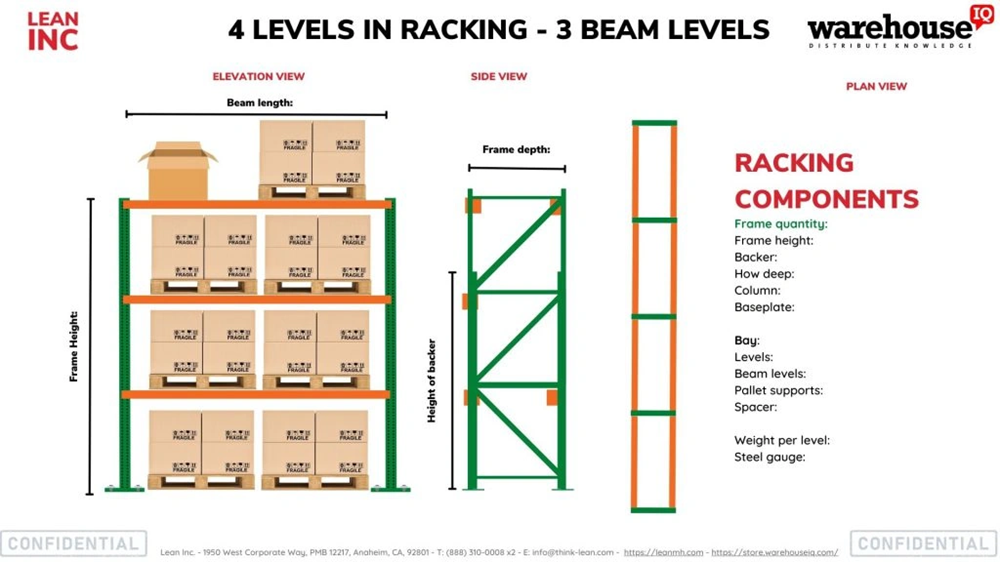
The right layout design serves as the foundation of warehouse safety compliance. Quality components matter, but their arrangement must follow specific regulations to optimize operations and protect workers.
Minimum Aisle Widths per OSHA and RMI
A well-designed warehouse starts with aisles that are properly sized. OSHA guidelines state that aisles should be at least three feet wider than the largest equipment used, with four feet as the minimum width. This standard will give enough clearance for forklifts and other material handling equipment to work safely without damaging stored products.
Mechanical equipment makes these clearances crucial. Narrow aisles reduce productivity and create hazards by blocking fire safety routes, which leads to higher accident risks. Emergency teams need adequate space to reach critical areas quickly during emergencies.
OSHA guidelines require permanent passageways to have clear markings. Aisle marking widths should range from 2 to 6 inches, though anything 2 inches or wider works. These markings aid safe navigation throughout the facility.
Sprinkler Clearance and Vertical Spacing Rules
Fire suppression systems need proper clearance from warehouse racking. OSHA rules require at least 18 inches of vertical space between sprinklers and materials below. This clearance must extend as a horizontal plane across storage areas, not just under sprinkler heads. The space lets sprinklers overlap their discharge and pre-wet combustibles effectively during fires.
Materials stored on wall-adjacent shelves don’t need this clearance since they don’t block spray overlap from multiple sprinkler heads. Library stacks or medical records storage can have shelves up to the ceiling if sprinklers are placed no more than 12 feet apart in every aisle.
In-rack sprinkler systems need only 6 inches of vertical clearance from storage. Racks 12 feet or taller must have these systems, plus smoke and heat barriers, depending on rack density.
Starter vs Add-on Bay Configuration
Starter and add-on bay setup affects installation costs and compliance substantially. A starter bay uses two complete upright frames, making it ideal as a standalone section or the first bay in a continuous run. Add-on bays need only one upright frame and must connect to either a starter or another add-on bay.
Add-on bays cost 25-30% less than starters, which creates budget advantages. Smart planning of starter and add-on placement helps warehouses optimize space and budget.
The setup follows a basic rule: two connected pallet rack bays need one starter and one add-on, while separate bays require two starters. Warehouses can expand storage capacity efficiently with this modular approach while keeping structural integrity and safety compliance intact.
Inspection and Maintenance Protocols
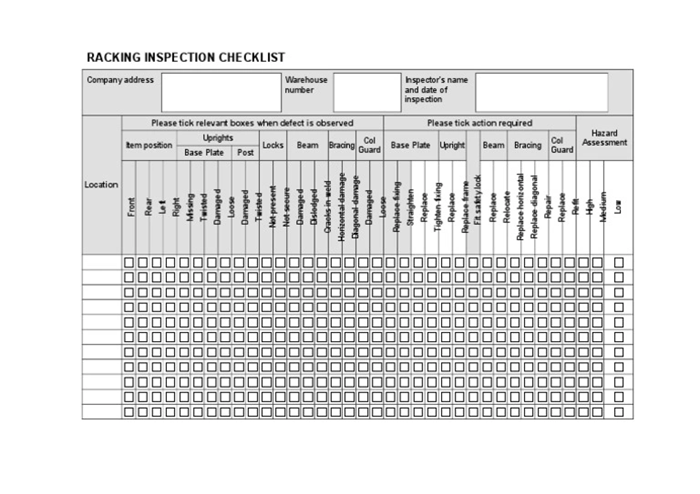
Safety and prevention of catastrophic failures depend on regular warehouse racking inspections. A well-laid-out approach will give a complete picture of potential hazards.
Warehouse Racking Inspection Frequency and Checklist
Risk factors determine how often warehouse racking inspections should happen. Here’s what facilities need to do:
- High-traffic areas with all but one of these risk factors need monthly visual inspections
- Medium-risk zones with three risk factors require quarterly checks
- Low-risk areas need bi-annual assessments
- Any incident that could damage racking needs immediate inspection
The inspection checklist must cover uprights, beams, bracing, footplates, anchors, and safety devices. Safe Working Load (SWL) notices should display maximum load capacities per level correctly.
Identifying Frame and Beam Damage
Precise measurements matter in frame damage assessment. Front upright columns need attention if damage exceeds 3mm. Regular upright frame columns have a bit more tolerance at 5mm. Diagonal and horizontal braces need replacement once damage reaches 10mm.
Beam deflection calculations use L/180, where L stands for beam length in inches. Overloading shows up when deflection goes beyond this threshold. Beam connectors need immediate attention if you spot visible deformation or cracking.
Corrective Actions and Load Re-rating Procedures
The traffic light system helps many facilities prioritize damage:
- Red (Critical): Unload and isolate right away
- Amber (Significant): Fix within weeks
- Green (Minor): Keep an eye on it during the next inspections
Damaged sections that are severely compromised need immediate unloading, barriers, and caution tape. Documentation of all damage is vital, as multiple “low priority” issues can add up to create high-priority problems. Qualified engineers might need to re-rate load capacity after repairs, based on previous damage location and extent.
Choosing the Right Racking System for Your Needs
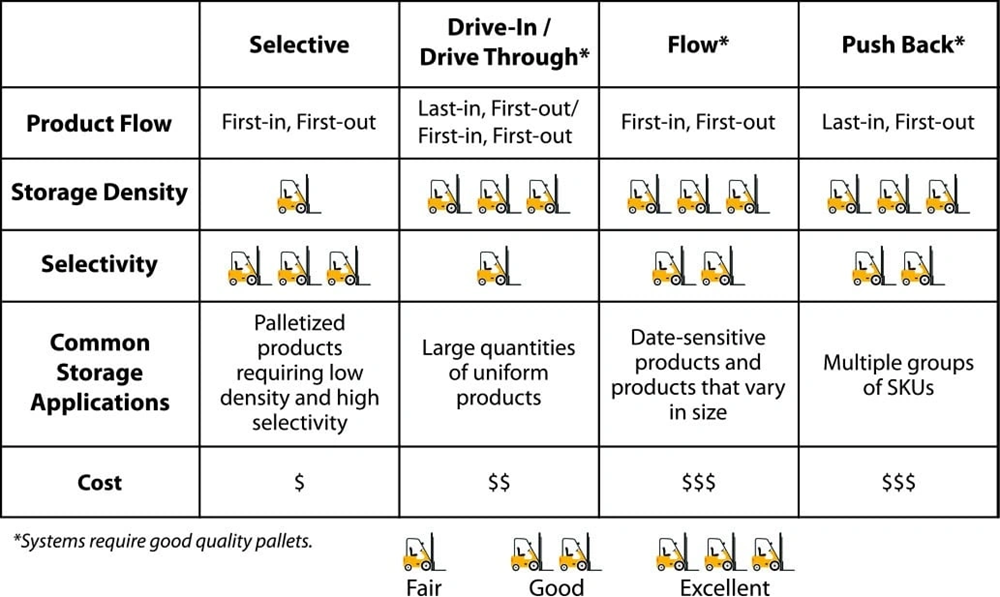
Your choice of warehouse racking systems will streamline processes, manage costs, and ensure safety compliance. A successful implementation needs careful assessment of your business needs rather than following industry trends.
Selective vs Drive-In vs Pushback Racks
Selective racking gives you 100% access to every pallet without moving other inventory. This makes it perfect for operations with a variety of product lines. The system works simply and supports both FIFO and LIFO inventory management strategies. Drive-in racking maximizes storage space by removing aisles between racks. Forklifts can enter the structure directly. These systems work on a LIFO basis and have a single entry/exit point. Pushback racking balances accessibility with density. It stores multiple pallets per lane with moderate selectivity. The cost per pallet position varies widely. Selective systems range from USD 55-200, drive-in from USD 115-500, and pushback configurations from USD 150-400. These price differences often guide the final choice.
Teardrop vs Structural Racks: Compatibility and Cost
Teardrop racking’s distinctive teardrop-shaped holes let beams snap into place without bolts. This design allows quick installation and easy adjustments. We used roll-formed steel to build these systems, making them 30-40% cheaper than structural alternatives. Structural racking uses hot-rolled steel with bolted connections. It handles heavier loads and lasts longer in demanding environments. The installation takes about 66% longer than teardrop systems. However, structural racks handle impact better, resist damage, and work reliably in harsh conditions like freezers. New style beams work with teardrop frames, but teardrop beams won’t fit new style frames.
Load Type and SKU Variety Considerations
Load characteristics shape your ideal racking choice. Operations with high SKU variety and frequent turnover work best with selective racking’s quick access features. Facilities storing large quantities of similar products should look at drive-in or pushback systems. Heavy items need structural racking’s extra strength. Facilities with changing inventory benefit from teardrop systems’ flexibility. Start by assessing your SKU count and picking frequency. Next, think over the load weight distribution and space usage priorities. Your warehouse traffic patterns, inventory rotation needs, and environmental conditions will give a system that balances accessibility with storage density.
Conclusion
Safety in warehouse racking plays a vital role in running efficient operations and meeting regulations. A good grasp of system parts – from upright frames and beams to wire decking – keeps structures sound and helps maximize storage capacity. OSHA standards, especially 1910.176(b), spell out what’s needed for secure storage to prevent workplace injuries and hazards. These rules need strict following of anchoring guidelines, beam locking mechanisms, and proper clearances throughout warehouse facilities.
Smart warehouse layout design makes a big difference in safety compliance and operational efficiency. The right aisle widths, sprinkler clearances, and bay configurations help prevent accidents and keep material handling smooth. Regular checks improve safety through systematic reviews of frames, beams, and connectors based on damage thresholds. This hands-on approach spots possible problems before they turn into serious safety risks.
Picking the right racking systems needs careful thought about your business needs, rather than just following industry trends. Each type of rack – selective, drive-in, and pushback – brings its own benefits based on inventory types and operational goals. The choice between teardrop and structural systems also affects both your budget and long-term durability.
Warehouse teams must find the sweet spot between accessibility, storage density, and safety rules when creating efficient storage spaces. Understanding load types, SKU variety, and traffic patterns helps facilities set up systems that work for both operations and regulations. Safe warehouse racking protects workers, prevents expensive accidents, and keeps business running smoothly through good planning, proper setup, and regular upkeep.
Key Takeaways
Understanding warehouse racking safety standards and proper system selection is crucial for operational efficiency and regulatory compliance. Here are the essential insights every warehouse professional should know:
• OSHA compliance requires proper anchoring and locking mechanisms – Every upright must be anchored to concrete with at least one bolt per baseplate, and beam safety clips/pins prevent dangerous disengagement.
• Regular inspections prevent catastrophic failures – Monthly checks for high-risk areas and immediate assessment after incidents help identify frame damage exceeding 3-5mm thresholds before collapse occurs.
• Aisle width and sprinkler clearance are non-negotiable – Maintain minimum 4-foot aisles plus equipment width, and ensure 18-inch vertical clearance between sprinklers and stored materials for fire safety.
• System selection depends on SKU variety and load characteristics – Selective racks offer 100% accessibility for diverse inventory, while drive-in systems maximize density for identical products at 30-40% lower cost.
• Wire decking enhances fire safety over solid alternatives – Open mesh design allows sprinkler penetration during emergencies and improves airflow, making it the preferred choice despite higher initial costs.
Proper warehouse racking combines technical knowledge with safety protocols to create storage environments that protect workers while maximizing efficiency and meeting regulatory requirements.
FAQs
Q1. What are the key components of a warehouse racking system? The main components include upright frames, pallet rack beams, and decking. Upright frames provide vertical support, beams connect to frames horizontally to support loads, and decking (wire or solid) distributes weight across beams.
Q2. How often should warehouse racking be inspected? Inspection frequency depends on risk factors. High-traffic areas should be inspected monthly, medium-risk zones quarterly, and low-risk areas bi-annually. Immediate inspection is required after any incident that could damage racking.
Q3. What are the OSHA requirements for warehouse racking safety? OSHA standard 1910.176(b) requires that storage materials be stable and secure against sliding or collapse. This includes proper anchoring of uprights, use of beam locking mechanisms, and maintaining adequate aisle widths and sprinkler clearances.
Q4. How do I choose between selective, drive-in, and pushback racking? Selection depends on your inventory needs. Selective racking offers 100% accessibility for diverse product lines. Drive-in maximizes storage density for identical products. Pushback provides a balance between accessibility and density for moderate SKU variety.
Q5. What are the advantages of wire decking over solid decking? Wire decking enhances fire safety by allowing sprinkler water to penetrate during emergencies. It also improves airflow, helps regulate temperature, and reduces dust accumulation. While initially more expensive, its safety benefits and durability make it the preferred choice for modern warehouses.