
Key Takeaways
Understanding the differences between pegboard, slatwall, and gridwall display hooks helps retailers optimize their merchandising strategy and store layout efficiency.
• Pegboard excels in weight capacity – Supports up to 150+ pounds per hook, making it ideal for heavy tools, hardware, and packaged goods in DIY stores.
• Slatwall offers superior flexibility – Tool-free repositioning with spring locks allows quick layout changes, perfect for frequently updated apparel and accessory displays.
• Gridwall provides maximum portability – Lightweight wire construction stores flat and sets up quickly, ideal for pop-up shops, tradeshows, and temporary displays.
• Match system to your retail needs – Consider product weight, display change frequency, and installation permanence when choosing between the three systems.
• Installation varies significantly – Pegboard uses pre-drilled holes, slatwall slides into grooves, while gridwall clips onto wire intersections without tools.
The right display hook system transforms your retail space from functional to profitable by maximizing product visibility while matching your operational requirements and esthetic goals.  Display hooks serve as the backbone of retail merchandising, but selecting the right system can substantially affect store efficiency and product visibility. Retailers choose between three primary systems: pegboard, slatwall, and gridwall. Each offers distinct advantages to meet different merchandising needs. The applications and benefits of slatwall, pegboard, and gridwall hooks will help retailers create an efficient retail space that improves product visibility and customer interaction. Your choice of merchandising display hooks should match your specific retail needs and the type of display units you use. We get into retail display hooks in all three systems in this piece. We compare pegboard display hooks, slatwall display hooks, and gridwall display hooks to help retailers determine which solution best fits their store layout and merchandise requirements.
Understanding Display Hook Systems for Retail Stores
What Are Pegboard Display Hooks
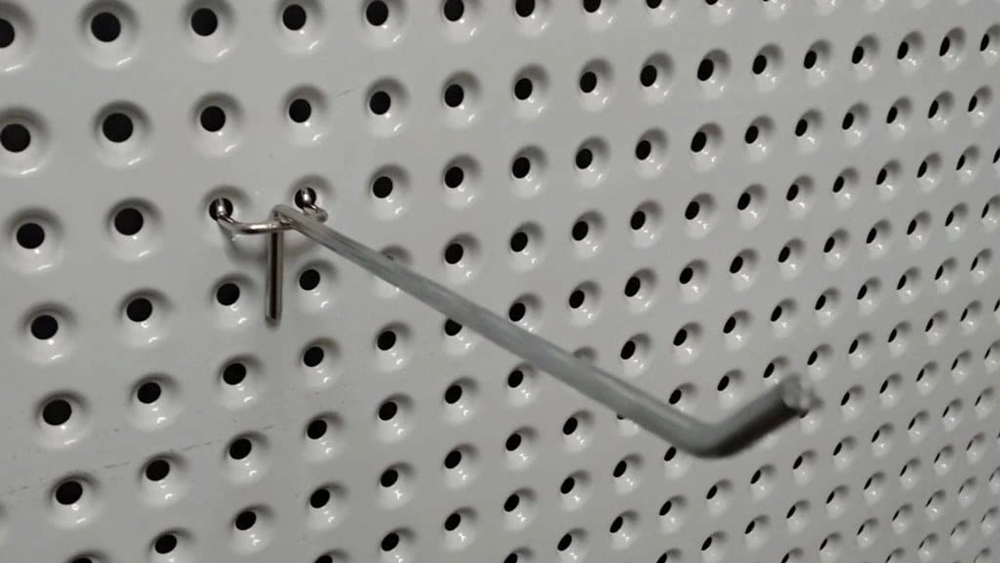
Pegboard, also referred to as perforated hardboard, features holes drilled throughout the board surface at even intervals. The Masonite Corporation founded the name Peg-Board in the early 1960s, though the trademark has since expired. Pegboard construction varies between tempered hardwood and metal, steel being the most common. Hooks attach to these pre-drilled holes and allow retailers to hang merchandise with hang tags, attachment points, or backer cards. Metal pegboards avoid the sagging issues sometimes seen with insufficient board thickness. Wooden pegboards may splinter or warp under excessive weight.
What Are Slatwall Display Hooks
Slatwall panels, also called Slotwall, consist of horizontal grooves or slats machined into medium-density fiberboard (MDF). The panels feature 3″ on-center grooves with aluminum-lined slots. Retailers mount aluminum or plastic inserts into these grooves and create attachment points for hooks and other accessories. Slatwall offers a clean, modern appearance suitable for retail environments of all types. Panel sizes include 2′ x 4′, 4′ x 4′, and 4′ x 8′. The system allows hooks to slide in and out of grooves and enables quick display reconfiguration.
What Are Gridwall Display Hooks
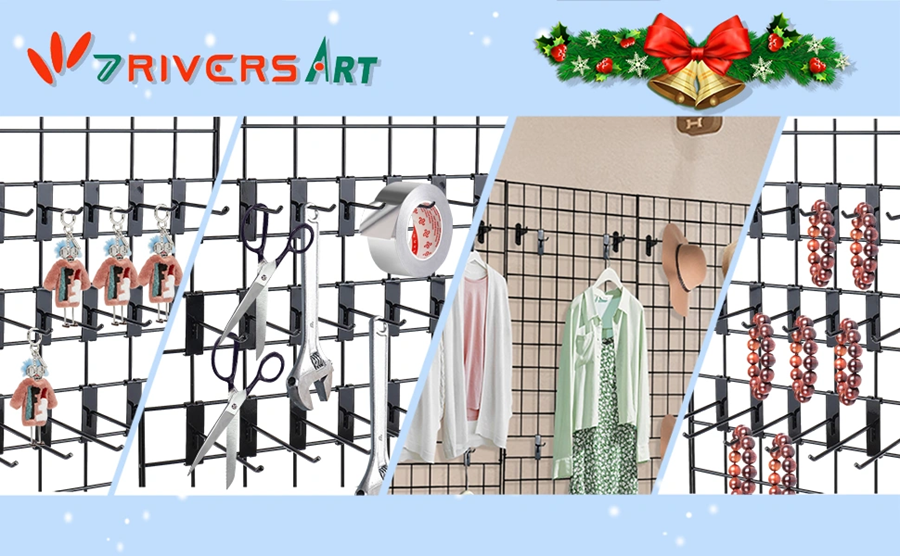
Gridwall units consist of a criss-crossing wire grid mesh onto which accessories clip into position. The lightweight wire strips create an industrial aesthetic while maintaining durability. Hooks attach by clipping onto the wire intersections rather than inserting into holes or grooves. Gridwall panels set up and removed with ease. They store flat to save backroom space.
Key Components of Each System
Display hooks are separated into two categories: display-only hooks without label provisions and scanning hooks with mounts for label holders. Hook varieties include single-prong hooks, loop hooks, flip-scan hooks, and quick back hooks. Material options span metal and plastic constructions in various lengths. Beyond simple hooks, specialty fixtures include J-hooks, utility hooks, and strip merchandisers.
Pegboard Display Hooks: Features and Applications
Installation Requirements for Pegboard Hooks
Pegboard hooks slot into pre-drilled holes for quick setup without specialized tools. Standard pegboard features 25mm hole spacing with 4mm thickness. The single prong merchandising hook inserts into these holes and creates a reconfigurable display that adapts to changing product needs. Wire diameter measures 4mm to match the pegboard specifications. Hooks feature polished zinc finishes with black rubber endcaps that protect products and prevent snagging.
Weight Capacity and Product Types
Pegboard systems hold up to 100 pounds on average. Testing reveals single pegs can support over 150 pounds without tearing or pulling away from wall mounts. Hook size determines load capacity. 1/4-inch hooks spread weight across the hole for heavier items. Metal pegboards handle serious weight and tool organization, while plastic options provide moisture resistance for humid environments.
Single vs Double Prong Options
Single prong hooks offer lengths of 10cm, 15cm, and 20cm. Double-pronged display hooks come in capacity lengths of 35mm, 100mm, 150mm, and 200mm. Made from glass-reinforced nylon, double prong options securely hang medium to heavyweight products. Both configurations work with Euroslot hanging tabs for packaged merchandise.
Best Use Cases for Pegboard Systems
Hangsell merchandising benefits from pegboard’s high perforation density. Multiple display hooks maximize stock visibility. Fashion retailers display shoulder bags, while DIY stores hang rows of packaged goods. The flexibility enables retailers to attach shelves, hooks, and wire display baskets anywhere on the panel.
Material Options: Metal vs Plastic
Plastic pegboards resist wear and tear while maintaining structural integrity, unlike wood, which warps in humidity, or metal prone to rust. Metal construction provides unmatched strength for heavy-duty applications. Plastic options remain lightweight, safe to handle, and budget-friendly.
Slatwall Display Hooks: Features and Applications
Installation Requirements for Slatwall Hooks
Slatwall display hooks slide into horizontal grooves without tools or additional hardware. The installation process requires tilting the hook upward, inserting it into the groove, and pressing down until it locks into position. Some models feature patent-pending spring locks that secure the hook and prevent shifting during frequent use. The spring lock’s easy-release function allows smooth repositioning without damaging the panel or hook. Retailers can adjust displays in response to new stock or sales patterns.
Adjustability and Repositioning Benefits
Slatwall systems excel in flexibility, as hooks move, swap, or replace without tools or disruption. Staff can make small, targeted changes that keep layouts relevant rather than redesigning entire displays. This repositioning capability saves both time and cost while allowing stores to stay responsive. Hooks can be unhooked and moved to any location on the panel for layout updates.
Hook Lengths and Sizing Options
Slatwall hooks come in lengths from 1″ to 12″, with common sizes including 2″, 4″, 6″, 8″, and 10″. Steel wire construction measures 1/4″ diameter with small upturns at the end to prevent items from falling. Chrome-plated and black powder-coated finishes offer durability for different retail aesthetics. Each hook supports up to 50 lb and accommodates various storage needs.
Best Use Cases for Slatwall Systems
Slatwall hooks suit apparel, accessories, kitchenware, and packaged goods. The system works especially well where adjustments occur on a regular basis. Retailers can hang promotional signs or seasonal decorations to boost thematic appeal. Heavy-duty options handle handbags and jewelry securely.
Gridwall Display Hooks: Features and Applications
Installation Requirements for Gridwall Hooks
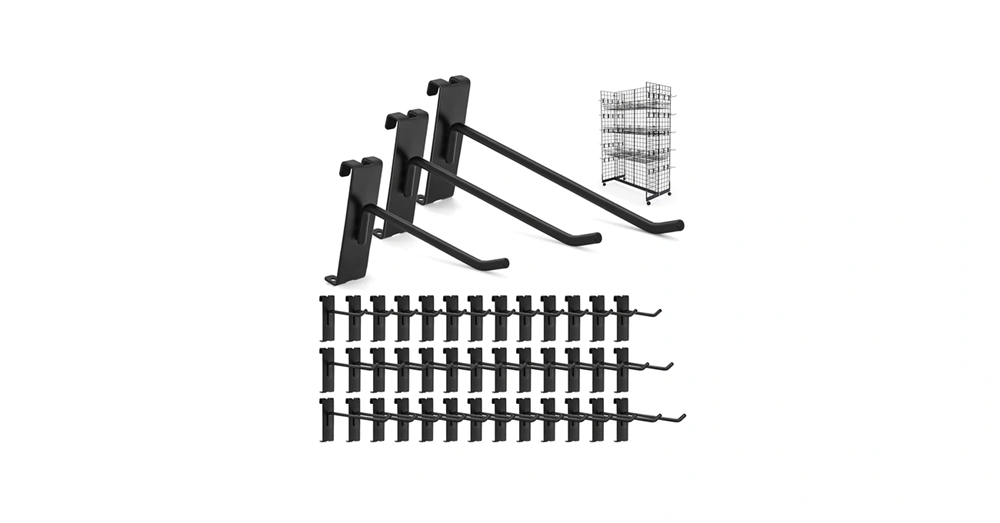
Gridwall hooks have prongs that wrap around wire intersections and create a secure clamp. You don’t need holes or grooves. The hooks clip onto the wire grid at any point and work with standard 3″ on-center spacing. Steel wire construction with black epoxy or chrome finishes gives you durability. The simple clip mechanism needs no tools or specialized hardware. Hook lengths range from 2″ to 12″ and fit shallow packaged goods through deeper merchandise displays.
Versatility for Temporary Displays
The lightweight wire construction allows quick setup and teardown. Gridwall panels store flat and save backroom space. Freestanding configurations work with bases, legs, or joining clips to create U-shaped, zigzag or H-shaped floor displays. Portable designs let you reposition for special promotions or reconfigure layouts often.
Stability and Product Security
Upturned hook ends prevent products from slipping off during display. The prong design clamps onto wire grids and distributes weight across multiple contact points securely. Proper installation keeps hooks stable under normal retail conditions.
Best Use Cases for Gridwall Systems
Gridwall hooks suit retail stores, tradeshows, conventions, pop-up shops, and street fairs. The system displays apparel, electronics, footwear, household items,s and jewelry well. Garden stores, home improvement retailers, and auto parts shops often use gridwall for its adaptability.
Compatibility with FSDUs and Wire Panels
Standard gridwall hooks work with both 3″ on-center grid panels and slatgrid systems. The universal wire spacing accepts various accessories like shelves and baskets to create versatile merchandising solutions.
Comparison Table
Display Hooks Comparison Table: Pegboard vs Slatwall vs Gridwall
| Feature/Attribute | Pegboard | Slatwall | Gridwall |
|---|---|---|---|
| Installation Method | Hooks slot into pre-drilled holes; no specialized tools required | Hooks slide into horizontal grooves; tilt upward and insert, then press down to lock | Hooks clip onto wire intersections; no tools or hardware required |
| Panel Construction | Perforated hardboard (tempered hardwood or metal/steel) | Medium-density fiberboard (MDF) with horizontal grooves and aluminum-lined slots | Criss-crossing wire grid mesh |
| Spacing/Specifications | 25mm hole spacing with 4mm thickness; 4mm wire diameter | 3″ on-center grooves | 3″ on-center wire spacing |
| Weight Capacity | Up to 100 lbs average; single pegs can support over 150 lbs | Up to 50 lbs per hook | Not mentioned |
| Hook Length Options | Single prong: 10cm, 15cm, 20cm; Double prong: 35mm, 100mm, 150mm, 200mm | 1″ to 12″ (common sizes: 2″, 4″, 6″, 8″, 10″) | 2″ to 12″ |
| Wire Diameter | 4mm | 1/4″ diameter steel wire | Steel wire (specific diameter not mentioned) |
| Adjustability | Reconfigurable by moving hooks to different holes | Hooks move, swap, or replace without tools; spring lock allows easy repositioning | Clips can be moved to any wire intersection; quick setup and teardown |
| Material Options | Metal (steel) or plastic; tempered hardwood | Steel wire with chrome-plated or black powder-coated finishes | Steel wire with black epoxy or chrome finishes |
| Finish Options | Polished zinc with black rubber endcaps | Chrome-plated and black powder-coated | Black epoxy or chrome |
| Best Use Cases | Hangsell merchandising, fashion retailers (shoulder bags), DIY stores (packaged goods), tool organization | Apparel, accessories, kitchenware, packaged goods, displays that change often | Retail stores, tradeshows, conventions, pop-up shops, street fairs, apparel, electronics, footwear, jewelry |
| Esthetic | High perforation density; industrial or utilitarian look | Clean, modern appearance | Lightweight wire strips; industrial esthetic |
| Storage/Portability | Fixed panel installation | Fixed panel installation | Stores flat to save backroom space; portable and freestanding options available |
| Key Advantages | High weight capacity, maximum stock visibility, flexible attachment options (shelves, hooks, baskets) | Repositioning without tools, spring lock security, quick layout updates, cost and time savings | Lightweight, versatile temporary displays, easy setup and teardown, portable configurations |
| Panel Sizes | Not mentioned | 2′ x 4′, 4′ x 4′, 4′ x 8′ | Not mentioned |
| Special Features | Rubber endcaps prevent product snagging; Euroslot compatibility | Patent-pending spring locks; easy-release function; upturned ends prevent items from falling | Upturned hook ends prevent slipping; compatible with FSDUs and wire panels |
| Durability Considerations | Metal avoids sagging; wooden may splinter or warp; plastic resists moisture | Durable with proper installation | Durable steel construction |
Conclusion
Choosing between pegboard, slatwall, and gridwall depends on your specific retail needs. Pegboard offers maximum weight capacity and budget-friendly pricing. Slatwall provides tool-free repositioning, especially when you have displays that change frequently. Gridwall excels in portability and temporary setups.
Think over your product weight, display frequency changes, and installation permanence when deciding. Pegboard’s strength benefits hardware stores and tool retailers. Apparel and accessory shops favor slatwall’s flexibility. Pop-up shops and tradeshows find gridwall’s portability a great asset.
FAQs
Q1. Which is better for retail displays: slatwall or pegboard? The choice depends on your specific needs. Slatwall excels in flexibility with tool-free repositioning, making it ideal for stores that frequently change displays like apparel and accessory shops. Pegboard offers superior weight capacity (up to 150 lbs per hook) and is more budget-friendly, making it perfect for hardware stores and tool retailers. Consider your product weight, how often you’ll reconfigure displays, and your budget when deciding.
Q2. What are the main differences between gridwall and slatwall display systems? Gridwall consists of lightweight criss-crossing wire mesh where hooks clip onto wire intersections, making it highly portable and ideal for temporary setups like pop-up shops and tradeshows. Slatwall features heavier horizontal panels with aluminum-lined grooves where hooks slide in and out easily. Gridwall stores flat and sets up quickly, while slatwall provides a cleaner, more permanent retail aesthetic with easier repositioning capabilities.
Q3. How much weight can slatwall hooks safely hold? Slatwall hooks typically support up to 50 pounds each. The actual weight capacity depends on the panel material and installation method. MDF slatwall with aluminum-reinforced grooves provides reliable support for most retail merchandise,e including apparel, accessories, kitchenware, and packaged goods. Proper mounting on wall studs increases the overall weight capacity and prevents panel failure under heavy loads.
Q4. What are the best alternatives to traditional pegboard hooks? Beyond standard pegboard hooks, retailers can use slatwall systems for easier repositioning, gridwall for portable displays, or French cleat systems for heavy-duty applications. Within the pegboard itself, you have options like single-prong hooks (10-20cm), double-prong hooks (35-200mm), J-hooks, utility hooks, and strip merchandisers. Material choices include metal for strength or plastic for moisture resistance, depending on your environment and product requirements.
Q5. Which display hook system works best for frequently changing retail layouts? Slatwall is the optimal choice for frequently changing displays. Its tool-free repositioning allows staff to move, swap, or replace hooks without disrupting the entire display. Some models feature spring locks that secure hooks firmly while still allowing easy release for quick adjustments. This flexibility saves time and cost while keeping your store layout responsive to new stock, seasonal changes, and promotional needs.