
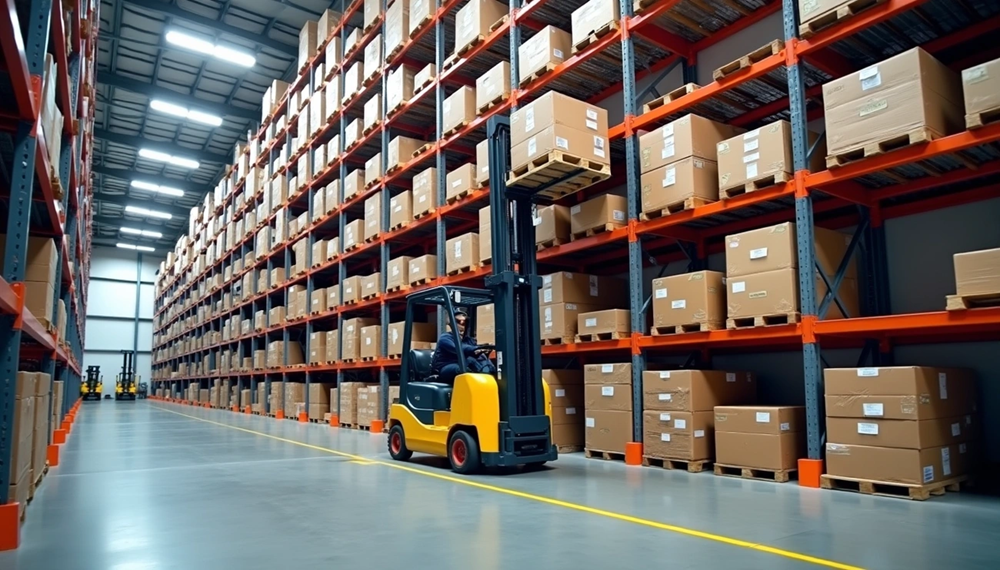
Pallet racking types provide essential storage solutions for warehouse operations dealing with increased real estate costs. Warehouse space costs have risen from $40-$50 per square foot to over $120 per square foot in certain markets. Businesses require maximum utilization of available storage space to maintain competitive operations.
Selective racking systems dominate worldwide warehouse installations and deliver 90% space utilization rates. High-density pallet flow racking accommodates up to 20 pallets deep per lane. Drive-in rack configurations handle up to 12 pallets deep or seven pallets high. Push-back racking systems store up to six pallets deep on each aisle side and increase storage utilization by 90%.
The main types of pallet racking systems serve specific warehouse applications. Each system addresses different inventory management requirements. Operations with high SKU variety require different solutions than those prioritizing maximum storage density. Warehouse managers need accurate information about system capabilities to select appropriate configurations that balance accessibility, storage capacity, and operational costs.
What is a Pallet Racking System and Why It Matters
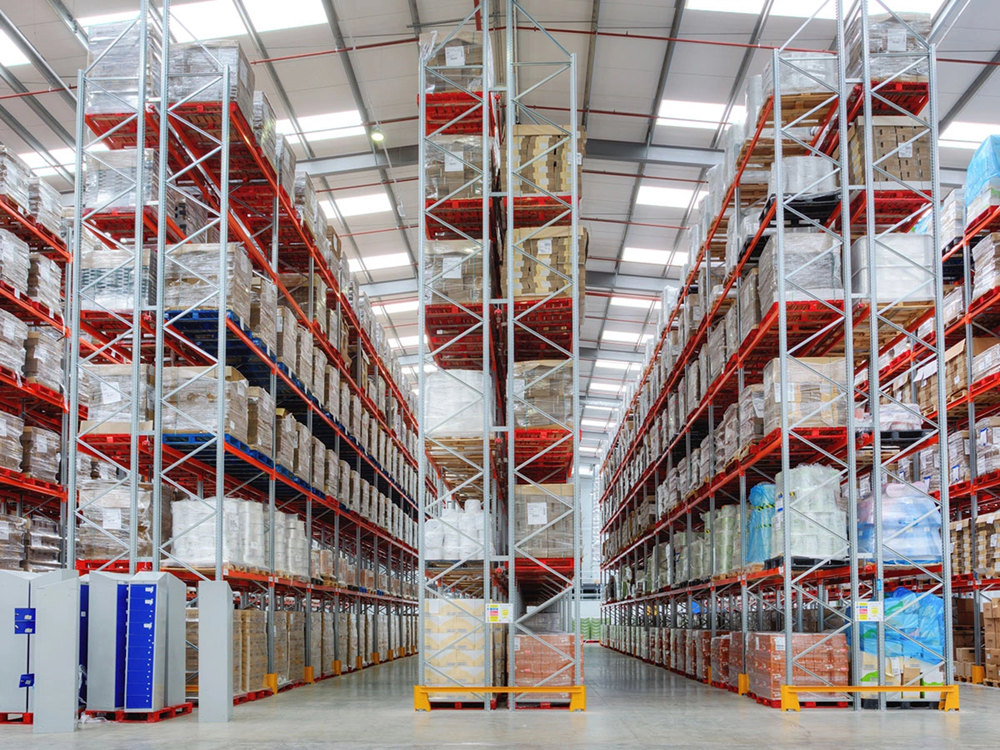
Pallet rack storage systems form the foundation of warehouse operations across multiple industries. These metal structures organize inventory through vertical space utilization rather than horizontal expansion.
Definition of pallet rack storage systems
Pallet racking systems store palletized goods in horizontal rows across multiple vertical levels. Three essential components comprise each system: rack structures, pallets containing goods, and material handling equipment, such as forklifts. Primary structural elements include upright frames that provide vertical support and horizontal beams connecting these frames to create storage levels. This configuration supports palletized materials while maintaining forklift accessibility.
Benefits of vertical space optimization
Vertical storage systems provide measurable advantages for space-constrained operations:
- Storage capacity increases up to five times in the same floor area through overhead space utilization
- Operational costs decrease through vertical expansion rather than horizontal facility expansion, particularly valuable in high-cost industrial zones
- Inventory organization improves through consolidated vertical storage, enhancing item location accuracy
- Workplace safety increases through the elimination of cluttered floors and aisles
- Productivity gains result from reduced product search time, accelerating order fulfillment and reducing labor costs
Common use cases in warehouses and distribution centers
Pallet racking applications have expanded across industries since World War II. Primary installations include:
- Distribution centers requiring organized storage for high-volume order processing
- Manufacturing facilities storing components and finished goods
- Retail operations with inventory rooms and large-format stores
- Cold storage facilities where space efficiency is essential
- E-commerce fulfillment centers managing rapid consumer demand changes
Pallet racking transforms disorganized warehouse inventory into structured, accessible storage systems that support efficient supply chain operations.
8 Types of Pallet Racking Systems Explained
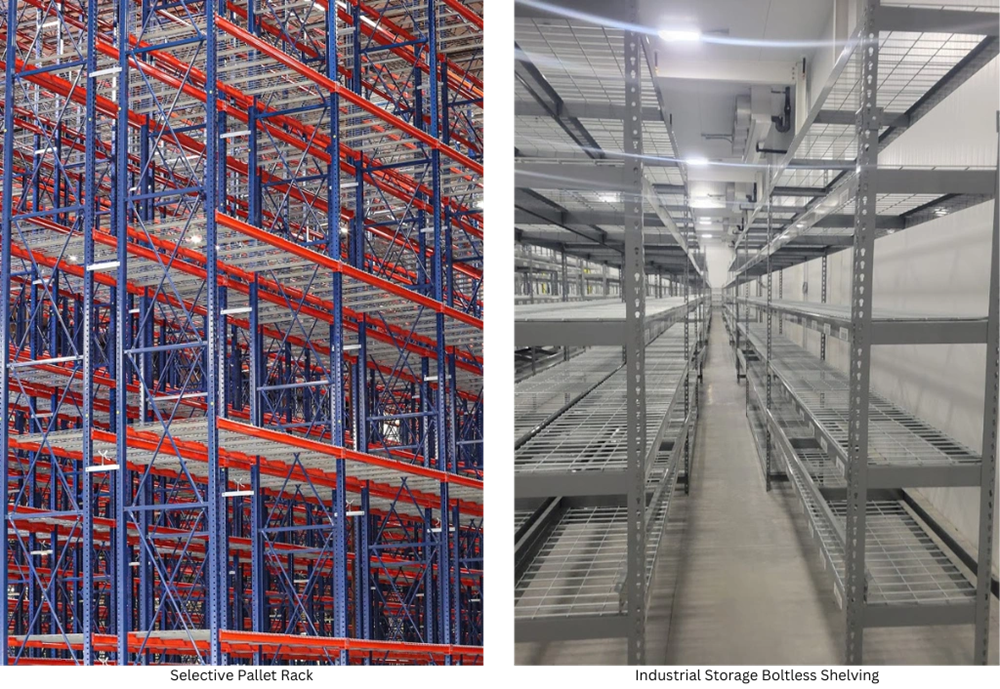
Warehouse operations demand proper racking system selection to achieve maximum storage efficiency. Each configuration serves specific inventory requirements, facility constraints, and operational needs. Eight primary racking systems offer distinct performance characteristics for different storage capacity requirements.
Selective Racking: Best for High SKU Variety
Selective racking provides universal storage applications through its direct access design. Interior aisles allow individual pallet access, suitable for warehouses managing diverse SKU inventories. The system delivers 100% selectivity and supports both FIFO and LIFO inventory methods. Storage density remains limited at 35% of cubic warehouse space.
Drive-In Racking: High-Density for Low SKU Count
Drive-In racking maximizes storage density through aisle elimination. Forklifts enter the rack structure directly for pallet loading and retrieval operations. The system operates on LIFO principles with single entry/exit access. Configurations accommodate up to 12 pallets deep or 7 pallets high, optimal for homogeneous products with low turnover requirements.
Push-Back Racking: FILO System with Medium Selectivity
Push-Back racking combines storage density with operational accessibility. Pallets are positioned on wheeled carts or inclined rollers, enabling new inventory to push existing pallets backward. Gravity automatically advances remaining inventory during retrieval. Systems typically handle 2-6 pallets deep per lane and achieve approximately 65% utilization versus selective racking’s 35%.
Pallet Flow Racking: FIFO System for Perishables
Pallet flow systems utilize inclined roller beds for gravity-assisted pallet movement. Loading and unloading occur at opposite ends, creating true FIFO operations. The configuration stores up to 20 pallets deep per lane. Food, pharmaceutical, and cosmetic industries benefit most from this system, where product dating requirements are critical.
Cantilever Racking: Ideal for Long and Bulky Items
Cantilever racks feature vertical columns with outward-extending horizontal arms, eliminating front column interference. The design accommodates long, bulky materials, including lumber, piping, textiles, or irregular-shaped items. Arms are available in straight, inclined, or axel-type configurations and provide adjustable storage for changing requirements.
Double-Deep Racking: Increased Density with Limited Access
Double-Deep racking positions pallets two deep, reducing required aisle space by half compared to selective systems. Space utilization reaches 80-90% but requires specialized forklifts with telescopic forks or pantograph mechanisms for rear pallet access. LIFO operations suit warehouses with multiple pallets per SKU.
Narrow Aisle Racking: Space-Saving with Specialized Forklifts
Narrow aisle systems compress aisle width to 1.5 meters minimum, reducing warehouse space requirements by 40%. Specialized equipment including turret trucks or reach trucks are required. The systems maintain direct pallet access while increasing storage density up to 50%. High real estate cost facilities benefit most from these configurations.
Mobile Racking: High Utilization with Movable Aisles
Mobile racking mounts standard racks on motorized bases moving laterally on rails, eliminating fixed aisles. Working aisles open only when required, increasing storage capacity 80-120% compared to conventional systems. Higher initial investment delivers exceptional return on investment with storage cost reductions reaching 64%.
How to Choose the Right Pallet Racking System
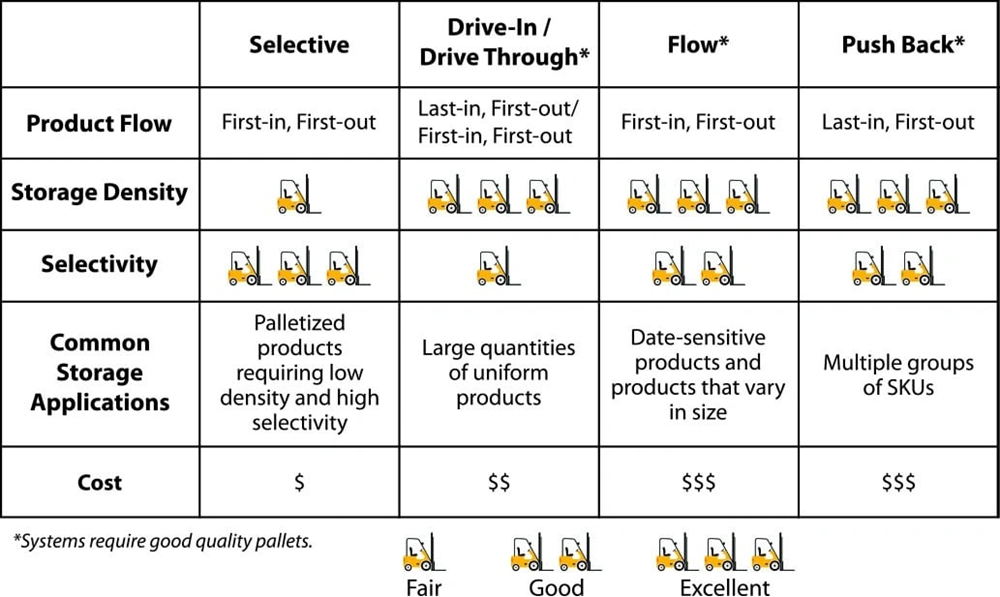
Pallet racking system selection depends on specific operational requirements. Multiple factors determine the optimal configuration for warehouse operations.
Inventory rotation method: FIFO vs FILO
Inventory rotation requirements guide system selection. FIFO (First-In, First-Out) applications require systems that process older inventory first. Pallet flow racks provide natural FIFO rotation. LIFO (Last-In, First-Out) operations utilize drive-in or push-back systems for non-perishable products.
SKU count and pallet volume considerations
SKU variety and pallet quantities per product determine system requirements. High SKU operations need selective racking for direct pallet access. Multiple pallets per SKU support high-density systems including drive-in or push-back configurations.
Warehouse layout and ceiling height constraints
Building specifications establish system parameters. Critical measurements include column spacing for back-to-back installations, ceiling height for rack levels, dock door positioning, and available floor space. Maximum rack height equals ceiling height minus sprinkler clearance requirements of 18-36 inches.
Forklift compatibility and aisle width requirements
Material handling equipment specifications determine aisle width requirements. Standard counterbalance forklifts operate in 12-foot aisles. Reach trucks function in 8.5-10 foot spaces. Narrow-aisle equipment requires 6-7 feet.
Budget and long-term ROI analysis
Investment analysis balances initial costs against operational benefits. System efficiency improvements, space utilization gains, and reduced operational expenses provide measurable ROI.
Installation and Safety Considerations for Racking Systems
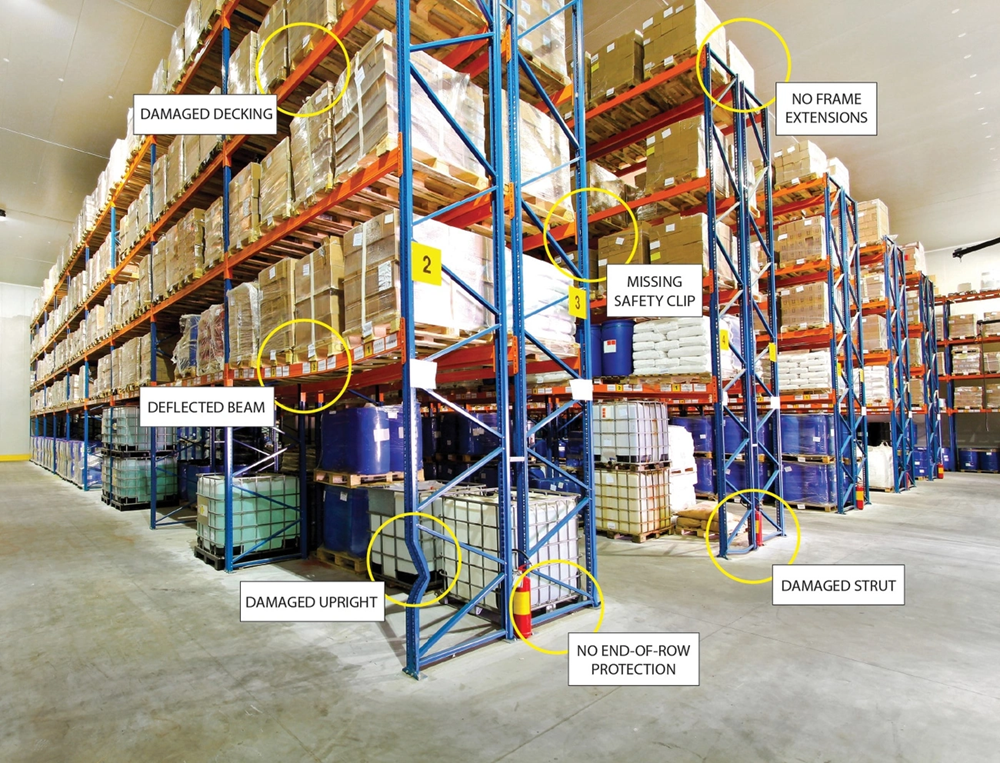
Safety requirements govern pallet racking installations. Proper implementation ensures operational efficiency and workplace protection.
Load capacity and seismic zone compliance
Load capacity calculations require maximum pallet weight, average pallet weight, and storage utilization factors. Seismic Design Categories (SDC) range from A to F, replacing basic zone designations. Regions with SDC B or higher need specific seismic design requirements. Rack columns require secure anchoring with base plates measuring 5″×5″ minimum in seismic zones. International Building Code compliance references RMI standards.
Fire safety regulations and in-rack sprinkler requirements
In-rack sprinklers are required for Class I to IV commodities stored up to 25 feet high with ESFR ceiling sprinklers. Sprinklers must be K-8.0 or K-11.2 quick-response types, installed at first tier level and halfway up storage height. Storage requires 6-inch vertical clearance above. Water demand calculations account for eight most remote sprinklers operating simultaneously, each discharging 60 gpm minimum.
RMI standards and steel gage requirements
The Rack Manufacturers Institute (RMI) establishes industry guidelines through ANSI MH16.1 standard. Specifications require one anchor minimum per column. R-Mark Certification Program identifies manufacturers meeting RMI specifications. Component mixing from different manufacturers is not recommended due to specific column and beam connector interface requirements.
Inspection and maintenance best practices
Regular inspections check for:
- Bent or missing horizontals and diagonals
- Broken welds or damaged footplates
- Missing safety clips or loose anchors
- Beam deflection or deformation [28]
Documentation of inspections is required for compliance tracking. Seismic events mandate inspection of connections, anchors, and structural integrity before operations resume.
Conclusion
Warehouse storage capacity optimization addresses rising real estate costs and inventory management requirements. Eight distinct pallet racking systems serve different operational specifications. Selective racking delivers 100% accessibility for high SKU operations. Drive-in and pallet flow systems increase storage density for homogeneous product storage.
Racking system selection depends on operational factors. Inventory rotation methods determine FIFO or LIFO system requirements. SKU variety and pallet volumes establish accessibility versus density balance. Physical constraints including ceiling heights and building layouts limit implementation options.
Safety requirements equal system selection importance. Load capacity calculations, seismic compliance, fire safety protocols, and maintenance procedures ensure personnel protection and regulatory compliance. RMI standards provide structural integrity specifications and operational durability requirements.
Warehouse managers achieve optimal results through detailed needs assessment before system implementation. Effective pallet racking systems balance accessibility for order fulfillment, storage density for space utilization, and cost-effectiveness for positive ROI. Proper system selection creates organized storage environments that support operational efficiency and competitive positioning.
Business model: B2B operations benefit from direct manufacturer relationships for pallet racking systems. No middle men provide reasonable pricing for high quality installations. ISO9001:2015 certified manufacturers ensure quality standards compliance.
Key Takeaways
Understanding the right pallet racking system can dramatically transform your warehouse efficiency and storage capacity while reducing operational costs.
• Choose based on SKU variety: Selective racking works best for diverse inventory (100% accessibility), while drive-in systems excel for homogeneous products (up to 12 pallets deep).
• Match system to inventory flow: Use FIFO systems like pallet flow racking for perishables and LIFO systems like push-back racking for non-perishable goods.
• Prioritize safety compliance: Ensure proper load calculations, seismic zone compliance, and RMI standards adherence to protect personnel and maintain regulatory compliance.
• Consider total cost of ownership: Balance initial investment against long-term ROI by analyzing storage density gains, operational efficiency improvements, and reduced real estate costs.
• Optimize vertical space utilization: High-density systems can increase storage capacity by 80-120% compared to conventional racking, maximizing every cubic foot of expensive warehouse space.
The key to successful warehouse optimization lies in matching your specific operational needs—inventory rotation, SKU count, and physical constraints—with the appropriate racking system to achieve maximum storage density without sacrificing accessibility or safety.
FAQs
Q1. What are the main types of pallet racking systems? The main types include selective racking, drive-in racking, push-back racking, pallet flow racking, cantilever racking, double-deep racking, narrow aisle racking, and mobile racking. Each system offers unique advantages for different storage needs and warehouse layouts.
Q2. How do I choose the right pallet racking system for my warehouse? Consider factors such as your inventory rotation method (FIFO vs. LIFO), SKU count, pallet volume, warehouse layout, ceiling height, forklift compatibility, and budget. Analyze these aspects to determine which system best balances accessibility, storage density, and cost-effectiveness for your specific needs.
Q3. What safety considerations are important when installing pallet racking? Key safety considerations include load capacity calculations, seismic zone compliance, fire safety regulations, adherence to RMI standards, and regular inspection and maintenance practices. Proper implementation of these measures ensures both operational efficiency and workplace safety.
Q4. How can pallet racking systems improve warehouse storage capacity? Pallet racking systems can significantly increase storage capacity by utilizing vertical space. High-density options like mobile racking can increase storage capacity by 80-120% compared to conventional systems, maximizing every cubic foot of warehouse space without expanding the facility’s footprint.
Q5. What is the difference between FIFO and LIFO inventory systems in pallet racking? FIFO (First-In, First-Out) systems, like pallet flow racking, are ideal for perishable goods as they ensure older inventory is accessed first. LIFO (Last-In, First-Out) systems, such as drive-in or push-back racking, are better suited for non-perishable items where inventory rotation is less critical.