
Choosing the Right LED Shelf Lighting
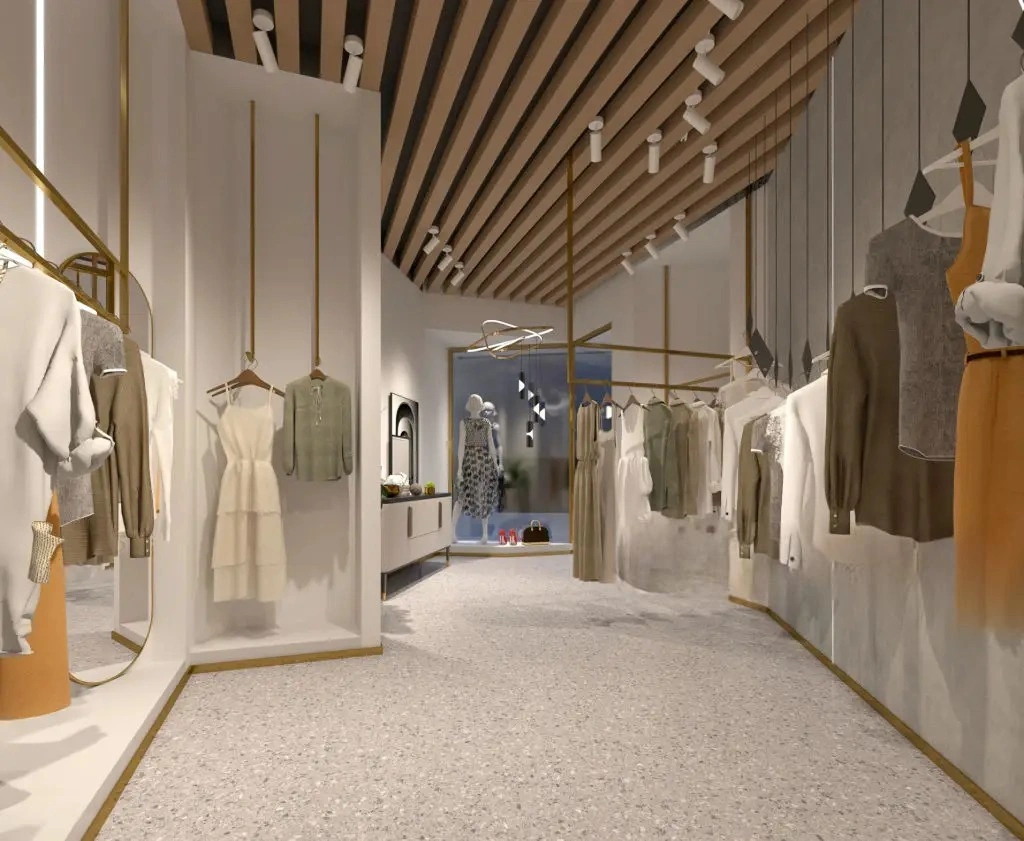
LED shelf lighting can change ordinary store displays into eye-catching product showcases. The market offers many options today. Finding lights that match your specific needs will create the perfect retail environment.
Types of LED shelf lights available
Retail displays typically use three main types of LED shelving lights:
LED Strip Lights are the most versatile option to light up shelves. These flexible, thin light strips give even, consistent lighting and you can cut them to specific lengths – perfect for custom applications. They work great to create ambient or accent lighting along shelf edges or underneath shelving units [1]. The uniform light prevents dark spots or glare across your shelves.
LED Puck Lights deliver focused illumination that makes specific products stand out and creates dramatic focal points. These small, round fixtures produce a narrower, concentrated beam of light (typically 30°-60°). Unlike strips that spread light broadly, puck lights excel at drawing attention to high-value merchandise. They’re a great choice for jewelry displays and premium products.
Recessed LED Fixtures sit flush with the shelf surface for a sleek, built-in look. These fixtures create a clean, minimalist style that keeps customers focused on your products rather than the lighting. High-end retail environments benefit from recessed options that hide hardware while providing professional illumination.
How to match lighting to shelf material
Each shelf material needs a specific lighting approach to look its best:
Wooden shelves look best with warm white light (2700K-3000K) that highlights the natural warmth of the wood grain. Under-shelf lighting creates bright, even appearances with minimal shadows. Over-shelf lighting adds more contrast and dimension.
Glass shelves shine with edge lighting techniques. LEDs illuminate through the transparent material. This creates an impressive effect where the entire shelf glows from within. Edge-lit glass shelving works especially well with high-end displays for jewelry and premium merchandise.
Metal shelves work great with magnetic mounting options. Magnetic LED fixtures attach firmly without adhesives or screws. You can quickly adjust or remove them without extra tools – perfect for retail spaces that update displays often.
Understanding color temperature and CRI
Color temperature plays a big role in how products look to customers. Measured in Kelvins (K), it determines if light appears warm or cool:
- Warm light (2700K-3000K): Sets a cozy mood that works well for wood products, textiles, and comfort-focused spaces
- Neutral light (3500K-4000K): Gives balanced lighting that suits mixed merchandise displays
- Cool light (4000K-6500K): Produces crisp, bright light that makes electronics, jewelry, and detailed items pop
Color Rendering Index (CRI) shows how accurately lights display colors compared to natural daylight. Retail spaces need a CRI of 90 or higher. This ensures customers see products in their true colors – especially important for cosmetics, fashion items, and fresh produce where color accuracy drives purchase decisions.
JY Shop Fitting brings 12+ years of experience to the shop fitting industry. We create stunning retail spaces that look amazing and work efficiently. Our commercial shop fitters know the power of proper lighting to showcase merchandise effectively. That’s why we recommend high-quality LED shelf lighting solutions for all retail projects.
Installation Techniques for LED Shelf Lights
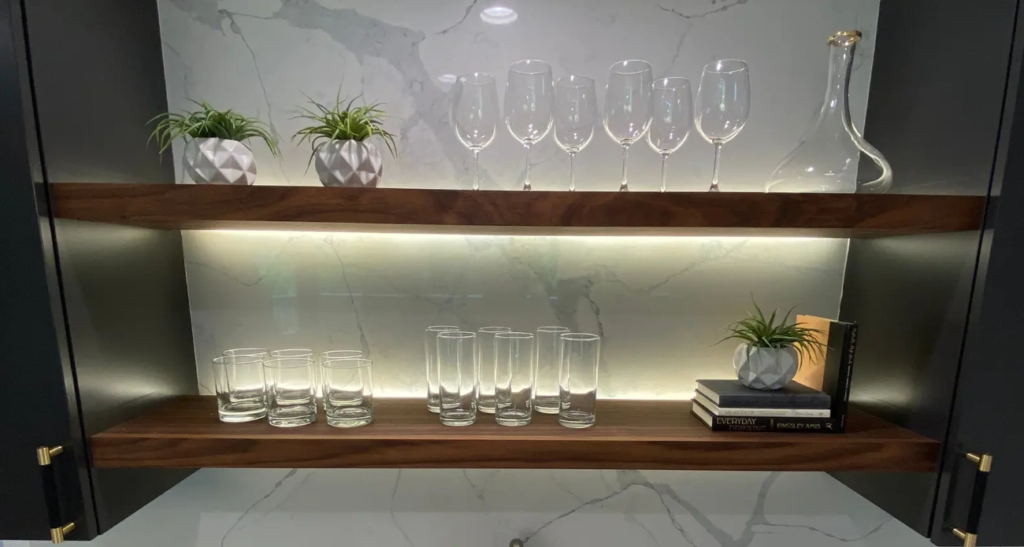
LED shelf lights can really improve product visibility and create eye-catching retail displays when installed correctly. Different installation methods serve unique purposes that help highlight merchandise and create the right mood in your store environment.
Undermount LED strip lighting
LED strips mounted under shelving units direct light downward onto products below. This setup creates fewer shadows and gives products a brighter, more even look. Here’s how to get the best results with undermount installation:
Make sure all mounting surfaces are clean for proper adhesion. Your surfaces need to be free of dust, completely dry, and above 60°F. Start applying the LED strips from the power source and slowly peel away the backing as you work along the cabinet edge.
The best light spread comes when you place strips about 1-2 inches from the shelf’s front edge. This keeps the shelf lip from casting shadows on your merchandise. You can get a more refined look with aluminum mounting channels and diffusers that create a smooth light line without visible LED dots.
Backlighting for floating effect
Backlighting makes shelves appear to float by placing LED strips along the rear edge and pointing light at the wall. This creates a soft glow that draws eyes to displayed items without harsh lighting.
The best way to backlight is to mount strip lights along the shelf’s back perimeter, facing the wall. Keep a steady gap between the shelf and wall (about 2-3 inches) to get an even wash of light. This works exceptionally well with floating shelves and makes them look like they’re suspended in space.
Edge lighting for product focus
Edge lighting helps guide customer attention right where you need it. This method puts LEDs along shelf fronts or sides to light up specific products with targeted illumination.
Products look their best when you install edge-lit fixtures at a 45-degree angle toward your merchandise. This creates an interplay of light and shadow that adds depth and makes objects pop. Edge lighting works great for jewelry, electronics, or any items that need extra visual appeal.
Recessed lighting for a clean look
Recessed installation puts LED lights right into the shelving structure for a smooth, professional finish. Custom shelving projects that need a minimalist touch benefit most from this approach.
A clean recessed installation needs grooves cut into the shelf with a router or saw. These channels should fit both the LED strip and any diffusion channel. Wooden shelves need about a ¼-inch deep channel where you want the light. After cutting, smooth out the edges and seal the cut areas for a professional look.
We know every retail project comes with its own challenges. Our team works side by side with you to learn about your needs and priorities. Our shop fittings experts then bring your vision and drawings to life with products that lift your store’s atmosphere and improve the shopping experience.
Store-Specific Display Ideas
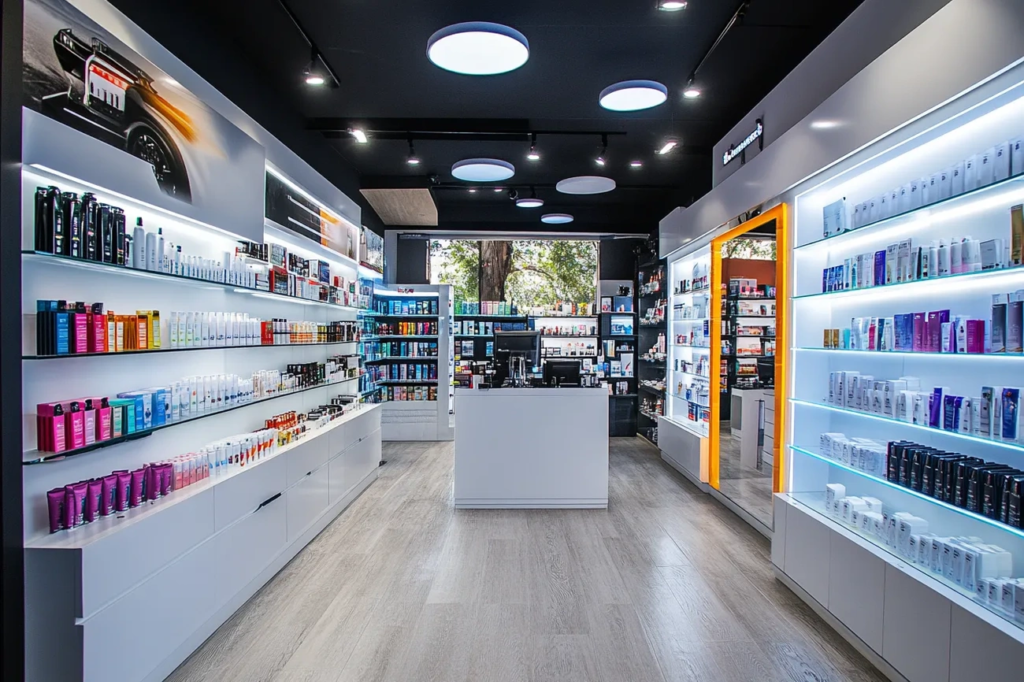
Different retail spaces need specific LED shelf lighting approaches to showcase their products well. The right industry-specific lighting setup will attract customers and drive more sales.
Jewelry and boutique lighting tips
Jewelry displays need lighting that boosts the brilliance of precious stones and metals. LED lights with high Color Rendering Index (above 90) will give a true color representation of gemstones. Gold jewelry looks best under warm white light (2700K-3000K), while diamonds sparkle brilliantly under cooler light (5000K-6500K). Backlighting display cases creates depth and adds a luxurious glow that makes items appear to float in luminous halos.
LED lights for shelving units in grocery stores
Bright, even illumination makes grocery store shelving stand out and shows off product freshness. LED shelf lighting at 5000K creates a daylight-like glow that works perfectly for produce, bakery items, and refrigerated goods. These fixtures reduce energy consumption by up to 80% compared to traditional lighting—a crucial factor for stores with long operating hours. Metal gondola shelving becomes easy to light with magnetic mounting systems that don’t need professional electrical work.
Highlighting electronics with cool white LEDs
Electronics displays need crisp, clean lighting to emphasize product features. Cool white LEDs (5000K-6500K) create perfect contrast and highlight the sleek lines of electronic devices. The glare-free lighting lets customers see product details clearly without any reflection interference.
Creating ambiance in clothing stores
Fashion retailers should create atmospheric lighting that makes shopping more enjoyable. Warm lighting sets a cozy, inviting mood that keeps customers browsing longer. Well-placed accent lighting draws eyes to folded items and accessories. Vertical LED lighting helps customers navigate the store layout better and find products easily.
Common Mistakes and How to Avoid Them
LED shelf lighting can challenge even seasoned retailers. Learning about common mistakes will help you save time, money and avoid frustration during your store’s lighting upgrade.
Over-lighting or under-lighting shelves
Poor light levels can quickly make products less appealing. Bright glare from over-lighting pushes customers away, particularly with glossy packaging or screens. Dark spots from under-lighting make merchandise look dull and uninviting. The best approach uses downlights for general illumination along with strategic accent lighting that creates the right contrast and hierarchy. Light positioning at the right angles helps minimize reflections and maximizes product visibility.
Ignoring wiring and power supply needs
Great displays need proper electrical planning. Retailers often underestimate voltage needs or overlook the “80/30 Rule” that suggests running drivers between 30-80% of their rated capacity. Voltage matching is vital—12V strips need 12V drivers, while 24V strips work with 24V drivers. Longer retail displays might benefit from 48V systems that reduce voltage drops and keep brightness consistent.
Choosing the wrong LED strip type
The wrong LED strips can really affect how products look. High-density strips shine brighter but need more power, which might limit how far they can run. Low CRI lighting changes product colors, making customers hesitate and return items more often. Retail displays need CRI ratings of 90+, and premium displays usually need Ra97 ratings that show colors accurately.
Not planning for dimming or control options
Missing lighting controls limits flexibility and wastes power. The wrong dimmers lead to flickering, buzzing, or early LED failure. Your control strategy needs early planning—you can use line-side dimming with matching power supplies or remote/wireless controls. Power supplies should stay available for maintenance instead of being hidden behind fixtures. Motion sensors in less-visited areas can make lighting both convenient and energy-efficient.
Conclusion
LED shelf lighting can change ordinary retail spaces into captivating shopping environments that showcase products well. We’ve looked at several lighting options – from versatile LED strips to focused puck lights. Each type works best for specific merchandise and shelf materials. The right color temperature with your products will show their true colors, whether it’s jewelry’s sparkle or produce’s freshness.
Your choice of installation method will affect the final look. Undermount lighting gives even illumination. Backlighting creates dramatic floating effects that catch customer attention. Edge lighting puts the focus on specific products. Recessed options give a clean, professional look. These techniques work well in different retail settings. Electronics stores need crisp, cool lighting, while clothing boutiques benefit from warm, inviting ambiance.
Smart planning helps avoid common mistakes like over-lighting, poor power management, or picking the wrong LED strips. Good lighting balance shows off merchandise and creates an atmosphere where customers want to stay and browse. We’re here as your trusted shopfitting partners to help your retail space stand out. Let’s work together to create a space that leaves lasting impressions on your customers.
Store owners can now set up LED shelf lighting that improves product visibility and creates unique brand experiences. Retail displays need both technical know-how and an eye for design. Light placement affects how customers see and respond to products. When done right, products shine, customers get involved, and sales follow naturally.
Key Takeaways
Master these essential LED shelf lighting strategies to transform your retail displays and boost customer engagement:
• Choose LED strips with 90+ CRI and appropriate color temperature (warm 2700K-3000K for textiles, cool 5000K-6500K for electronics) to showcase products in their true colors
• Install undermount lighting for even illumination, backlighting for dramatic floating effects, or edge lighting to focus attention on specific high-value merchandise
• Match lighting techniques to your store type: warm ambient lighting for clothing stores, bright daylight-like 5000K for grocery displays, and high-CRI spotlighting for jewelry
• Avoid common mistakes like over-lighting that creates glare, under-planning power requirements, or choosing incompatible dimmers that cause flickering
• Plan for control options early, including motion sensors and dimming capabilities, while ensuring power supplies remain accessible for maintenance
Proper LED shelf lighting isn’t just about illumination—it’s about creating an atmosphere that encourages customers to linger, explore, and ultimately purchase. The right combination of technical knowledge and esthetic understanding transforms ordinary retail spaces into captivating shopping environments where products naturally shine and sales follow.
FAQs
Q1. What are the best LED lights for retail display shelves? LED strip lights are highly recommended for retail displays due to their versatility, energy efficiency, and even illumination. For optimal results, choose LED strips with a Color Rendering Index (CRI) of 90 or higher to ensure products appear in their true colors.
Q2. How should I install LED lights on shelves for the best effect? The installation method depends on your desired effect. Undermount lighting provides even illumination, backlighting creates a floating effect, and edge lighting focuses attention on specific products. For a clean look, consider recessed lighting that sits flush with the shelf surface.
Q3. What color temperature should I use for my store’s LED shelf lighting? The ideal color temperature depends on your products. Use warm white (2700K-3000K) for clothing and wood products, neutral white (3500K-4000K) for mixed merchandise, and cool white (4000K-6500K) for electronics and jewelry to enhance their appearance.
Q4. Do I need special wiring for LED shelf lights? While LED lights don’t always require special wiring, it’s crucial to plan your electrical needs carefully. Ensure you match the correct voltage (12V, 24V, or 48V) between your LED strips and drivers. For longer installations, consider using 48V systems to maintain consistent brightness.
Q5. How can I avoid common mistakes when installing LED shelf lighting? To avoid common pitfalls, balance your lighting to prevent over or under-illumination, plan your power supply needs thoroughly, choose appropriate LED strip types for your application, and incorporate dimming or control options for flexibility. Also, ensure power supplies remain accessible for future maintenance.