

Warehouse racks exist in multiple configurations. Automated systems reduce space requirements by up to 90% compared to traditional storage methods. Logistics professionals and warehouse managers face a choice between conventional pallet racking and automated storage and retrieval systems (ASRS). This decision affects operational capacity and efficiency. Traditional warehouse pallet racks provide familiarity and lower initial investment. Automated warehouse racking systems maximize vertical and horizontal space utilization without requiring access aisles.
Industrial warehouse racks continue development as space optimization becomes critical for distribution centers. Automated storage solutions include vertical lift modules (VLMs) and horizontal carousels. These systems provide efficient resource saving over traditional shelving and rack systems. Warehouse storage racks eliminate the need for employees or large forklifts to navigate between aisles. This improves space utilization and safety. Warehouse racking systems using ASRS technology use shuttle devices and automated cranes to move and store products. Businesses can install these systems in smaller spaces where traditional racking would be impractical. This guide examines which system saves more space and how this choice affects warehouse operations.
Understanding Warehouse Racking Systems
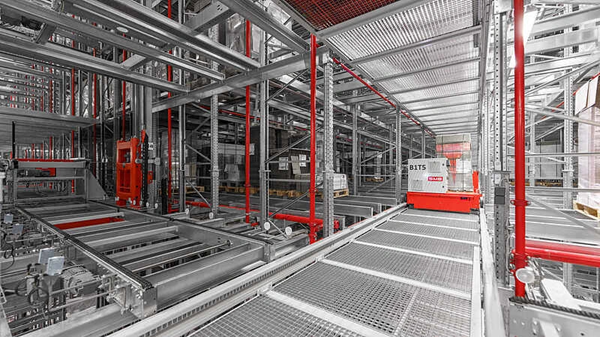
Warehouse storage operates on two primary racking approaches. Storage systems have evolved from basic shelving to automated solutions that maximize horizontal and vertical space.
What is Pallet Racking in Industrial Warehouses?
Pallet racking organizes palletized materials in rows on metal shelves with multiple vertical levels accessible by forklifts. Warehouse racking systems consist of two main components: upright frames and cross beams. Upright frames are vertical columns running from the floor to the top. Cross beams connect to create shelves for pallets. Upright frames feature holes allowing shelf size adjustments based on storage needs. The teardrop-shaped connection enables boltless assembly for installation.
Pallet rack design requires calculating loaded pallet height plus beam height plus four inches clearance, multiplied by the number of levels needed [10]. Industrial warehouse racks include selective pallet racking, drive-in/drive-through racks, push-back racks, and pallet flow systems. Selective pallet racking provides direct access to all pallets. Drive-in/drive-through racks allow forklifts to enter the structure for high-density storage.
How Automated Warehouse Racking Systems (ASRS) Work
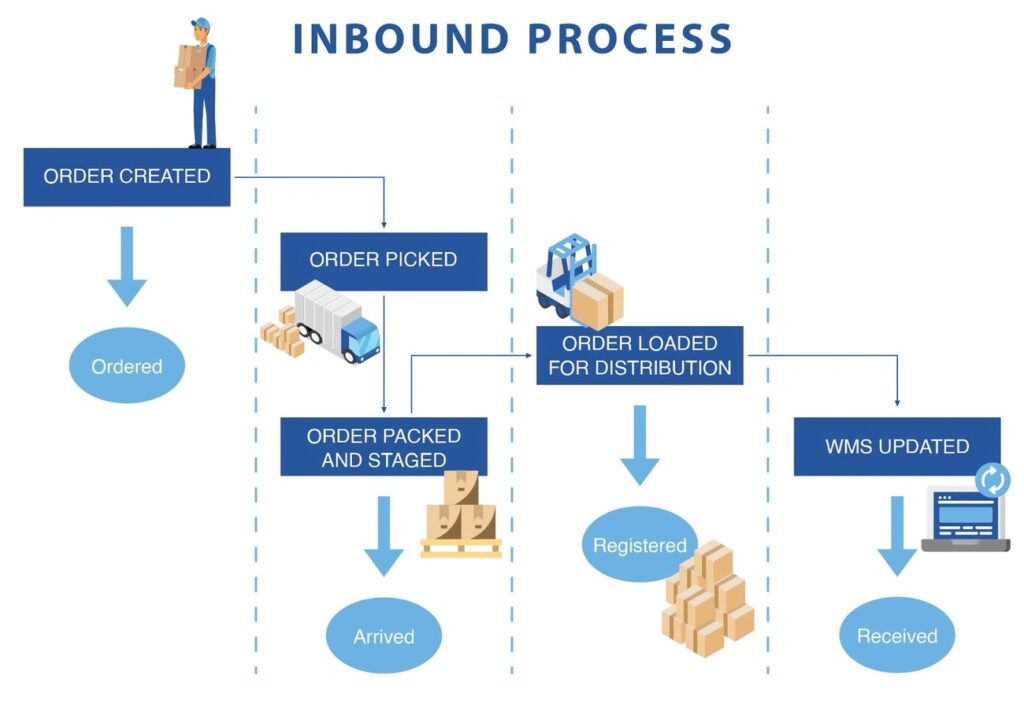
Automated Storage and Retrieval Systems combine technology-driven solutions with robotics and digital controls. These systems automate inventory handling without manual intervention. ASRS uses software, structural hardware, and robotics to manage warehouse operations,s including inbound processing, storage, and retrieval.
ASRS types include cube storage systems that store items in bins, carousels with rotating shelves, and vertical lift modules. Unit-load ASRS handles pallet loads exceeding 1,000 lbs. Mini-load systems manage smaller containers under 1,000 lbs. Computer-controlled cranes or robots travel through narrow aisles or along rails to place and retrieve inventory based on system commands.
Key Differences Between Manual and Automated Racks
Manual pallet racking offers lower initial investment and modification flexibility. Automated systems deliver superior space efficiency by eliminating or narrowing aisles. ASRS can reach heights up to 100 feet, though most common systems are 40 feet or less. This maximizes vertical space utilization.
Manual systems require human operators with forklifts. This creates safety considerations and labor dependencies. Automated systems operate continuously with minimal human intervention. Picking accuracy rates approach 99%. Automated systems require significant upfront investment in hardware, software, and installation costs.
Types of Racking Systems and Their Space Usage
Warehouse racking configurations provide distinct advantages for specific storage requirements. The correct system transforms available space utilization and operational efficiency.
Conventional Pallet Racks: Aisle Width and Vertical Limits
Selective pallet racking requires specific aisle widths based on equipment: counterbalance trucks need 3.5-4.0m, reach trucks function in 2.7-3.0m spaces, while very narrow aisle systems operate in just 1.6-1.9m. Proper vertical clearance demands at least 75mm for lower installations and 100mm for higher racks between the top of the pallet and the underside of the next beam. Beam deflection must be considered when calculating total usable height.
Drive-In and Drive-Through Racks: Deep Lane Storage
These systems optimize space by over 80% by eliminating multiple access aisles [6]. Drive-in racks feature single entry points using LIFO (Last In, First Out) inventory methods. These racks suit low-turnover products. Drive-through racks allow access from both ends, enabling FIFO (First In, First Out) rotation. This configuration works for date-sensitive goods. Both systems excel at storing homogeneous products with multiple pallets of the same item.
Mobile Pallet Racks: Space-Saving with Movement
Mobile racking systems mount conventional racks onto motorized bases that slide laterally on floor rails. Only the needed working aisle opens. This design increases storage capacity by 80-120% versus fixed systems. Mobile racks maintain direct access to every pallet. These systems reduce energy consumption in cold storage by decreasing the air volume requiring cooling.
Vertical Lift Modules (VLM): Up to 90% Space Reduction
VLMs save up to 90% of valuable floor space compared to traditional storage methods. These automated vertical systems utilize ceiling height while keeping inventory secure and accessible. VLMs deliver items directly to operators at ergonomic heights, eliminating search time. Their modular design provides flexibility. Heights can be modified by adding or removing modules to match ceiling constraints.
Horizontal Carousels: Optimizing Low-Ceiling Spaces
Horizontal carousels provide high-speed picking solutions designed for environments with height limitations. These systems are arranged in integrated pods of two, three, or four units. The systems work together to enhance productivity by up to 65%. Operators pick from one carousel while others automatically pre-position for subsequent picks, minimizing downtime. This approach reduces worker movement, increases accuracy, and organizes inventory efficiently in facilities with limited vertical space.
Space Efficiency Metrics: Pallet Racking vs ASRS
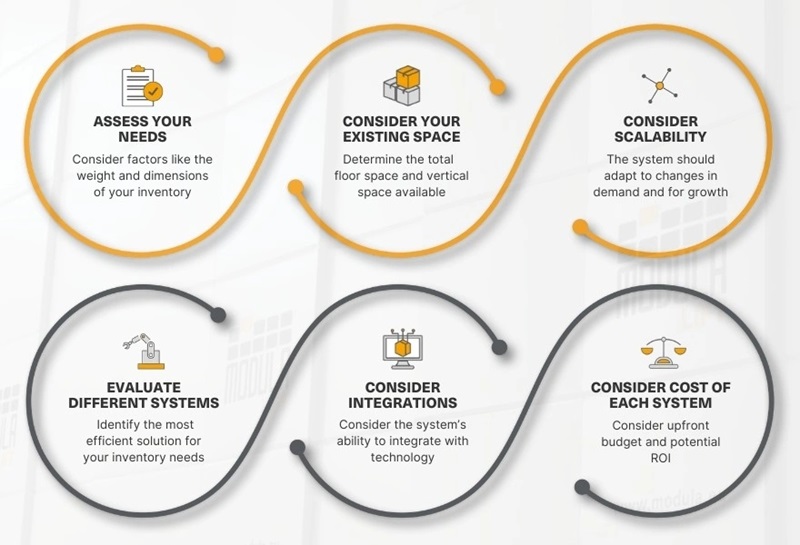
Space efficiency measurement shows the contrasts between traditional and automated warehouse storage solutions. These metrics explain why facilities reconsider their storage approaches.
Storage Density: Pallet Positions per Square Foot
Traditional warehouse racks achieve 0.7-0.9 pallets per square meter with selective racking, including aisle space. Drive-in racking increases this to 2-3 pallets per square meter. Automated storage systems improve these numbers, with ASRS configurations storing 3+ pallets per square meter.
Aisle Requirements: Manual vs Automated Systems
Aisle requirements create space disparities between systems. Traditional warehouse pallet racks require wide aisles (2.5-3.5 meters) for forklift operation. Automated warehouse racking systems need only narrow equipment tracks, increasing storage capacity by 50-80% within the same footprint.
Vertical Utilization: Ceiling Height Optimization
Vertical space utilization shows the greatest efficiency difference. Traditional storage utilizes 40-60% of available vertical space. ASRS utilizes up to 85% of available height, with racking systems reaching 100+ feet tall. Many warehouses operate at less than 30% vertical storage efficiency due to traditional racking limitations.
Footprint Reduction: Real-World Case Studies
UPS Global Logistics implemented ASRS in its Netherlands fulfillment center, creating up to 400% more storage capacity in the same space versus traditional warehouse racking. Rapyuta ASRS increases storage density by 2.5X compared to traditional racking.
Operational Impact of Space Optimization
Warehouse racks optimization provides operational advantages beyond space savings. Racking configuration affects inventory handling, safety standards, and growth adaptation.
Inventory Accessibility and Picking Speed
Warehouse racking systems reduce picking times and increase throughput. Travel between picking locations consumes approximately 55% of order selectors’ time. Layout optimization becomes crucial for productivity. Optimized warehouse layouts yield efficiency improvements from 15% to 60%. Well-organized facilities experience 15-20% productivity gains after optimization.
Fast-moving products placed near fulfillment zones reduce travel distances. Automated warehouse racking systems use pick-to-light technologies to guide pickers to exact locations. This increases picking speed by up to 50% compared to paper-based methods.
Safety Improvements from Reduced Aisle Traffic
Optimized warehouse racking systems create less congested environments through better space utilization. Clearly marked aisles with proper signage facilitate traffic flow for pedestrians and vehicles throughout the warehouse. Dedicated lanes for pedestrians and vehicles remain separated, minimizing collision risks.
Scalability for Growing Inventory Needs
Adaptable storage handles fluctuating demand requirements. Warehouse capacity planning accounts for seasonal inventory adjustments that strain storage capacity. Modular warehouse racks allow businesses to expand while maintaining operational stability. Companies accommodate increased inventory or changing product lines without overhauling entire storage infrastructure.
Comparison Table
| Comparison Factor | Traditional Pallet Racking | Automated Storage and Retrieval Systems (ASRS) |
|---|---|---|
| Storage Density | 0.7-0.9 pallets per square meter (selective racking) | 3+ pallets per square meter |
| Aisle Width Requirements | 2.5-3.5 meters | Minimal (only narrow equipment tracks) |
| Vertical Space Utilization | 40-60% of available space | Up to 85% of available space |
| Maximum Height Capability | Not specified | Up to 100 feet (most common ≤40 feet) |
| Initial Investment | Lower initial investment | Significant upfront investment required |
| Human Intervention | Requires forklift operators | Minimal human intervention needed |
| Picking Accuracy | Not specified | Up to 99% accuracy |
| Space Savings vs Traditional | Baseline | Up to 90% space reduction |
| Flexibility for Modifications | High flexibility | Limited once installed |
| Access to Inventory | Direct access with forklifts | Computer-controlled automated access |
| Safety Considerations | Requires safety measures for forklift traffic | Reduced human traffic, improved safety |
| Operating Hours | Limited by human operators | Can operate continuously |
Conclusion
The choice between traditional pallet racking and ASRS depends on operational requirements, budget constraints, and growth projections. Space efficiency metrics demonstrate that automated systems offer substantial advantages. These systems reduce space requirements by up to 90% compared to conventional methods. ASRS maximizes vertical and horizontal space utilization. Businesses can store three or more pallets per square meter versus the 0.7-0.9 pallets achieved by selective racking.
Traditional pallet racks provide familiarity and lower initial costs. Wide aisle requirements and limited vertical reach reduce storage density. ASRS technologies such as vertical lift modules and horizontal carousels improve space utilization. These systems enhance picking accuracy to nearly 99%. The systems eliminate the need for forklift-accessible aisles. This creates safer work environments with less traffic congestion.
Companies must consider long-term scalability needs before making decisions. Mobile racking systems offer a middle-ground approach. Storage capacity increases by 80-120% over fixed systems while maintaining direct access to all pallets. Case studies confirm these advantages. Some facilities experience up to 400% more storage capacity after implementing automated solutions.
Operational efficiency gains prove equally important. Warehouse optimization yields 15-60% productivity improvements. This occurs primarily through reduced travel time between picking locations. Automated systems can operate continuously without human limitations. This maximizes facility utilization throughout all hours.
The warehouse racking landscape continues development as space optimization becomes critical for distribution centers. Traditional systems will maintain their place in certain applications due to flexibility and lower upfront investment. Automated solutions represent the future for operations seeking maximum space efficiency and productivity gains. Warehouse managers who evaluate their specific needs against these different systems will find the optimal solution for their storage challenges.
Key Takeaways
Understanding the space efficiency differences between traditional pallet racking and automated systems helps warehouse managers make informed decisions that can dramatically impact storage capacity and operational costs.
• ASRS delivers up to 90% space reduction compared to traditional pallet racking by eliminating wide aisles and maximizing vertical utilization up to 85% of available height.
• Traditional pallet racking requires 2.5-3.5 meter aisles while automated systems need only narrow equipment tracks, increasing storage capacity by 50-80% in the same footprint.
• Storage density jumps from 0.7-0.9 pallets per square meter with selective racking to 3+ pallets per square meter with automated warehouse systems.
• Operational efficiency improves 15-60% after warehouse optimization, with automated systems achieving 99% picking accuracy and continuous operation capabilities.
• Initial investment trade-offs matter: Traditional systems offer lower upfront costs and flexibility, while ASRS requires significant capital but delivers long-term space and productivity gains.
The choice between systems depends on your specific operational requirements, budget constraints, and growth projections. Companies experiencing space limitations or seeking maximum efficiency should seriously consider automated solutions, while those prioritizing flexibility and lower initial investment may benefit from optimized traditional racking configurations.
FAQs
Q1. What are the main advantages of Automated Storage and Retrieval Systems (ASRS)? ASRS offers significant space savings, with up to 90% reduction compared to traditional racking. It also provides high storage density, improved inventory accuracy, and continuous operation capabilities, enhancing overall warehouse efficiency.
Q2. How does pallet racking compare to ASRS in terms of space utilization? Traditional pallet racking typically achieves 0.7-0.9 pallets per square meter, while ASRS can store 3+ pallets per square meter. ASRS also utilizes up to 85% of available vertical space, compared to 40-60% for traditional racking.
Q3. What are the key benefits of implementing a racking system in a warehouse? Racking systems increase storage capacity, optimize floor and vertical space utilization, improve inventory tracking, speed up order processing, reduce labor requirements, and help protect stored goods from damage.
Q4. How much aisle space is required for different racking systems? Traditional pallet racking requires 2.5-3.5 meter wide aisles for forklift operation. In contrast, ASRS needs only narrow equipment tracks, potentially increasing storage capacity by 50-80% within the same footprint.
Q5. How does the choice between pallet racking and ASRS affect operational efficiency? ASRS can achieve up to 99% picking accuracy and operate continuously without human limitations. Optimized warehouse layouts, including both traditional and automated systems, typically yield efficiency improvements ranging from 15% to 60%, primarily through reduced travel time between picking locations.