
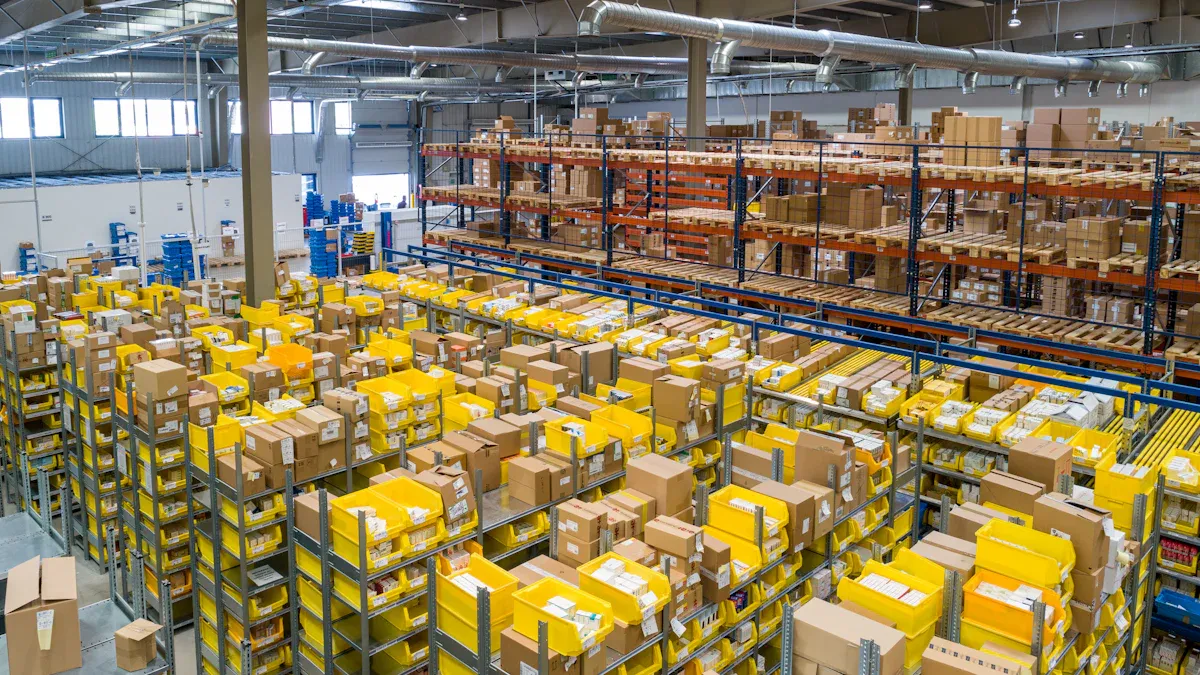
Smart Racks and modular storage systems drive a new era of warehouse efficiency, flexibility, and scalability. Recent advances show that automation technologies, including vertical racking and robotics, can boost storage capacity by 50% and reduce operational errors by 99%. Businesses report improved inventory accuracy, faster item retrieval, and enhanced safety, as modular solutions optimize space utilization and adapt to changing demands. The adoption of these technologies also lowers installation time and lifecycle costs, helping companies remain competitive in a rapidly evolving market.
Key Takeaways
- Smart racks and modular storage systems boost warehouse space use by up to 50%, helping businesses store more without expanding their buildings.
- Automation and real-time tracking improve inventory accuracy and speed up order picking, reducing errors and labor costs.
- Modular solutions offer easy customization and quick adjustments, allowing warehouses to adapt fast to changing inventory and seasonal demands.
- These technologies enhance worker safety by reducing manual handling and providing alerts to prevent accidents.
- Sustainable materials and energy-efficient designs in smart racks support long-term cost savings and lower environmental impact.
Overcoming Warehouse Storage Challenges
Space Utilization and Optimization
Warehouse operators often struggle to maximize available space. Many facilities underuse vertical storage or suffer from poor layout planning. These inefficiencies lead to wasted square footage and higher operational costs. Smart racks and modular systems address these issues by enabling better organization and accessibility. Pallet rack systems and vertical lift modules allow warehouses to use vertical space more effectively. This approach not only increases storage capacity but also streamlines picking and putaway processes. Facilities that optimize space can handle more inventory without expanding their footprint, which supports business growth and reduces overhead.
Tip: Regularly reviewing warehouse layouts and adopting modular solutions can help businesses adapt quickly to changing inventory needs.
Labor Efficiency and Safety
Labor shortages and high turnover rates present ongoing challenges for warehouse managers. Many facilities face bottlenecks in receiving and putaway, which cause dock congestion and increase labor costs. Suboptimal labor management and inefficient order fulfillment processes further impact productivity. Smart racks and modular solutions simplify workflows, reducing the need for manual handling and repetitive tasks. Automation and ergonomic designs help minimize workplace injuries and improve overall safety. As a result, workers can focus on higher-value activities, and businesses can better manage labor resources.
Common labor-related challenges include:
- Difficulty hiring and retaining skilled workers
- Increased costs due to inefficiencies
- Safety risks from manual handling
Inventory Visibility and Management
Accurate inventory management remains critical for warehouse success. Poor inventory practices often result in stock imbalances, misplacement, and product damage. Facilities managing multiple sales channels or handling returns face even greater complexity. Smart racks and modular systems enhance inventory visibility through real-time tracking and integration with Warehouse Management Systems (WMS). Automated storage solutions and tools like RFID, barcode scanners, and drones reduce human error and support precise stock monitoring. These technologies enable faster, more accurate audits and help maintain optimal stock levels, ensuring customer satisfaction and operational efficiency.
- Real-time tracking improves inventory accuracy
- Automated audits reduce discrepancies
- Better organization supports faster order fulfillment
Smart Racks: Definition and Key Features
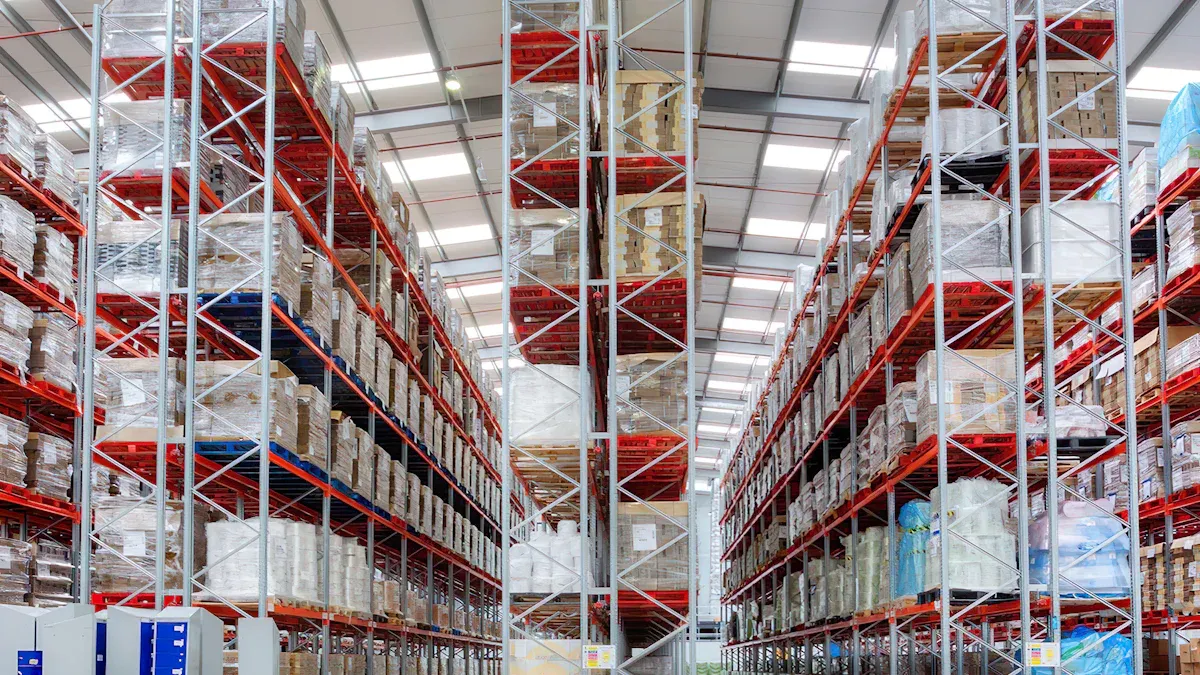
Smart Racks represent a new generation of warehouse storage systems that combine advanced automation, sensor integration, and digital connectivity. These systems use embedded technologies to monitor inventory, optimize workflows, and enhance safety. By leveraging real-time data and intelligent automation, Smart Racks help warehouses achieve higher efficiency and accuracy.
Automation and Sensor Integration
Modern Smart Racks rely on a blend of automation and sensor technologies to streamline warehouse operations. These systems often include IoT devices, robotics, and advanced analytics. The following table highlights common technologies found in Smart Racks and their benefits:
| Technology Type | Examples and Details | Benefits Provided |
|---|---|---|
| IoT Devices | Optimized space utilization, seamless inventory rotation, and reduced storage costs | Machine learning, computer vision, and analyzing IoT data |
| Automation Technologies | Robotics, AGVs, AS/RS, Goods-to-person systems, Conveyor systems | Streamlined operations, reduced manual labor, increased picking and sorting speed, enhanced safety |
| AI and Analytics | Real-time inventory tracking, monitoring inventory levels, environmental conditions, and equipment status | Pattern recognition, anomaly detection, optimized inventory management, predictive maintenance |
| Smart Shelving and AS/RS | High-density storage systems, cube-based storage | Optimized space utilization, seamless inventory rotation, reduced storage costs |
Arthur Fendel, VP of Sales and Engineering at STOW, notes that smart pallets equipped with RFID or GPS sensors enable rapid location tracking in fast-paced environments. These sensors offer durability, easy installation, and global connectivity. However, steel racking can disrupt signals, so warehouses may need WiFi repeaters to maintain connectivity. Proper employee training ensures that teams handle smart pallets correctly and maximize the benefits of these technologies.
Key advantages of automation and sensor integration include:
- Enhanced inventory accuracy, reaching up to 99.5% precision and reducing write-offs by up to 40%
- Real-time updates on inventory movement, improving order picking accuracy to 99.84%
- Optimized space utilization, with productivity gains of up to 25%
- Streamlined operations, reducing travel time by up to 50%
- Predictive maintenance lowers maintenance costs by up to 40% and extends equipment life by up to 20%
Real-Time Data and Connectivity
Smart Racks deliver significant value through real-time data connectivity. IoT devices such as RFID tags and sensors provide up-to-date information on stock levels and locations. This connectivity reduces errors and guides workers efficiently through fulfillment processes. The following table summarizes how real-time data and connectivity improve warehouse operations:
| Aspect | Explanation |
|---|---|
| Real-time inventory tracking | IoT devices on Smart Racks provide current stock data, reducing errors and guiding efficient fulfillment |
| Operational visibility | Connectivity enables transparency into inventory and labor, supporting better resource allocation |
| Agility and scalability | Data-driven insights help warehouses adapt quickly to demand changes, improving response times |
| Workflow optimization | Integration with WMS, AR, and wearable scanners streamlines picking routes and enhances worker safety |
| Environmental and asset monitoring | Sensors track storage conditions and equipment usage, enabling predictive maintenance and product quality |
| Worker empowerment | AR and wearable devices offer real-time guidance, improving accuracy, speed, and safety |
| Cost and performance benefits | Faster order fulfillment, higher accuracy, reduced costs, and increased customer satisfaction |
Warehouses that use Smart Racks with real-time connectivity gain operational visibility and agility. Data-driven insights allow managers to anticipate demand shifts and optimize resource allocation. Integration with warehouse management systems and wearable technology further streamlines picking routes and reduces cognitive load for workers.
Enhanced Safety and Workflow
Smart Racks also play a crucial role in improving safety and workflow within warehouse environments. Automation reduces manual handling and downtime, while digital asset tracking with alerts prevents loss and theft. These features increase accountability and help facilities meet regulatory compliance.
- Automation of asset signout minimizes manual handling and improves workflow efficiency
- Digital tracking with alerts enhances safety and security
- Automatic audit trails support regulatory compliance
- 24/7 contactless access reduces bottlenecks and supports continuous operations
- Modular, wall-mounted designs maximize floor space
- Integration with warehouse management systems streamlines reporting and operations
By optimizing space usage and integrating with digital systems, Smart Racks create safer, more efficient workflows. Workers benefit from reduced physical strain and improved access to inventory, while managers gain better control over operations.
Benefits of Smart Racks
Increased Operational Efficiency
Companies that implement Smart Racks experience measurable improvements in operational efficiency. These systems help warehouses save floor space and reduce labor requirements. Facilities can repurpose freed-up areas for new production lines or improved workflows. Smart Racks streamline material handling by reducing transportation times and enabling lineside storage. This eliminates the need for kitting and simplifies processes. Employees benefit from fewer manual tasks and a more modern work environment, which boosts productivity and morale.
- Floor space savings allow for future expansion.
- Labor reductions lower operational costs.
- Error minimization leads to higher accuracy.
- Flexible and scalable systems adapt quickly to production changes.
Note: Data-driven decision-making improves with real-time inventory tracking, better forecasting, and bottleneck identification.
Real-Time Inventory Tracking
Smart Racks use IoT technology, such as sensors and RFID tags, to provide real-time visibility of stock levels, sales, and orders. AI and machine learning analyze historical data to predict future demand, allowing proactive inventory adjustments. Real-time tracking helps businesses avoid stockouts and overstocking by enabling continuous monitoring and quick responses to changes.
- Improved demand forecasting and supply chain efficiency.
- Enhanced order fulfillment and customer satisfaction.
- Cost savings through just-in-time inventory.
- Metrics such as perfect order index, on-time deliveries, inventory turnover ratio, and order accuracy show measurable improvement.
Real-time data also helps companies prepare for seasonal demand and supply chain disruptions, ensuring optimal inventory levels and profitability.
Improved Worker Safety
Warehouse environments present significant safety risks. The injury rate in warehousing stands at 4.7 cases per 100 full-time employees. Forklifts contribute to one in six workplace fatalities and cause most pallet rack damage. Smart Racks, combined with technologies like Warehouse Management Systems and Real-Time Location Systems, reduce these risks. These systems optimize travel routes, create slow zones, and provide real-time proximity alerts to prevent collisions.
- Automation reduces manual handling errors and physical strain.
- AI-powered systems increase near-miss visibility and lower incident rates.
- Dynamic geofencing and heatmaps manage forklift and pedestrian traffic.
- Proper rack maintenance and repair kits ensure structural safety.
Tip: Integrating smart systems with regular maintenance routines creates a safer, more productive warehouse environment.
Modular Solutions for Warehouse Storage
Modularity and Customization
Modular warehouse storage solutions offer unmatched flexibility for modern facilities. These systems include mezzanine platforms, working platforms, repurposed office spaces, and partition walls. Each component serves a unique purpose. Mezzanine platforms create intermediate floors, maximizing vertical space without expanding the building’s footprint. Working platforms combine storage with active work areas, ideal for packing or assembly tasks. Repurposed office spaces provide controlled environments for sensitive or small items, while partition walls organize inventory by dividing zones for different goods or workflow stages.
- Scalability and quick installation support rapid adaptation to changing needs.
- Integration with existing infrastructure, such as pallet racks and conveyors, ensures seamless upgrades.
- Customization options include adjustable dimensions, load capacities, and configurations tailored to specific requirements.
Note: Modular pallet racking systems allow expansion as storage needs grow, offering adjustable height, width, and shelving types for optimal space utilization.
Tool-Free Adjustability and Scalability
Tool-free adjustability stands out as a key advantage of modular solutions. Systems like SpanTrack and FlowCell enable quick changes to accommodate varying carton sizes and inventory types. Adjustable dividers and shelves can be reconfigured without tools, supporting fast adaptation to demand fluctuations. SpeedCell provides high-density storage that expands incrementally, reducing upfront costs and improving space utilization.
Modular robotic solutions also enhance scalability. Facilities can reprogram or repurpose robots to meet evolving tasks, adding capacity during peak seasons and scaling back afterward. Lightweight components and PC-based programming allow rapid updates, minimizing downtime and supporting continuous operational efficiency.
Multi-Use Configurations
Multi-use configurations drive significant improvements in warehouse performance. Modular rack systems can increase space utilization by up to 90%, far surpassing conventional setups. Workflow efficiency rises by as much as 40%, with reduced travel time and optimized inventory organization. Operating costs related to labor and processing drop by approximately 30%, thanks to easy component replacement and streamlined processes.
Mobile and multi-tier modular racks enable seasonal reconfiguration without disrupting operations. Facilities can double storage capacity by eliminating permanent aisles or multiply floor space vertically. Modular warehouse tents further enhance agility, offering rapid deployment and relocation, reducing capital expenditures, and supporting diverse industry needs.
Supporting Business Growth with Modular Solutions
Adapting to Evolving Inventory Needs
Modular solutions give businesses the flexibility to respond quickly to changing inventory requirements. Companies can customize and interchange components, allowing rapid adaptation to market shifts. This flexibility proves essential during disruptions or sudden demand changes. For example, during the COVID-19 pandemic, automotive manufacturers like Tesla reconfigured modular assembly lines to produce ventilators. In another case, technology firms such as Western Digital used modular supply chains to recover quickly after the 2011 Thailand floods. Real-time data and contingency planning play a critical role in these strategies, helping maintain operational continuity.
- Modular systems allow easy customization for new products.
- Rapid reconfiguration minimizes downtime during disruptions.
- Supply chain visibility tools and strong supplier collaboration enhance adaptability.
| Industry | Adaptability Benefits | Examples |
|---|---|---|
| Franchise & Retail | Standardized layouts, automated inventory management | Automated tracking, modular fixtures |
| Automotive | Flexible production, automated inventory tracking | Modular platforms, rapid pivots |
| Manufacturing | Scalable expansions, centralized asset management | Modular facility upgrades, real-time data |
Managing Expansion and Seasonal Fluctuations
Businesses often face challenges when scaling operations or handling seasonal peaks. Modular storage systems, such as high-density cube storage, increase capacity without requiring new buildings. Advanced Warehouse Management Systems (WMS) provide real-time inventory visibility, supporting accurate forecasting and planning. AI-driven analytics optimize picking routes and automate decisions, reducing errors and increasing throughput. Retailers have expanded warehouse space by 25% using modular shelving and automation, enabling flexibility for future growth.
- High-density storage maximizes space efficiency.
- Modular automation supports rapid deployment and scalability.
- Strategic order management balances workload during peak seasons.
Tip: Designing expansions with modular storage allows businesses to adapt to changing inventory types and volumes without frequent reconfigurations.
Long-Term Cost Savings
Modular warehouse solutions deliver significant long-term savings. Businesses can start with a basic setup and expand as needed, minimizing initial capital outlay. Interchangeable components reduce the need for costly custom solutions. Improved organization and inventory management increase productivity and lower operational expenses. Scalability prevents costly disruptions by allowing storage adjustments as needs evolve. Future-proofing ensures ongoing cost-effectiveness as business demands change.
- Incremental expansion spreads costs over time.
- Customizable shelving and bins boost productivity.
- Adaptable systems support sustained operational success.
Sustainability in Warehouse Storage
Eco-Friendly Materials and Design
Modern warehouses increasingly prioritize sustainability by adopting eco-friendly materials and innovative design practices. Companies select recycled and recyclable materials, especially steel, for racking systems. Steel offers durability and high recyclability, making it a preferred choice for long-term use. Manufacturers implement eco-conscious processes that reduce energy waste and emissions, lowering the carbon footprint of production. Custom heavy-duty racking systems optimize space usage, which prevents material waste by tailoring solutions to specific warehouse needs.
- Recycled and recyclable steel forms the backbone of sustainable racking.
- Eco-conscious manufacturing reduces emissions and energy waste.
- Custom designs prevent unnecessary material use.
- Modular systems allow future adjustments, supporting sustainable scalability.
- Corrosion-resistant coatings extend the lifespan of racks, reducing replacement frequency.
These practices not only improve operational efficiency but also contribute to long-term environmental and economic sustainability. Warehouses that invest in modular and durable designs reduce waste and support a circular economy.
Energy Efficiency and Waste Reduction
Sustainable warehouses focus on energy efficiency and waste reduction to lower costs and environmental impact. Facilities often start with an energy audit to identify high-consumption areas. Upgrades such as LED lighting, HVAC optimization, and solar panel installation deliver significant savings. Automation technologies like Automated Storage and Retrieval Systems (ASRS) enhance space utilization and reduce energy use.
| Energy Efficiency Measure | Impact on Costs and Environment |
|---|---|
| HVAC Optimization | Reduces energy use by 20-30%, lowering utility costs and emissions. |
| Programmable Thermostats | Enable precise temperature control, saving energy. |
| Regular HVAC Maintenance | Improves efficiency by 15-20%, extends equipment lifespan. |
| Solar Panel Installation | Provides 10-15% annual ROI, reduces fossil fuel reliance. |
| ASRS | Enhances space use, reduces energy, and cuts emissions. |
Warehouses waste about 20% of every dollar spent, which highlights the importance of waste reduction. Comprehensive strategies such as recycling, repurposing materials, and using returnable pallets lower material costs and pollution. Frequent workflow audits and equipment maintenance help eliminate wasteful processes. Sustainable practices like rainwater reuse and waste-to-energy solutions further reduce the environmental footprint. These initiatives improve brand reputation, ensure regulatory compliance, and attract sustainability-focused customers and investors.
Integration with Automation and AI

System Coordination and Robotics
Modern warehouses rely on seamless coordination between smart racks, robotics, and automation systems. Automated Storage and Retrieval Systems (AS/RS) use robotic lifts, shuttles, or cranes to access products quickly and reliably. These systems reduce labor costs and boost efficiency. Autonomous Mobile Robots (AMRs) navigate warehouse floors, handling picking and transport tasks. They adapt to layout changes and provide flexibility during peak periods.
Robotics work alongside conveyor systems to automate goods movement. This reduces forklift traffic and connects workflow stages efficiently. Sensors and software track inventory and operations in real time. Early detection of issues maintains accuracy and prevents disruptions. Integration with warehouse management and conveyor systems ensures smooth coordination between inbound, outbound, and storage activities. This reduces errors and operational costs.
A cohesive ecosystem forms when hardware, software, and the workforce operate together. This approach optimizes space utilization, speeds up order fulfillment, and maintains a steady workflow. Automated picking systems, such as robotic arms and voice-guided modules, enhance accuracy and speed. Staff can focus on higher-value tasks, lowering the risk of burnout and improving overall warehouse performance.
Tip: Piloting new automation systems before full deployment helps identify and resolve issues early, ensuring a smooth transition.
Predictive Analytics for Optimization
Predictive analytics plays a vital role in optimizing warehouse storage and operations. AI-driven analytics and machine learning algorithms analyze data to improve space utilization and streamline picking routes. These technologies predict demand trends, which enables better inventory planning and prevents overstocking or stockouts.
- AI-driven analytics optimize space and picking routes.
- Machine learning predicts demand, supporting accurate inventory planning.
- Data-driven insights help maximize storage space, especially with smart racks and modular solutions.
- Predictive analytics forecasts demand and adjusts inventory levels, enhancing warehouse efficiency.
Seamless integration with Warehouse Management Systems (WMS) supports real-time inventory tracking and demand forecasting. Reliable Wi-Fi, compatible hardware, and the use of APIs or middleware enable smooth data flow between AI systems, sensors, and warehouse hardware. Continuous monitoring and optimization ensure that warehouses maintain a high return on investment and adapt to growth. Risk mitigation, including data security and vendor support, remains crucial for long-term success.
Practical Considerations for Implementation
Steps for Adopting Smart Racks and Modular Solutions
Successful implementation of Smart Racks and modular storage solutions requires a structured approach. Companies should follow these steps:
- Analyze storage needs by evaluating item types, sizes, weights, and movement frequency.
- Select the right racking system, such as selective racks for versatility or dynamic racks for high-turnover goods.
- Integrate technology like Warehouse Management Systems, barcode scanning, and RFID tagging to boost inventory tracking and picking efficiency.
- Design the warehouse layout to optimize workflow and ensure smooth connections between storage, picking, and shipping.
- Implement efficient picking strategies, including zoned picking or pick-to-light systems, to reduce travel time and speed up order fulfillment.
- Maintain safety and stability through regular inspections, preventive maintenance, and compliance with OSHA standards.
- Engage professional expertise for installation and ongoing upkeep to ensure optimal system performance.
Careful planning and customization at each stage help maximize efficiency, safety, and cost-effectiveness.
Workforce Training and Change Management
Workforce readiness plays a critical role in the adoption of new technologies. Companies should:
- Start with a strategic assessment to identify the most problematic zones in the warehouse.
- Launch a pilot program covering a small area to test new technology and processes.
- Invest in staff training that demonstrates how Smart Racks simplify daily tasks, which accelerates adoption and builds employee support.
- Use data from the pilot to refine sensor placement and workflows before scaling up.
Clear communication and hands-on training help employees adapt quickly and become advocates for change.
Addressing Implementation Challenges
Businesses often encounter several challenges during implementation:
- Retrofitting existing facilities can be complex. A phased approach, starting with critical areas and scalable technologies, minimizes disruption.
- Data security concerns arise as warehouses collect more information. Regular software updates, strict access controls, and employee training protect sensitive data.
- High upfront investment may deter some companies. Choosing scalable modular solutions and prioritizing high-ROI technologies can deliver payback within 6 to 18 months.
Proactive planning and expert guidance help organizations overcome these hurdles and achieve long-term success.
Smart racks and modular solutions drive efficiency, flexibility, and sustainability in warehouse storage. Early adopters gain a competitive edge by optimizing space, improving energy use, and supporting rapid expansion.
- Modular racks enable easy scalability and equipment management, aligning with changing business needs.
- These systems support omnichannel fulfillment and adapt to unpredictable supply chains, controlling capital expenditures and boosting operational resilience.
Industry leaders combine automation, software, and modular designs to help businesses future-proof operations and respond quickly to market changes.
FAQ
What are the main benefits of switching to smart racks?
Smart racks increase storage capacity, improve inventory accuracy, and reduce labor costs. They also enhance safety and streamline workflows. Companies gain real-time data for better decision-making and faster order fulfillment.
How difficult is it to retrofit existing warehouses with modular solutions?
Most modular systems offer flexible installation. Many do not require major structural changes. Companies can phase in upgrades, starting with high-impact areas. Professional installers help ensure a smooth transition.
Do smart racks require specialized training for warehouse staff?
Yes, staff need training to use new technology and systems. Most providers offer onboarding programs. Training covers equipment operation, safety protocols, and software use. Ongoing support helps maintain high performance.
Can modular storage systems adapt to seasonal changes in inventory?
Modular systems allow quick reconfiguration. Facilities can add or remove components as needed. This flexibility supports seasonal peaks and changing product lines. Businesses maintain efficiency without costly downtime.
Are smart racks and modular solutions environmentally friendly?
Many smart racks use recycled materials and energy-efficient designs. Modular systems reduce waste by allowing reuse and easy upgrades. Companies lower their carbon footprint and support sustainability goals.